
Polyforum Siqueiros a Sci-Fi Temple of Mexican Muralism
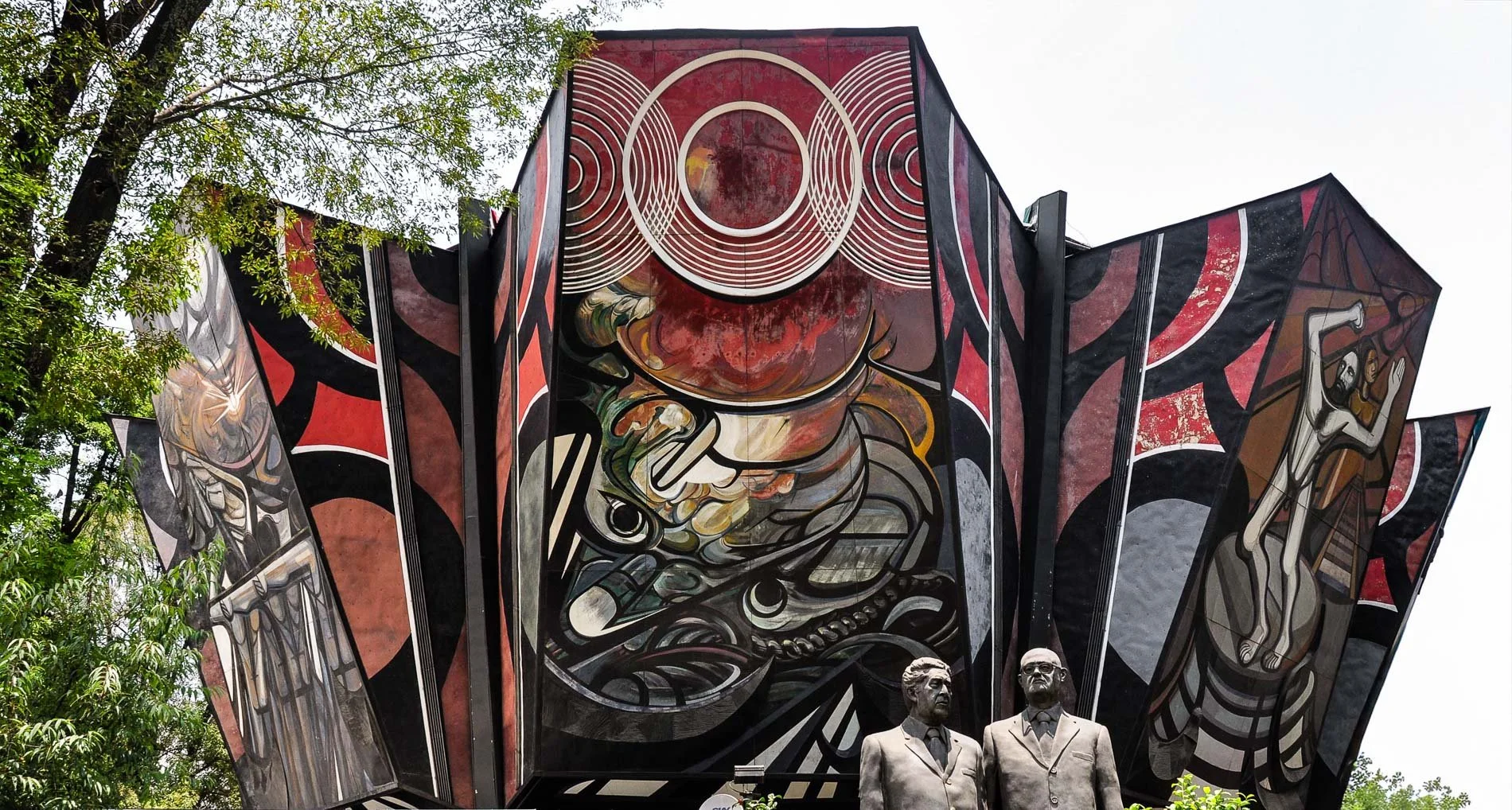
Visiting the Polyforum Siqueiros conference hall in Mexico City feels like stepping onto the set of an unrealised sci-fi epic, a strangely transportive marvel. Part civic forum, part total artwork, it is one of Mexico City’s most immersive spaces.
The project is the masterpiece of David Alfaro Siqueiros (1896–1974), the fiery muralist and lifelong member of the Mexican Communist Party, who, alongside Diego Rivera and José Clemente Orozco, played a key role in redefining 20th-century Mexican art as a means of political education and in fostering national identity. In this work, he refined his sculptural painting techniques to create what is often considered the largest interior mural in the world: La Marcha de la Humanidad—The March of Humanity. This mural envelops visitors in a fully immersive, three-dimensional environment that discourages passive observation.
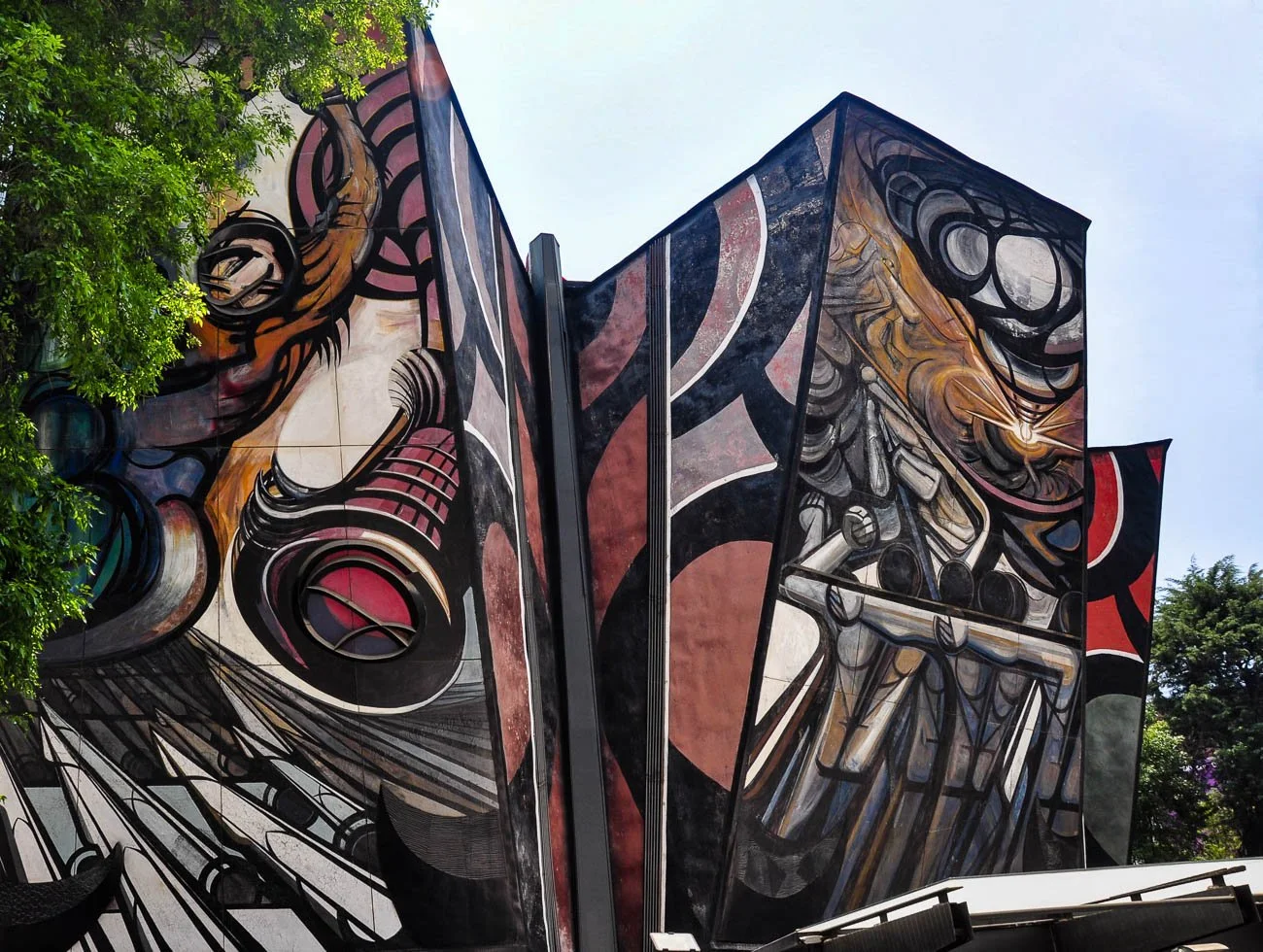
Before you even reach the entrance, the exterior prepares you for what is to come. The building’s polygonal, faceted concrete shell is decorated with murals that vibrate with colour and movement; each angled face is filled with profound philosophical symbolism. Leadership, the dead and reborn tree, a circus, Moses shattering the stone tablets of law, Jesus as a charismatic leader, the dance and escape of winter and summer, mestizaje, music, and the atom. It reads almost like a visual prologue, presenting the themes of power, belief, conflict, rebirth, culture, and progress that are further developed inside.
A sculpture of Siqueiros and his patron Manuel Suárez y Suárez stands in front of the building, symbolising both a personal statement and a significant long-term collaboration.
Inside Foro Universal
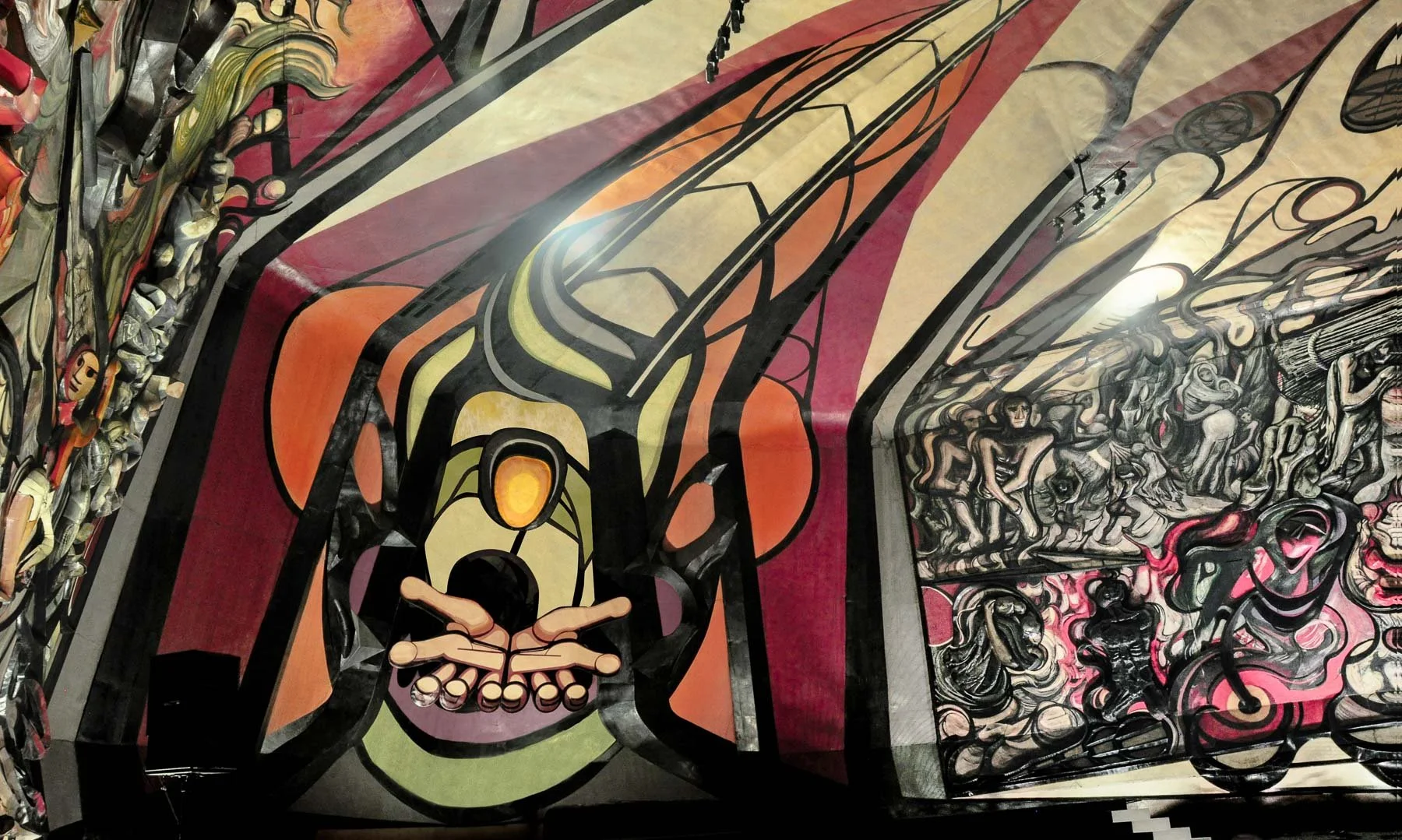
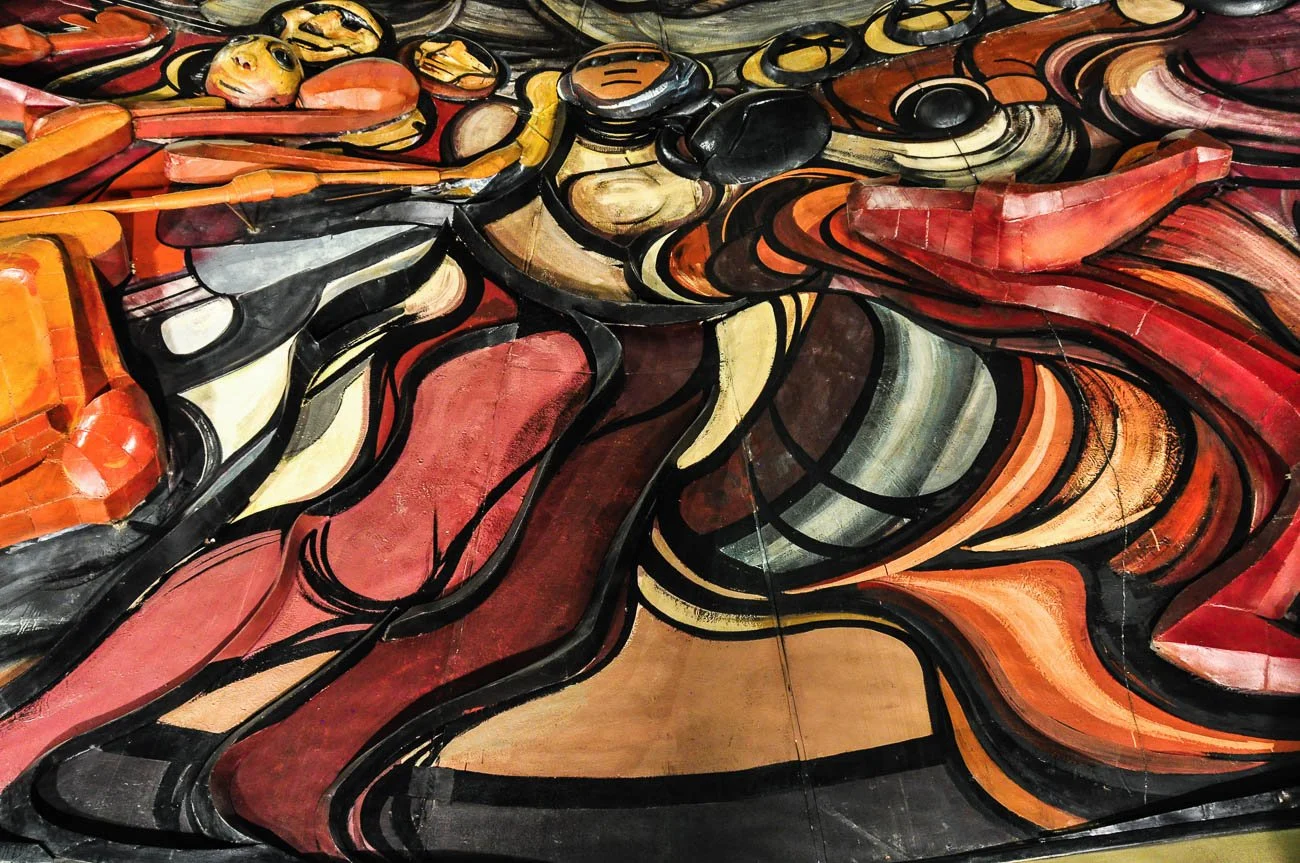
Once you enter, you are swallowed by a three-dimensional painting; every surface is painted: walls, ceiling, and angled planes that stretch and fold like the interior of a crystalline shell. This is a complete work of art in which architecture, sculpture, and mural merge into a single experience. The 'March of Humanity', covering more than 237 square metres, fills the space with a continuous narrative divided into four conceptual sections.
To the south, ‘The March of Humanity towards the Bourgeois Democratic Revolution’ depicts crowds moving from darkness towards a civilisation illuminated by new ideas.
To the north, 'The March of Humanity towards the Future Revolution’ looks ahead, confronting obstacles, resistance, and challenges along the path; the price of progress towards a more just and developed society.
To the east, 'Peace, Culture, Harmony'—represented by women, the protectors and creators of life.
To the west, ‘Science & Technology ’—symbolised through the hands of men, building, experimenting, and reshaping the world.
Together, they form an ideological circuit that reveals itself fully only in motion; Siqueiros sought to have viewers experience history and ideology in constant motion around them. A lifelong communist and passionate advocate for social justice, he believed in humanity's progress towards a society where justice and freedom are genuinely intertwined. Here, his vision reaches its most ambitious scope, depicting not only humanity's progress but also its struggles, conflicts, and the way it reshapes itself to advance again. The artwork captures humanity’s path towards a future where justice and freedom are not merely concepts but everyday realities.
On Sundays, the central platform slowly rotates, turning the floor into a giant turntable. You remain still as the mural glides around you. It is a surprisingly moving and hypnotic experience. If we were to make a cult film in which the leader demands total obedience from his followers, this location would be the set.
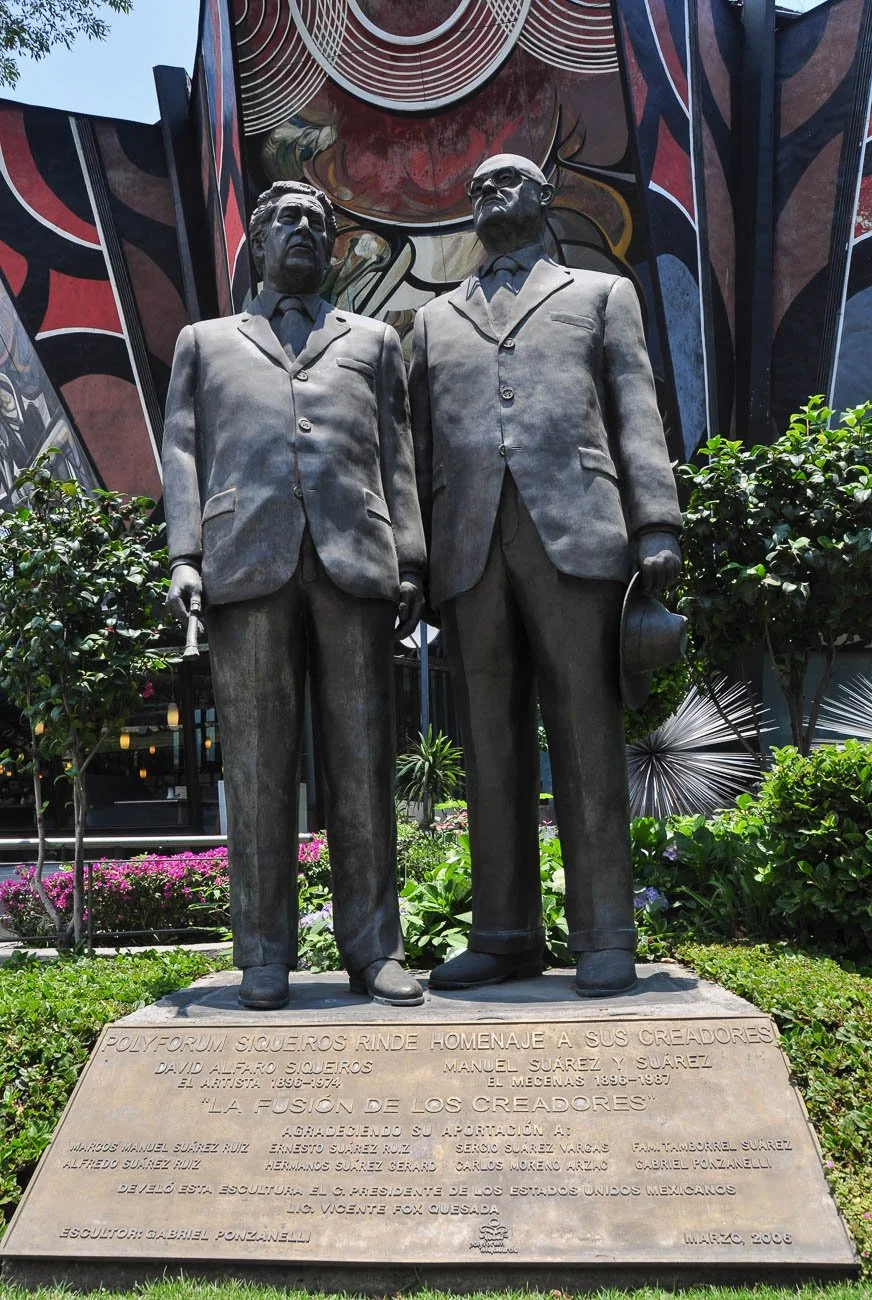
David Alfaro Siqueiros & benefactor Manuel Suarez y Suarez
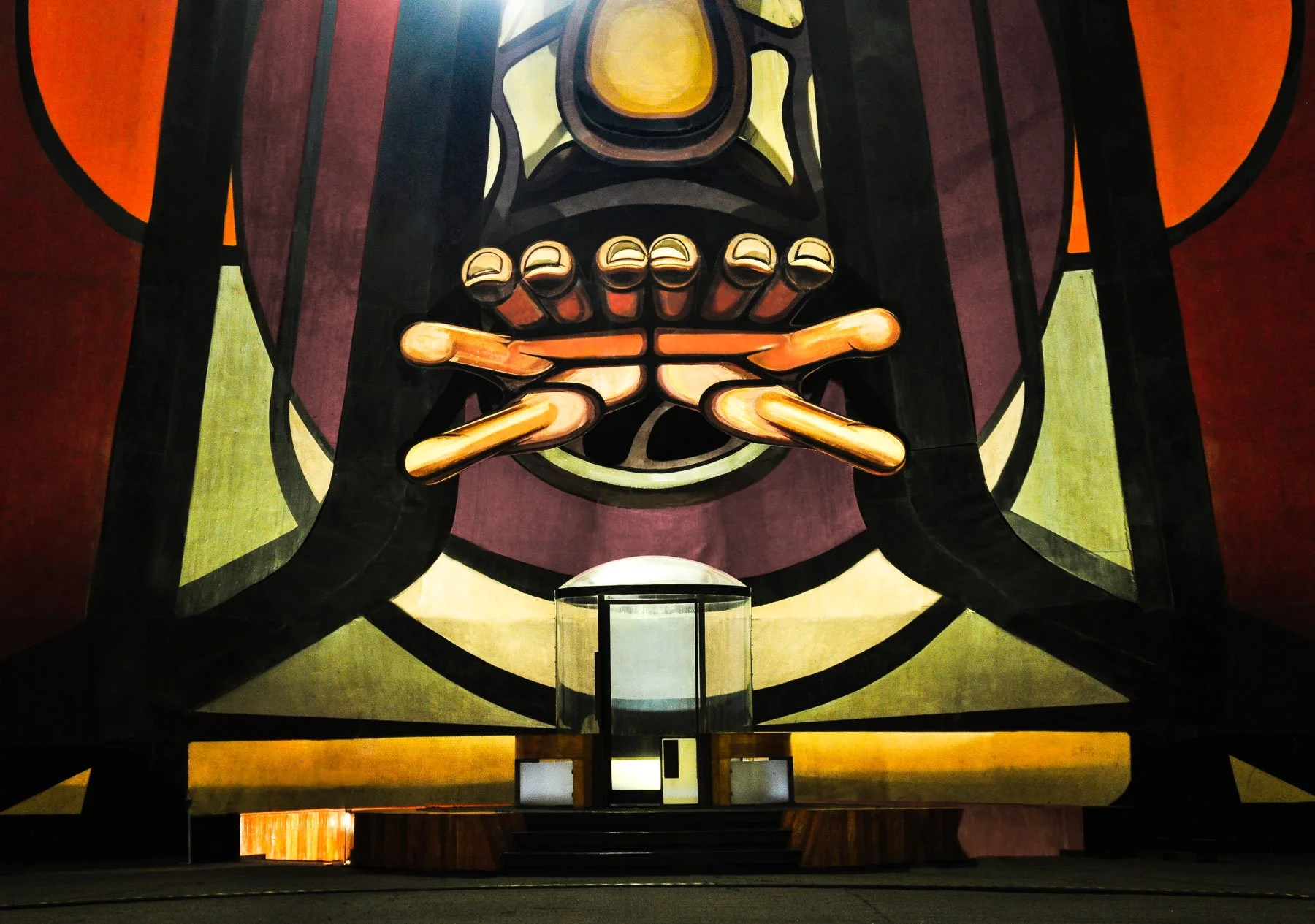
To the west, ‘Science & Technology’ — symbolised through the hands of men, building, experimenting, and reshaping the world.
A Modernist Threshold
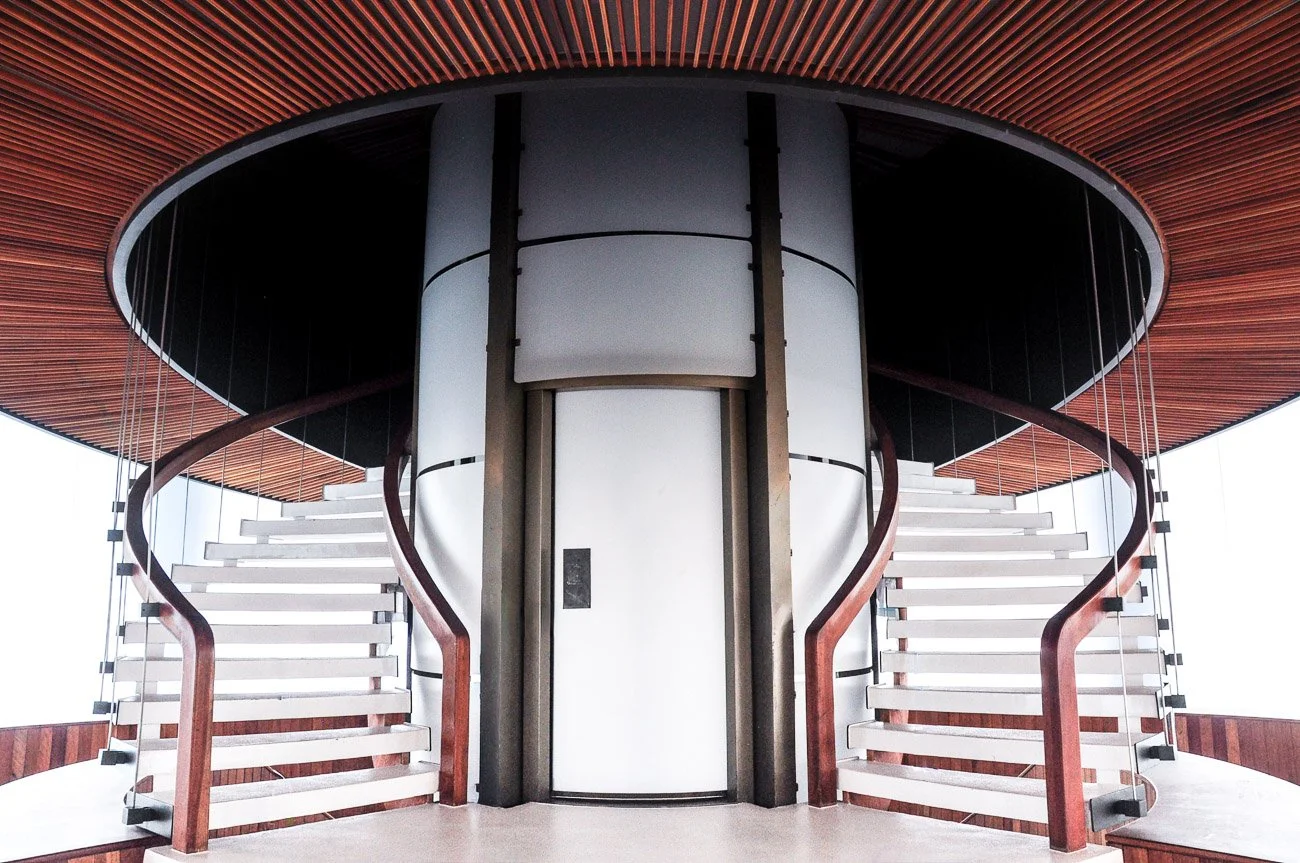
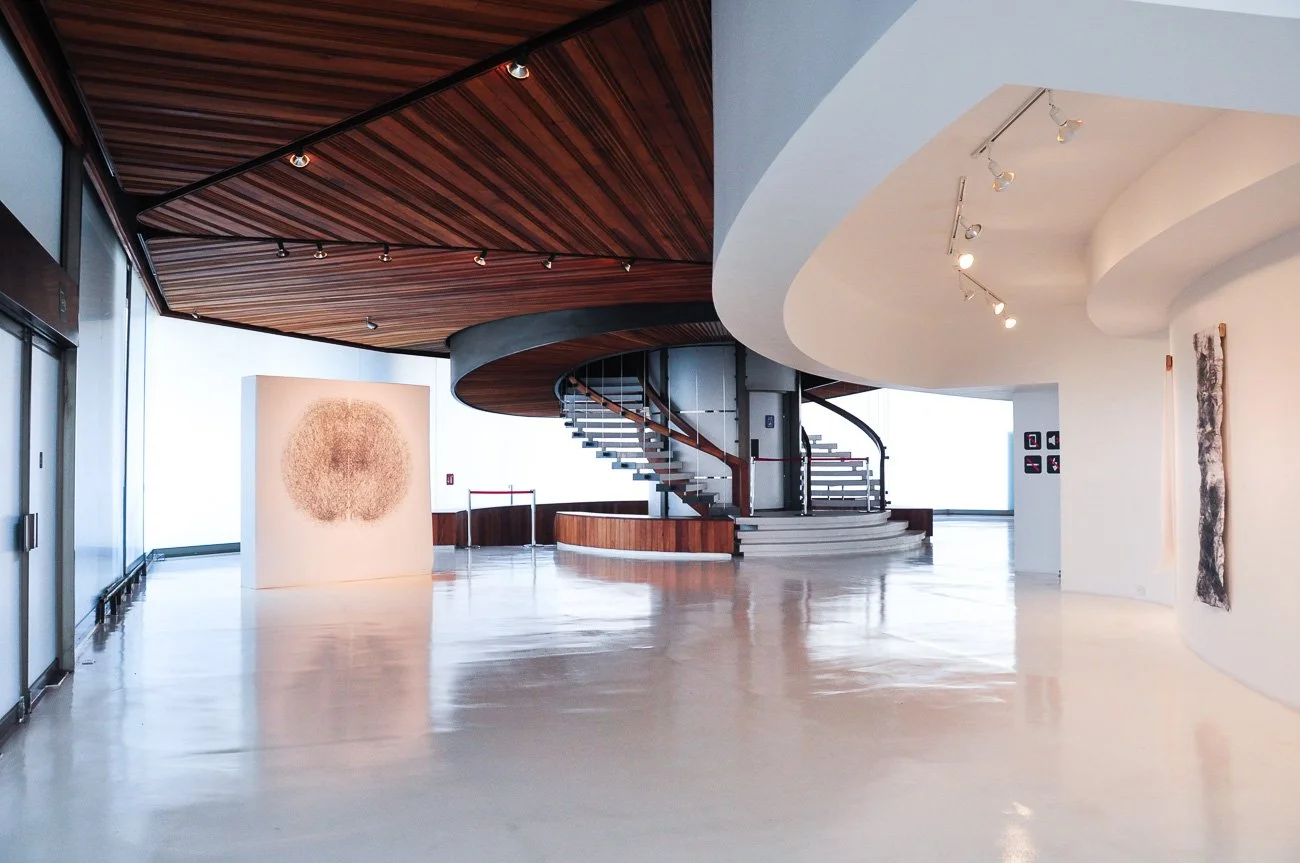
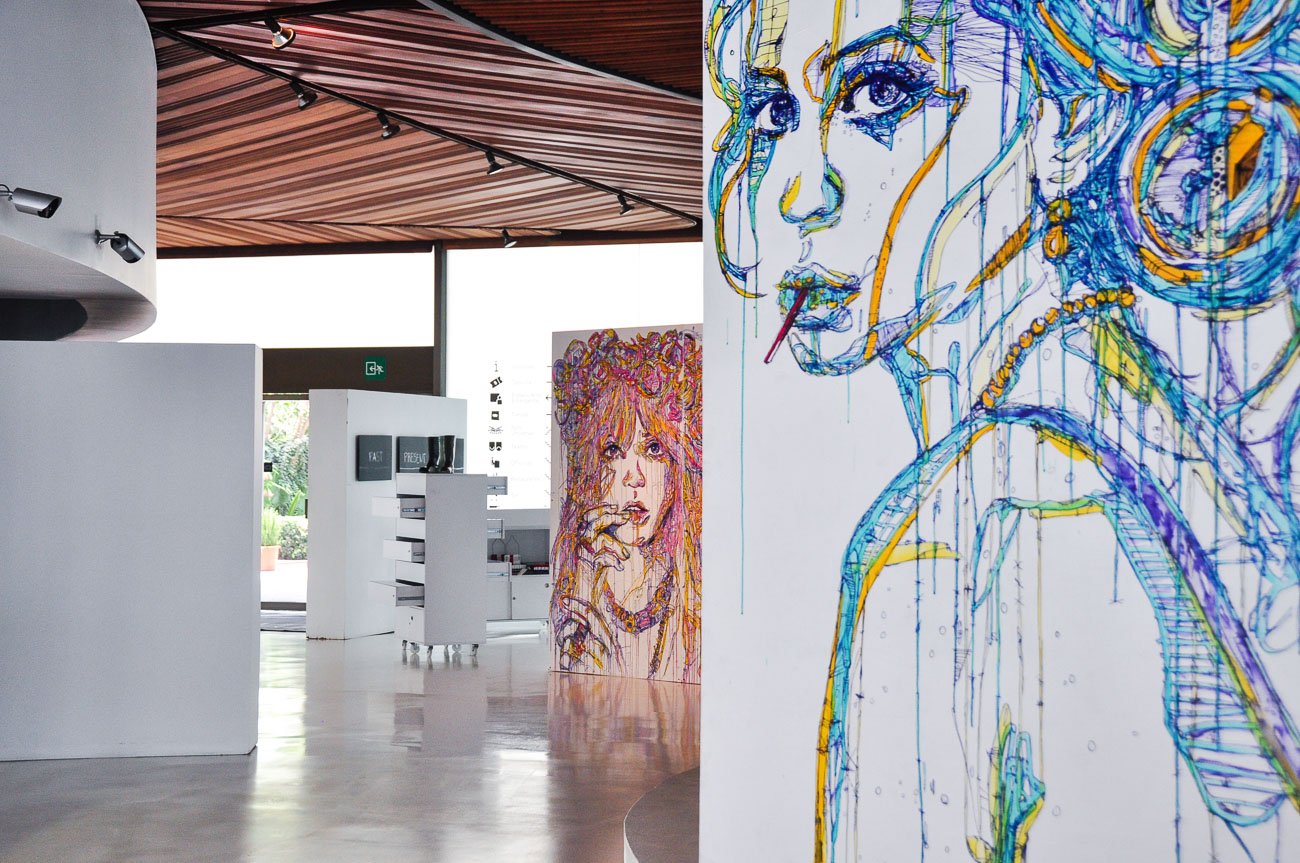
The contrast in spaces is deliberate; the lobby is sleek, bright, and modern, nearly clinical, with softly curved white-on-white surfaces that create a peaceful, futuristic atmosphere. It also functions as an exhibition space for emerging artists. It serves as a decompression chamber between the city and the sci-fi in its own right, though in a subtler form. Additionally, the lobby includes a small design shop, one of the top spots in the city for contemporary Mexican jewellery, ceramics, books, textiles, and home accessories, all curated with a discerning eye.
History and Function
Construction began in 1966, following the decision to relocate ‘The March of Humanity’ mural from its original setting at the Hotel Casino de la Selva in Cuernavaca to a dedicated space. The Polyforum opened in 1971 and has since hosted political meetings, concerts, readings and exhibitions, maintaining its role as an active civic space rather than a static monument. It remains awe-inspiring in scale and grandeur.
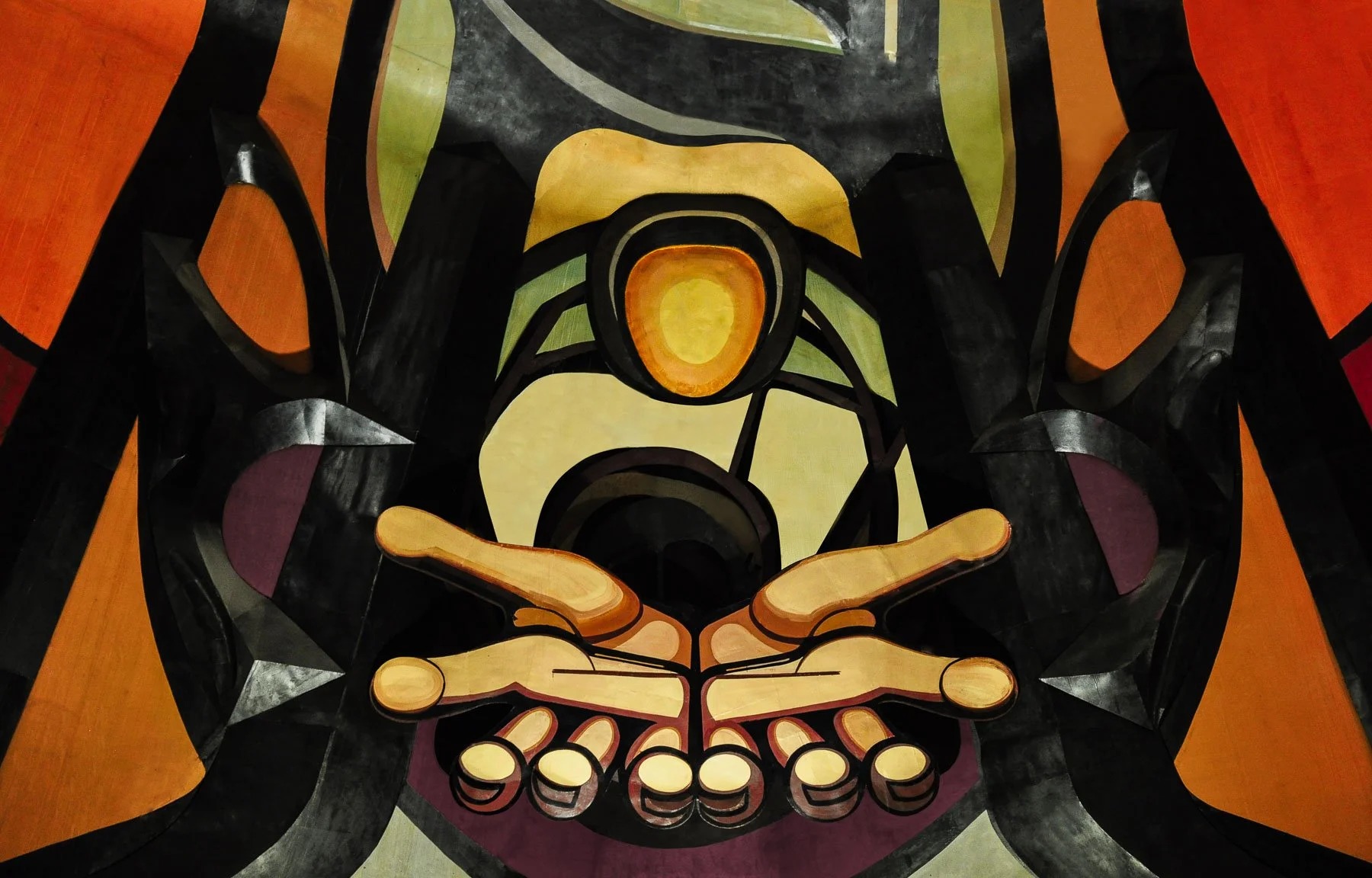
To the east, 'Peace, Culture, Harmony'—represented by women, the protectors and creators of life.
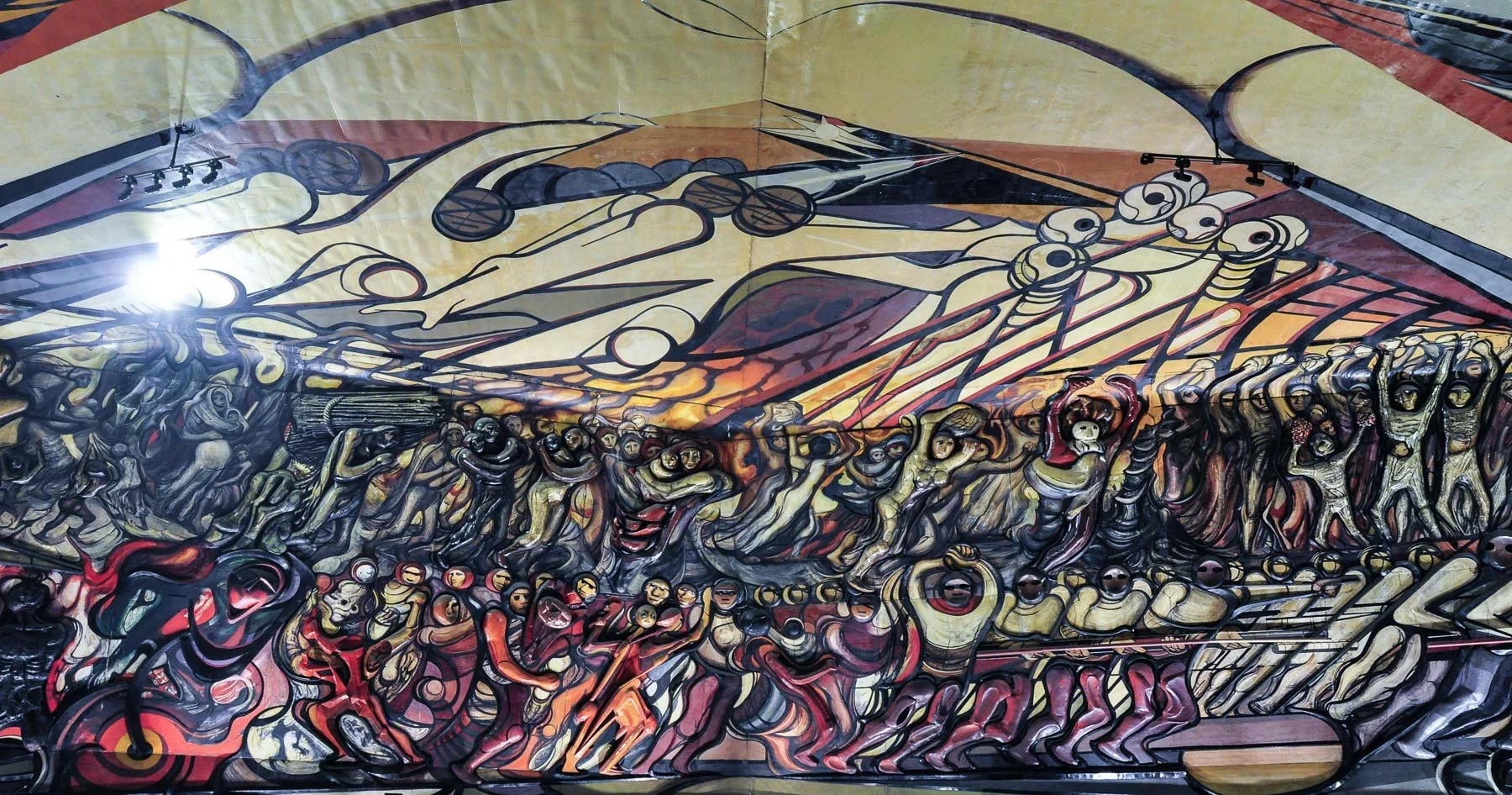
To the north, 'The March of Humanity towards the Future Revolution’ looks ahead, confronting obstacles, resistance, and challenges along the path; the price of progress towards a more just and developed society.
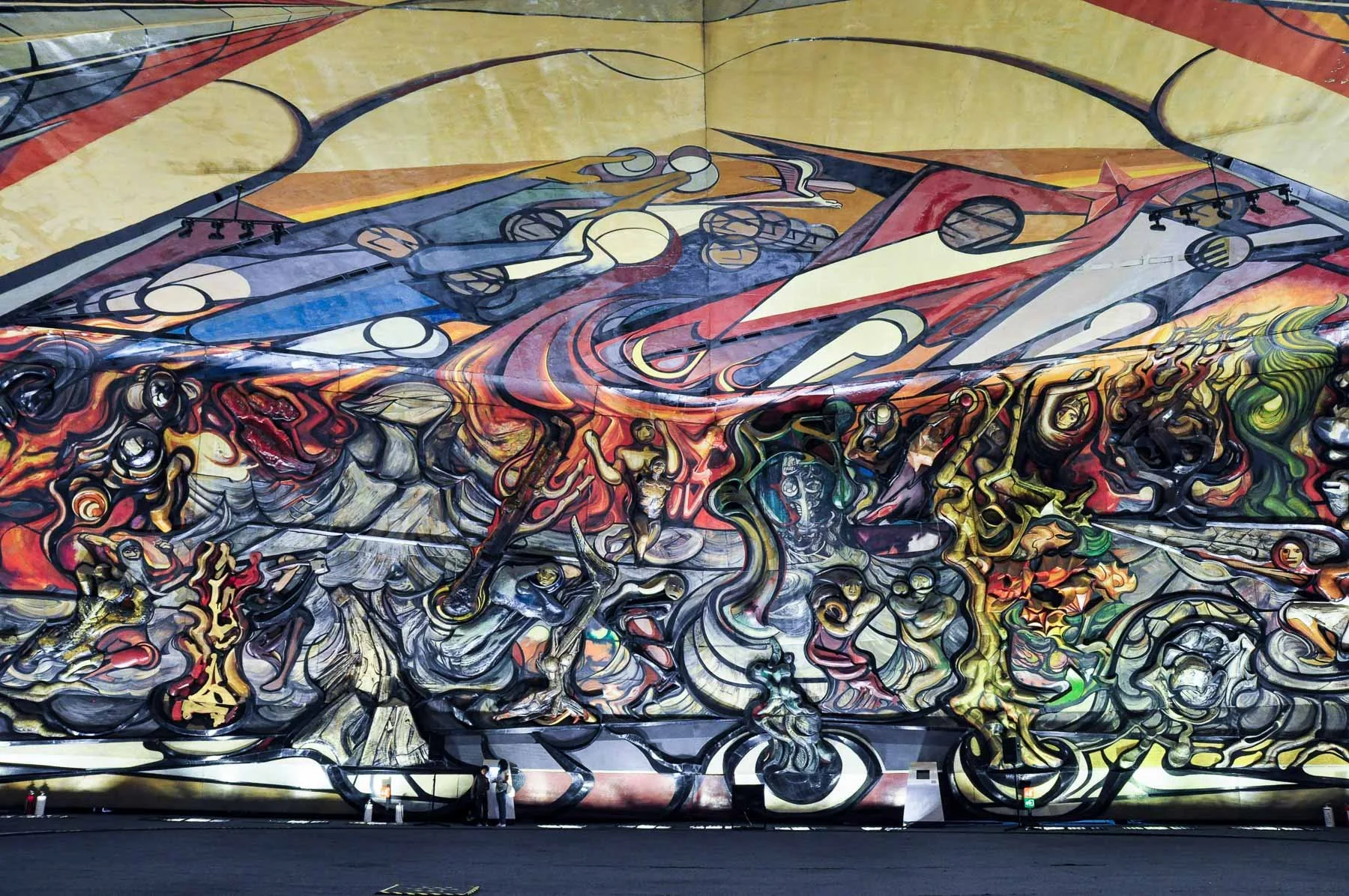
To the south, ‘The March of Humanity towards the Bourgeois Democratic Revolution’ — depicts crowds moving from darkness towards a civilisation illuminated by new ideas.
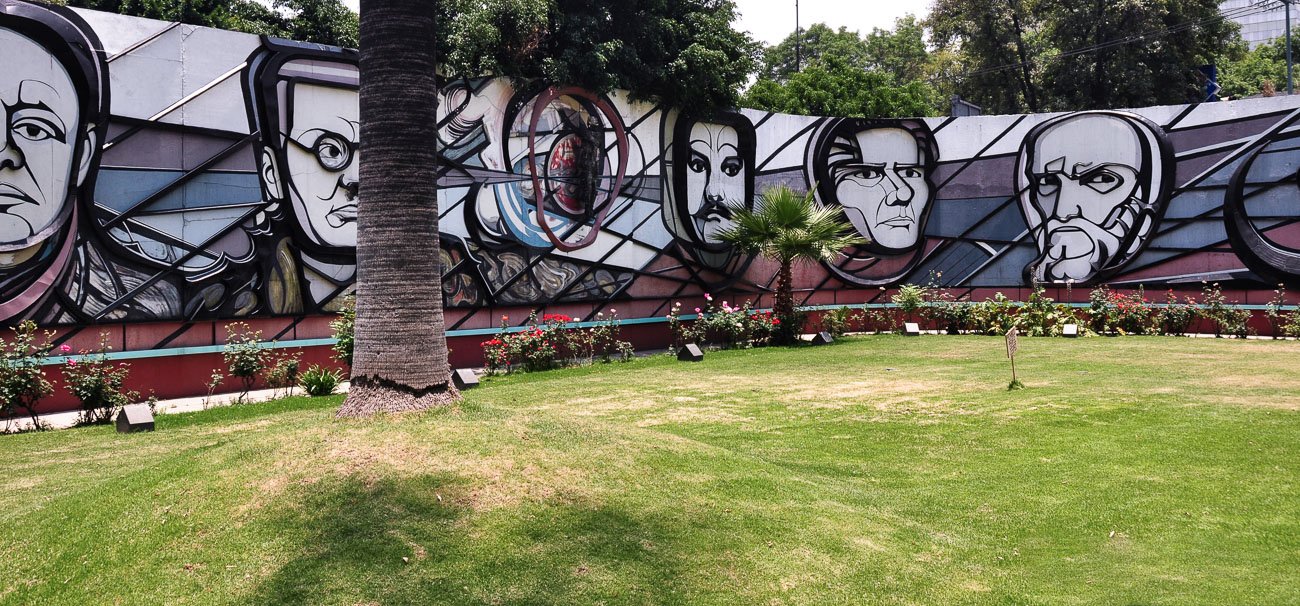
Barda Mural,
A final detail worth checking out is the Barda Mural, created by Siqueiros to commemorate fifty years of the Mexican mural movement; a monumental portrait frieze honouring the artists and printmakers who shaped the tradition. Diego Rivera, José Clemente Orozco, José Guadalupe Posada,Leopoldo Méndez, Gerardo Murillo (better known as Dr Atl).
Polyforum Siqueiros
+52 55 536 4520
Av. Insurgentes Sur 701, esquina con Filadelfia, Colonia Nápoles, Benito Juárez Ciudad de México, CDMX 03810, México
www.polyforumsiqueiros.com
