
The Ancient Maya Mythical City of Chichen Itza in Yucatán
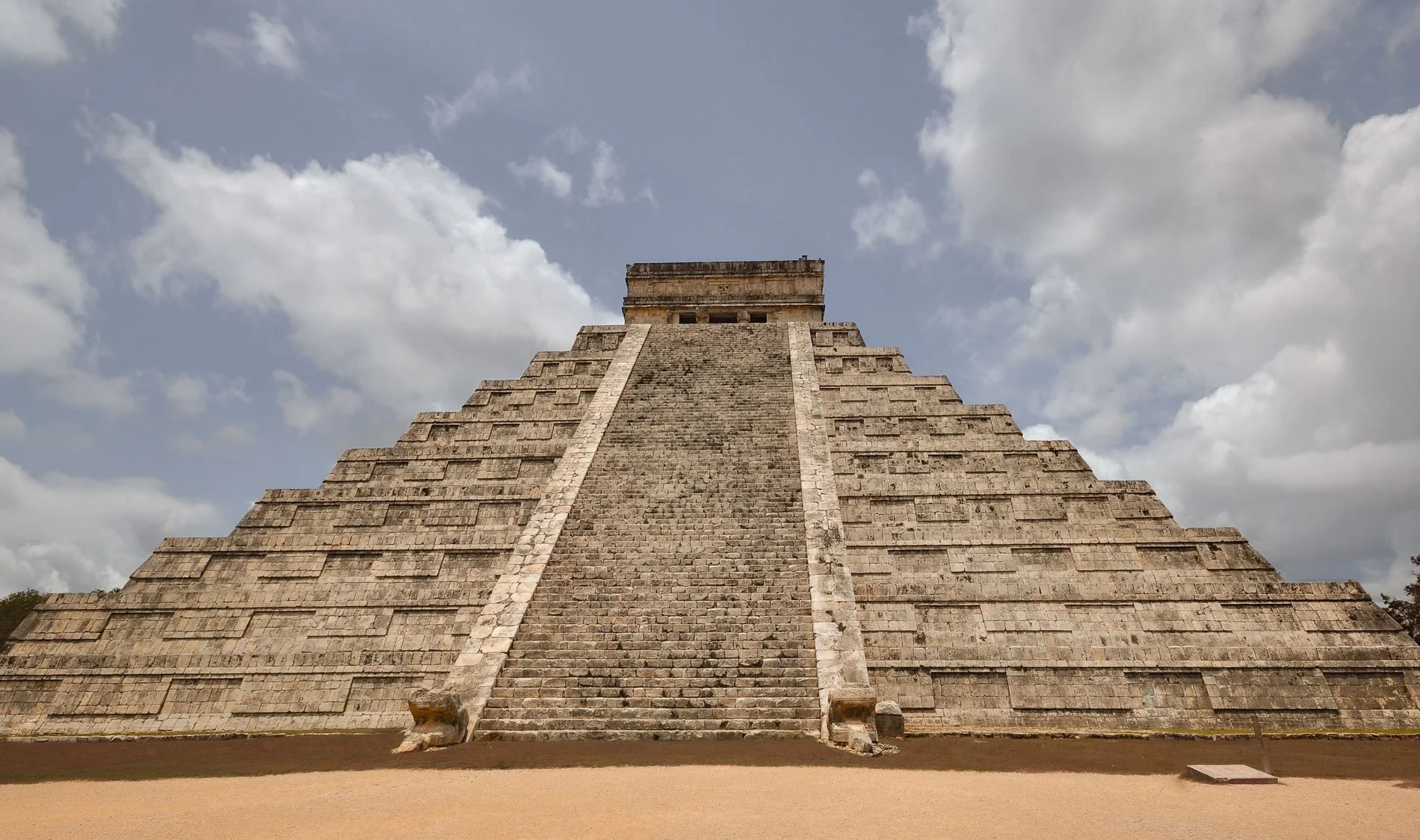
The Pyramid and Temple of Kukulcán
The road from Mérida heads east through low forests and limestone fields before the land starts to open up towards the ancient city. Not far from Cobá and the eastern jungles of Quintana Roo, the landscape of Yucatán shifts subtly here — flatter, drier, dotted with sinkholes and scattered trees. Then, almost without warning, the monuments of Chichén Itzá begin to emerge from the clearing.
Chichén Itzá was one of the prominent mythic centres of the Maya civilisation — aTollan, a legendary place of origins and authority. Situated in eastern Yucatán, evidence of occupancy predates 600 AD, although its principal development occurred between AD 750 and 900, when it expanded into a city with an estimated population of around 65,000 inhabitants. It achieved regional prominence by the late 800s and evolved into a major hub for commerce, culture, and religion. Trade networks extended well beyond the peninsula.
By the late 900s, strong ties with central Mexico integrated Toltec-style architecture, iconography, and ritual practices. This blending of Maya and central Mexica traditions helped transform it into one of the most influential cities in Mesoamerica.
The name Chichén Itzá translates roughly as “the mouth of the well of the Itza.” The term refers to nearby cenotes — natural limestone sinkholes filled with crystal-clear freshwater. These openings in the earth were both essential water sources and sacred portals to the Maya underworld. Excavations at the Cenote Sagrado have uncovered jewellery, offerings and human remains, confirming the cenote’s ceremonial importance.
Archaeological evidence suggests that Chichén Itzá declined as a regional centre around AD 1100, probably due to political fragmentation, shifting trade routes, and the rise of rival centres such as Mayapán. However, it was never completely abandoned. Spanish chroniclers reported that thriving communities existed among the ruins during the 1530s, and by 1588, colonial records documented the area being used as a cattle ranch.
Formal archaeological work began in the 19th century and continues today. Less than ten per cent of the ancient city has been fully excavated, meaning that much of Chichén Itzá still lies hidden beneath forest and soil.

The Pyramid and Temple of Kukulcán
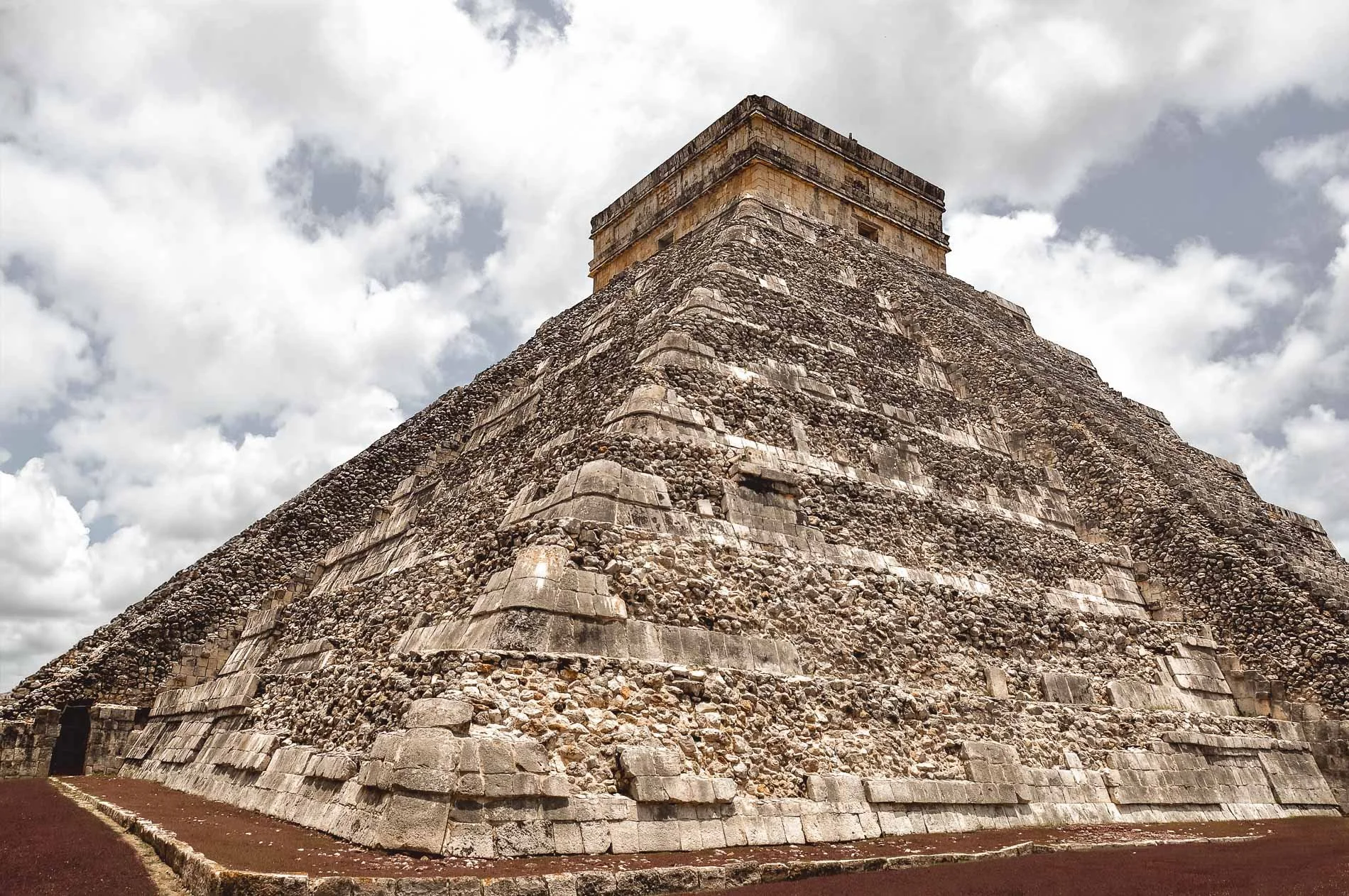
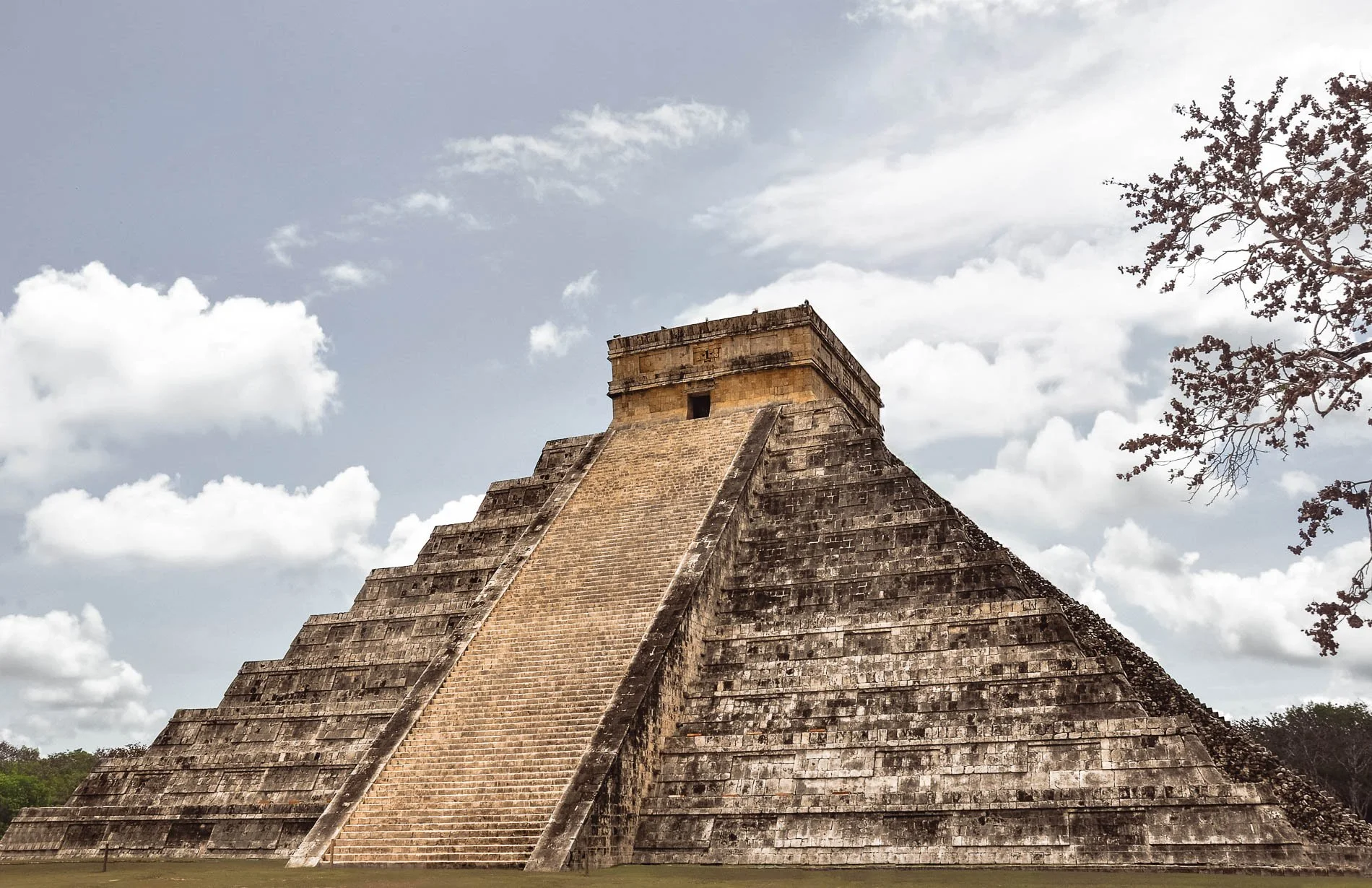
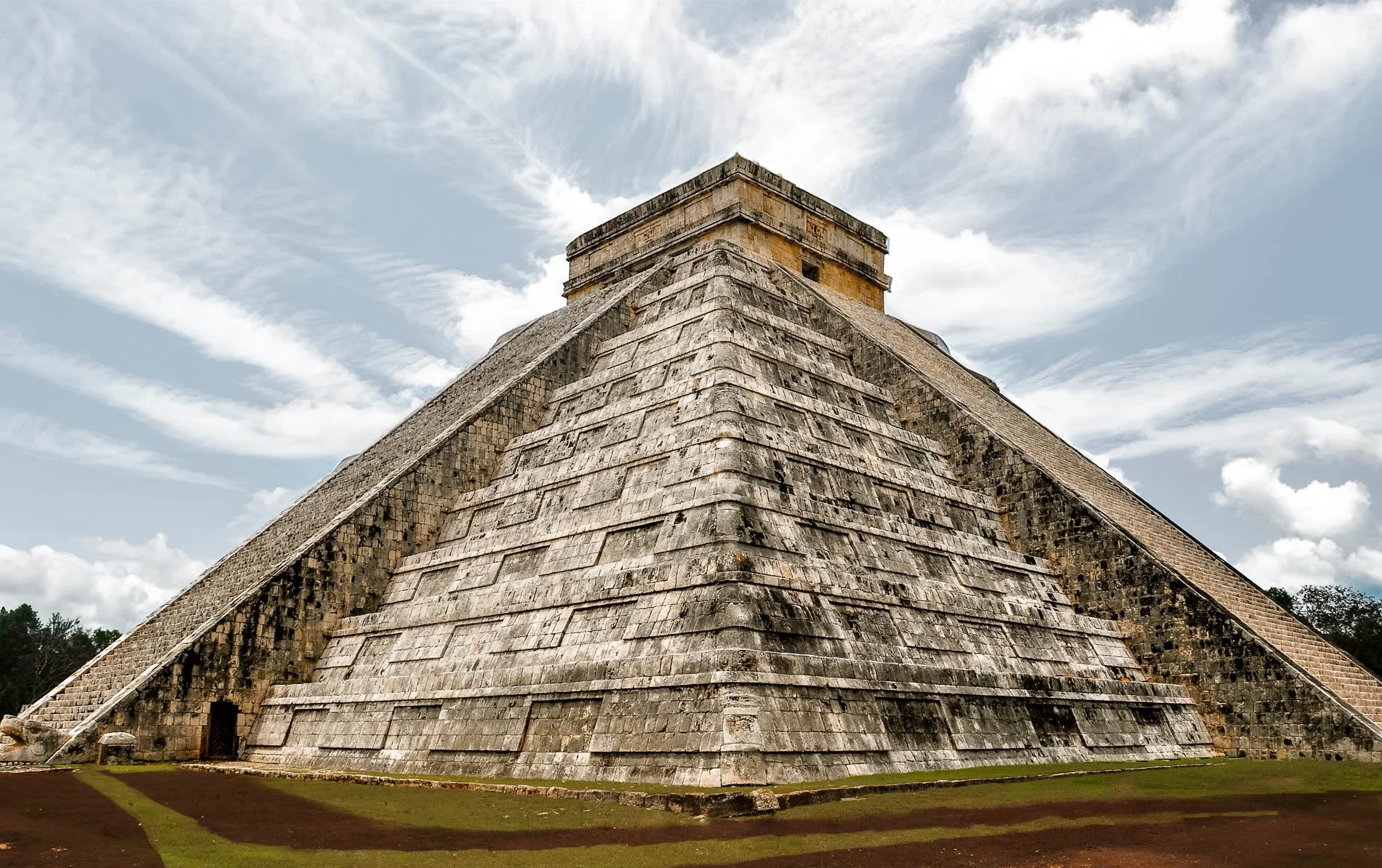
Dominating the site is the iconic pyramid and temple dedicated to Kukulcán, the feathered serpent deity, one of the most important figures in Mayan cosmology. Kukulkan symbolises a bridge between the earthly realm and the divine: wind, knowledge, and transformation.
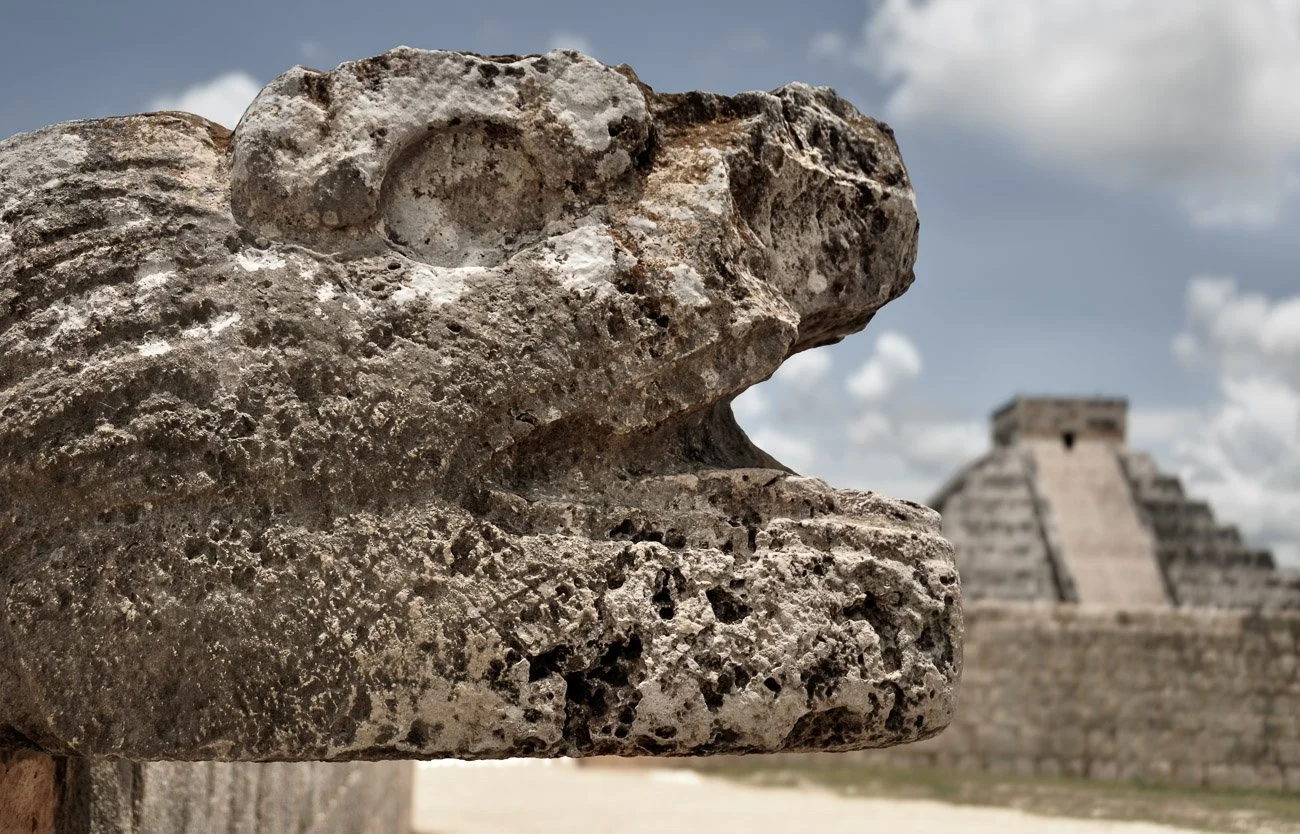
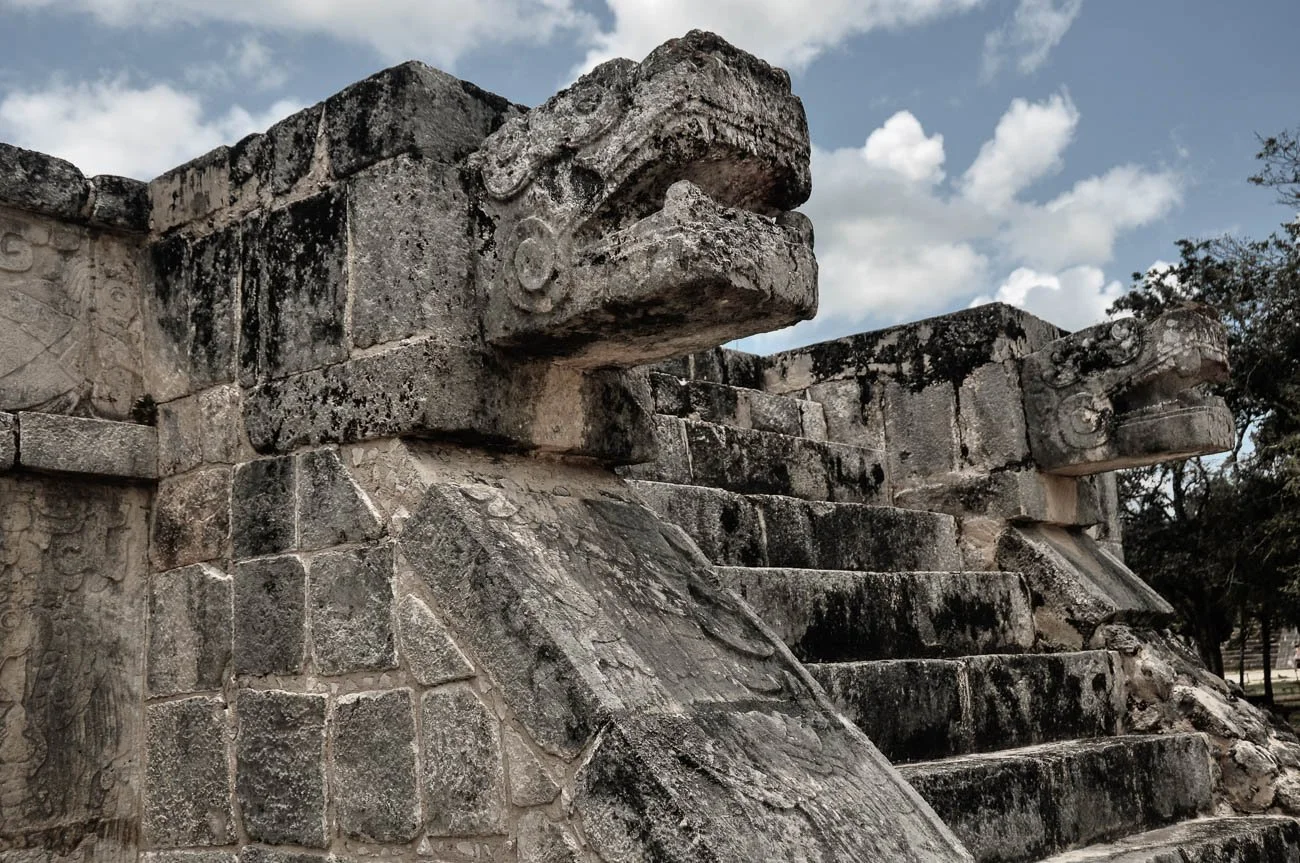
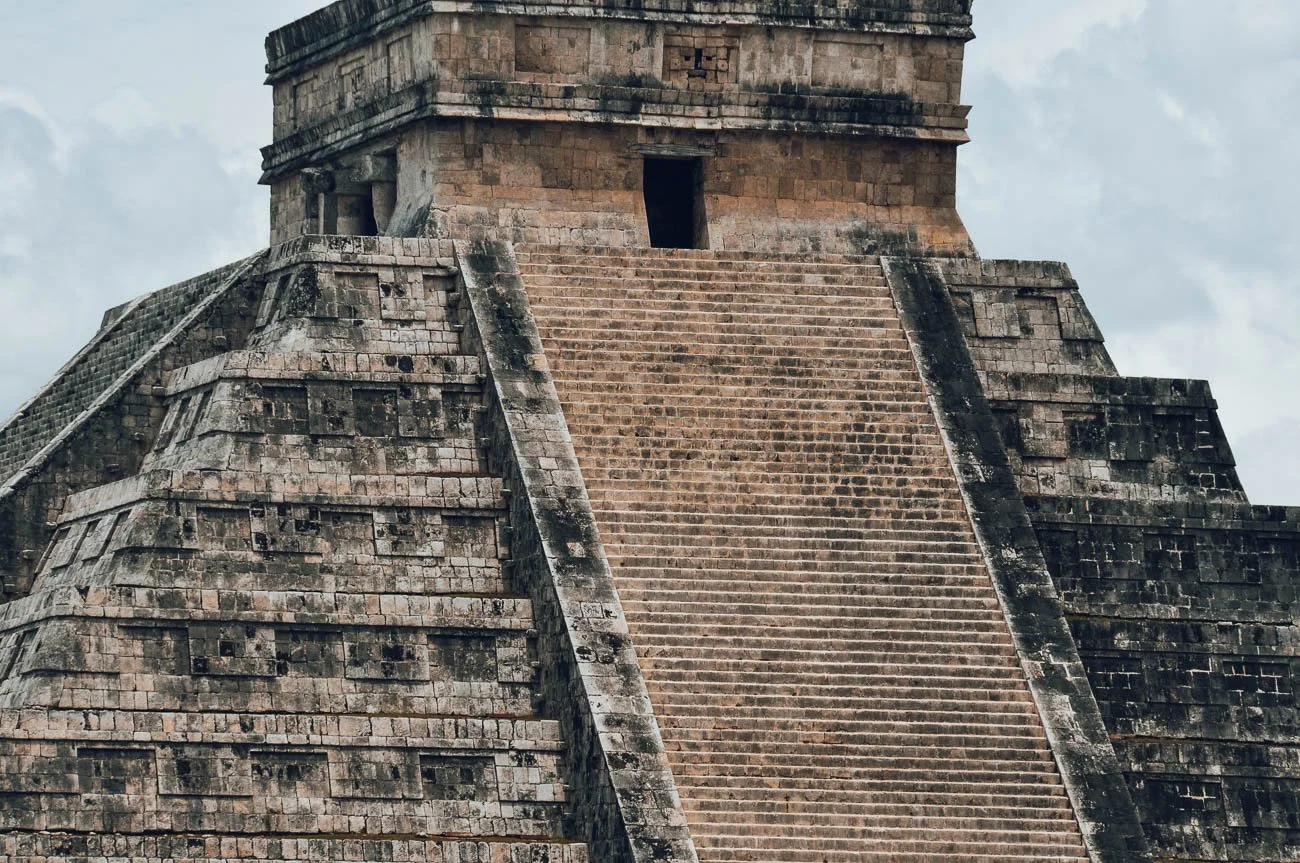
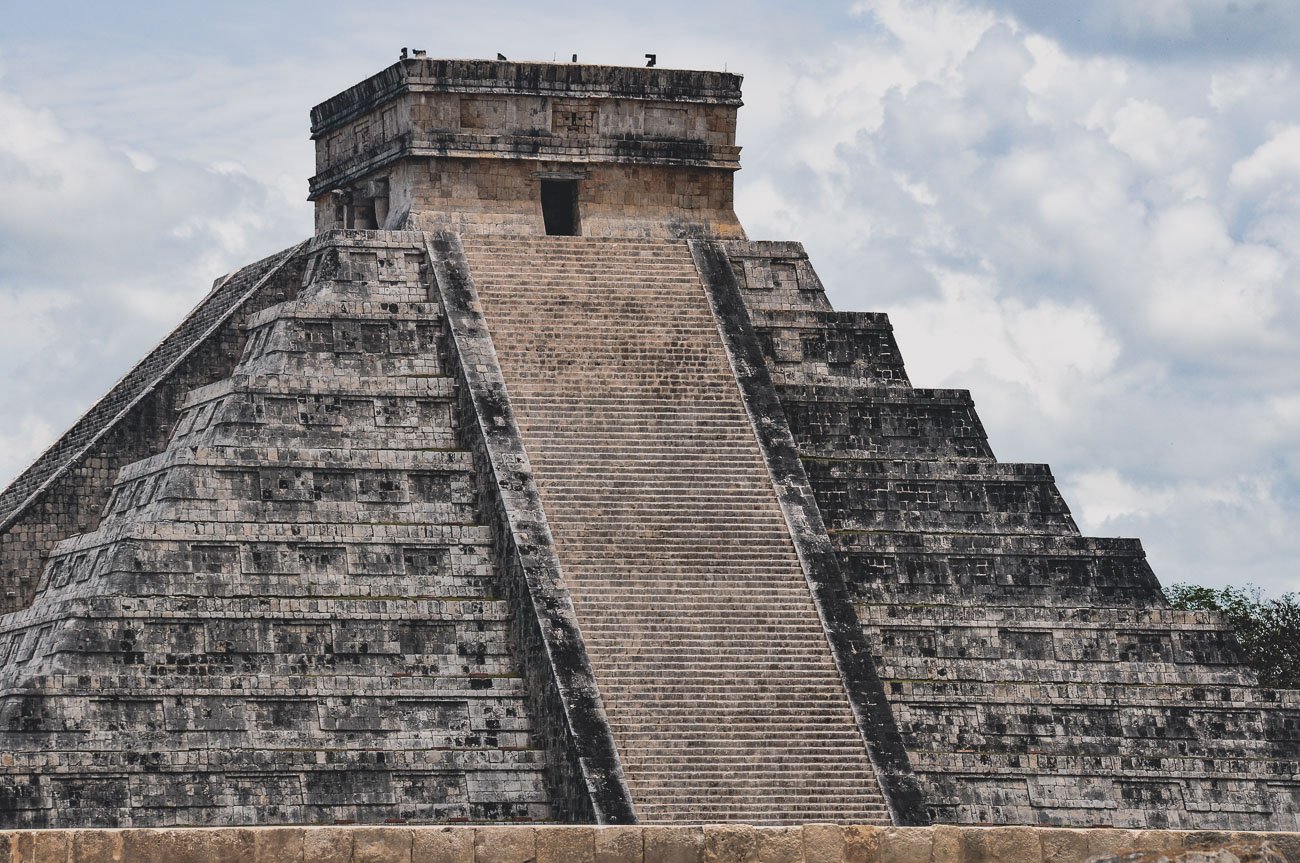
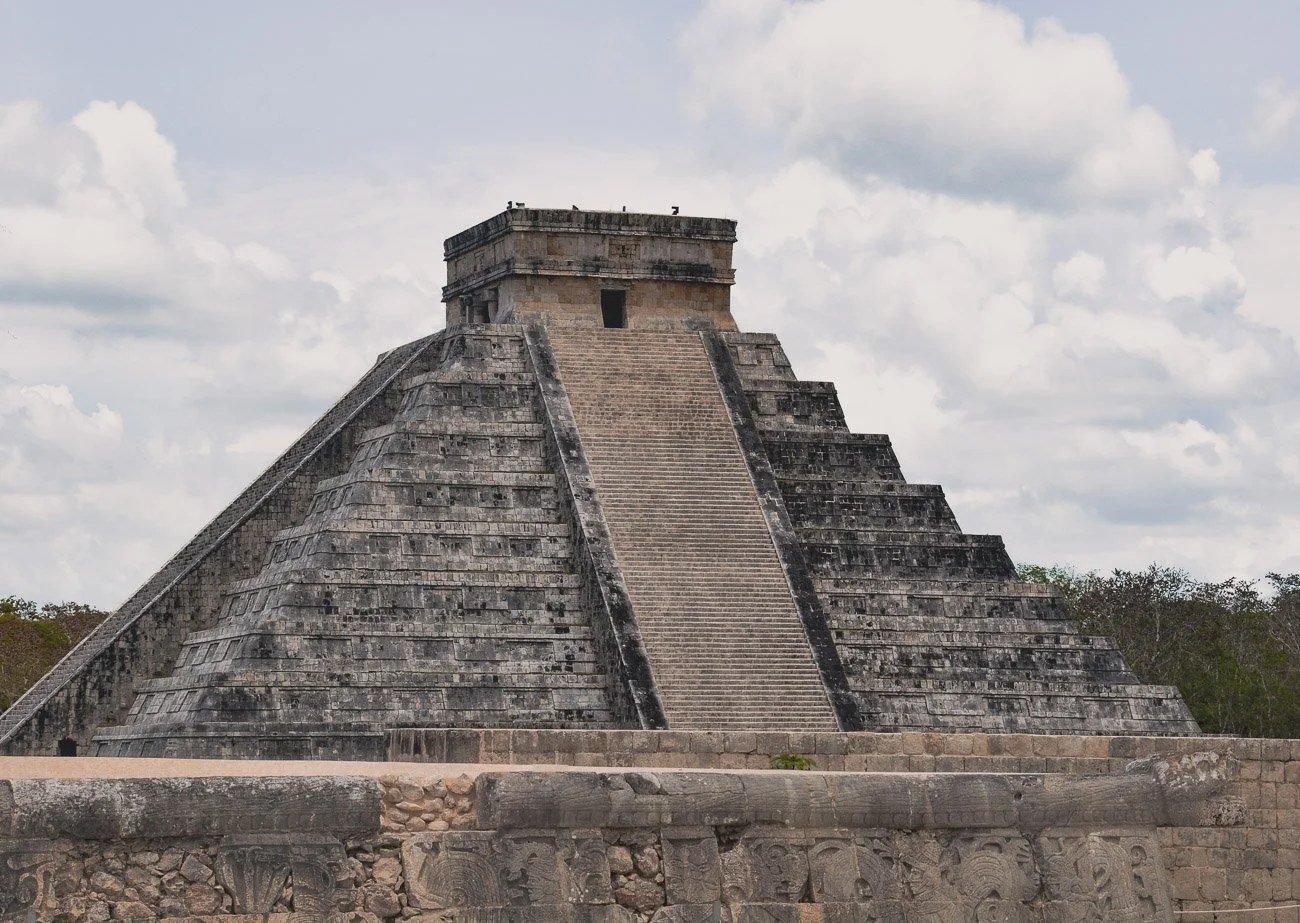
The pyramid of Kukulcán rises from the flat Yucatán plain like a geometric mountain. Its stone terraces climb in four steep levels to a small temple where priests once watched the sky and the unfolding calendar. Measuring roughly 53 metres on each side, the structure leads to a ceremonial platform. On the northern staircase, sculpted serpent heads flank the base.
During the spring and autumn equinoxes, as the sun sets, it casts a rippling shadow along the balustrade, creating the illusion of a giant serpent descending the pyramid. Today, it stands in quiet symmetry above the clearing, still holding the rhythm of the ancient world.
Visitors often gather in front of the temple, enthusiastically clapping their hands. This might seem odd at first until you try it yourself. The echo returns with a sharp, chirping tone, reminiscent of the call of the quetzal, a sacred bird in Maya culture. Imagine the plaza centuries ago, thousands gathered before the temple, clapping in rhythm as the pyramid returned the cry of the quetzal across the stone courtyard.
Like many Mesoamerican structures, Kukulcán was built over earlier structures. Excavations in the late 1930s revealed a concealed staircase on the northern side; further excavation uncovered another temple submerged beneath the present one. Inside the temple chamber, a Chac Mool statue and a jade-inlaid throne fashioned in the shape of a jaguar were discovered. Recent geophysical scans have also detected a large cenote beneath the pyramid, which remains unexplored.
The Spaniards later named the structure El Castillo, a name still commonly used, but it is better to stick to the ancient names.
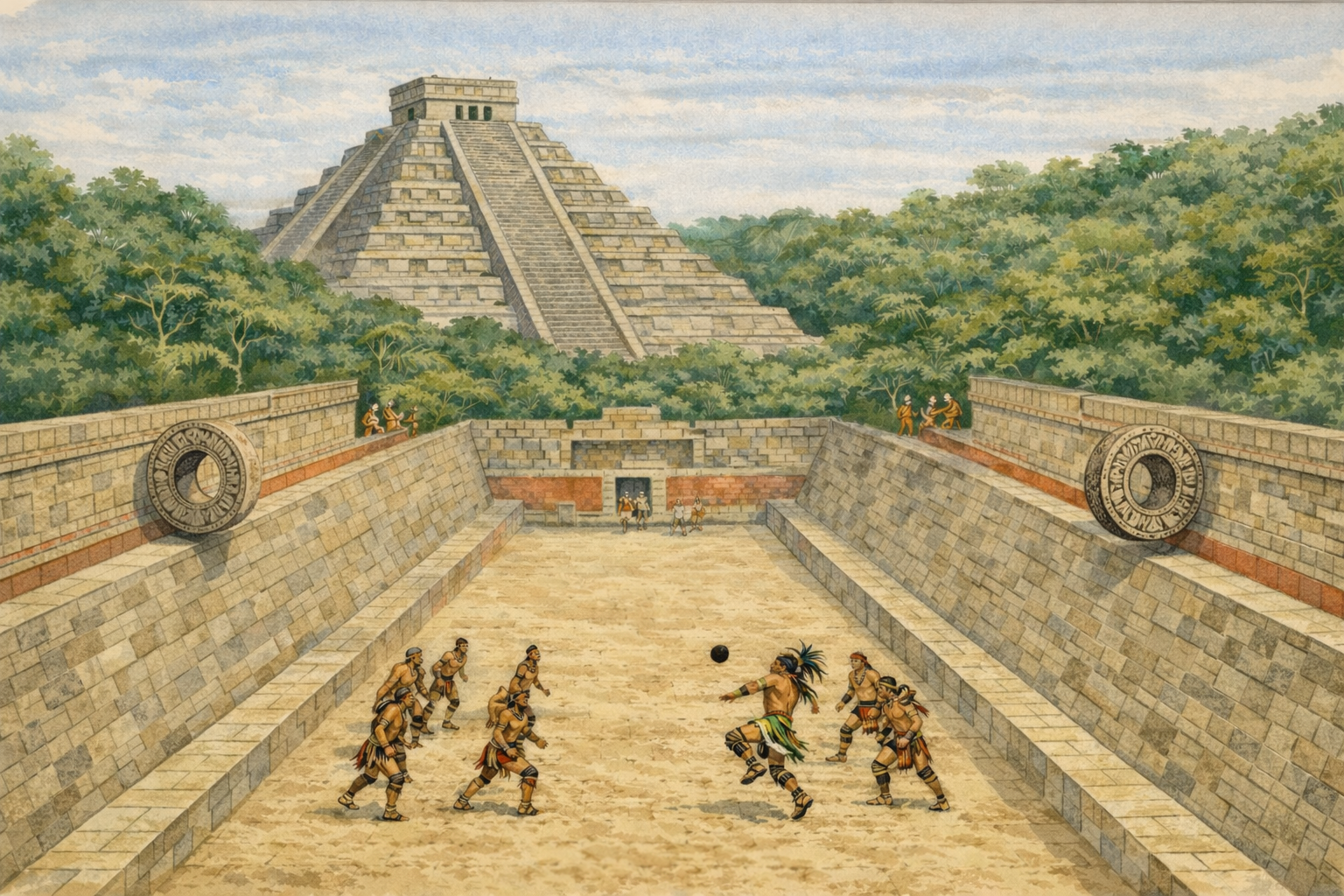
Instead, the ball was struck primarily with the hips, sometimes the shoulders or thighs. Teams attempted to keep it in motion while manoeuvring it toward their captain, who would be running along the side platform. The captain then aimed to send the ball through the vertical ring or hoop score and win the game.
Imagine the arena during a festival. Thousands of spectators fill the surrounding platforms while players launch the heavy rubber ball across the court, its sharp echoes ricocheting from the stone walls.
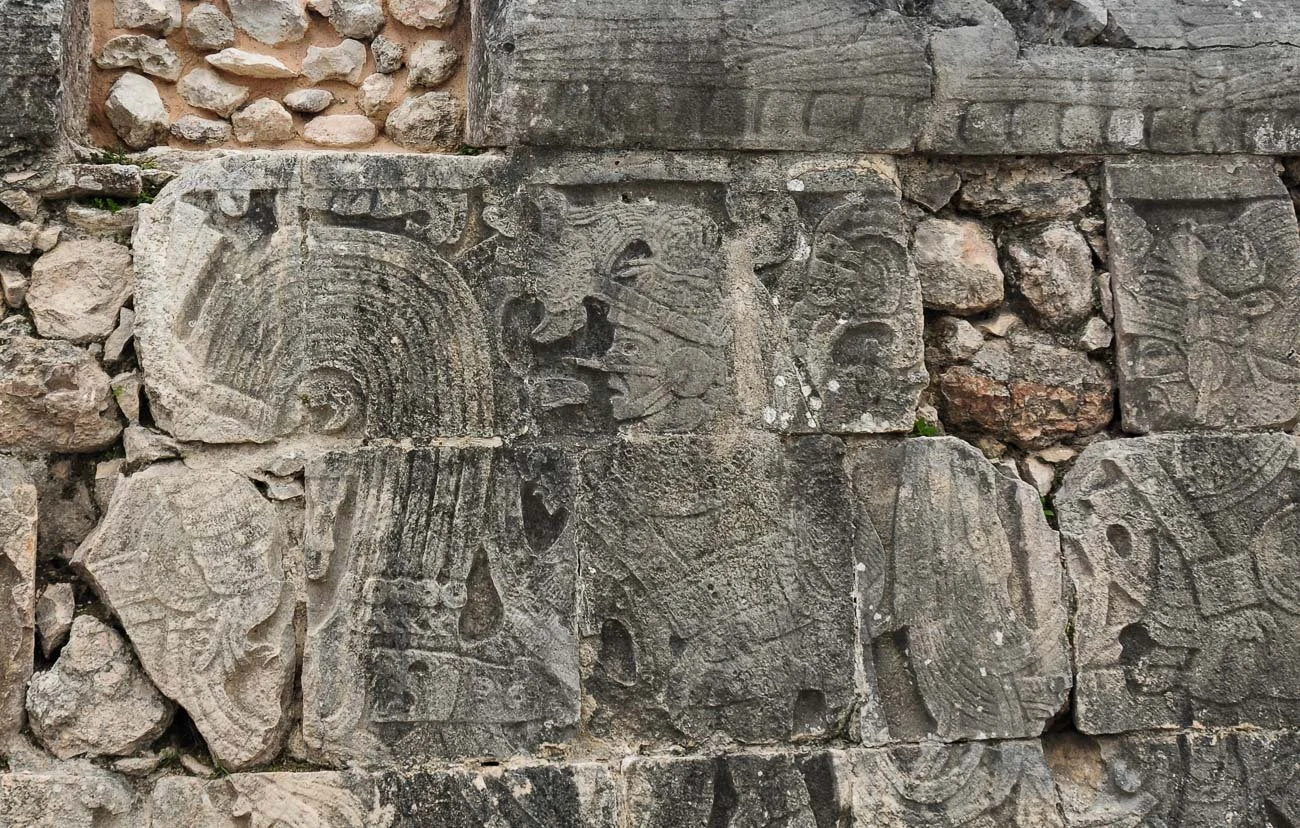
Tlachtli was far more than just a sport. In Maya cosmology, the court symbolised the threshold between the earthly and supernatural worlds, with the game itself seen as a reenactment of cosmic battles from creation myths. The movement of the ball was believed to mirror the paths of the sun, moon, and stars.
According to later interpretations, the captain of the victorious team could be honoured with ritual decapitation. This offering was believed to sustain cosmic balance and the ongoing motion of the universe.
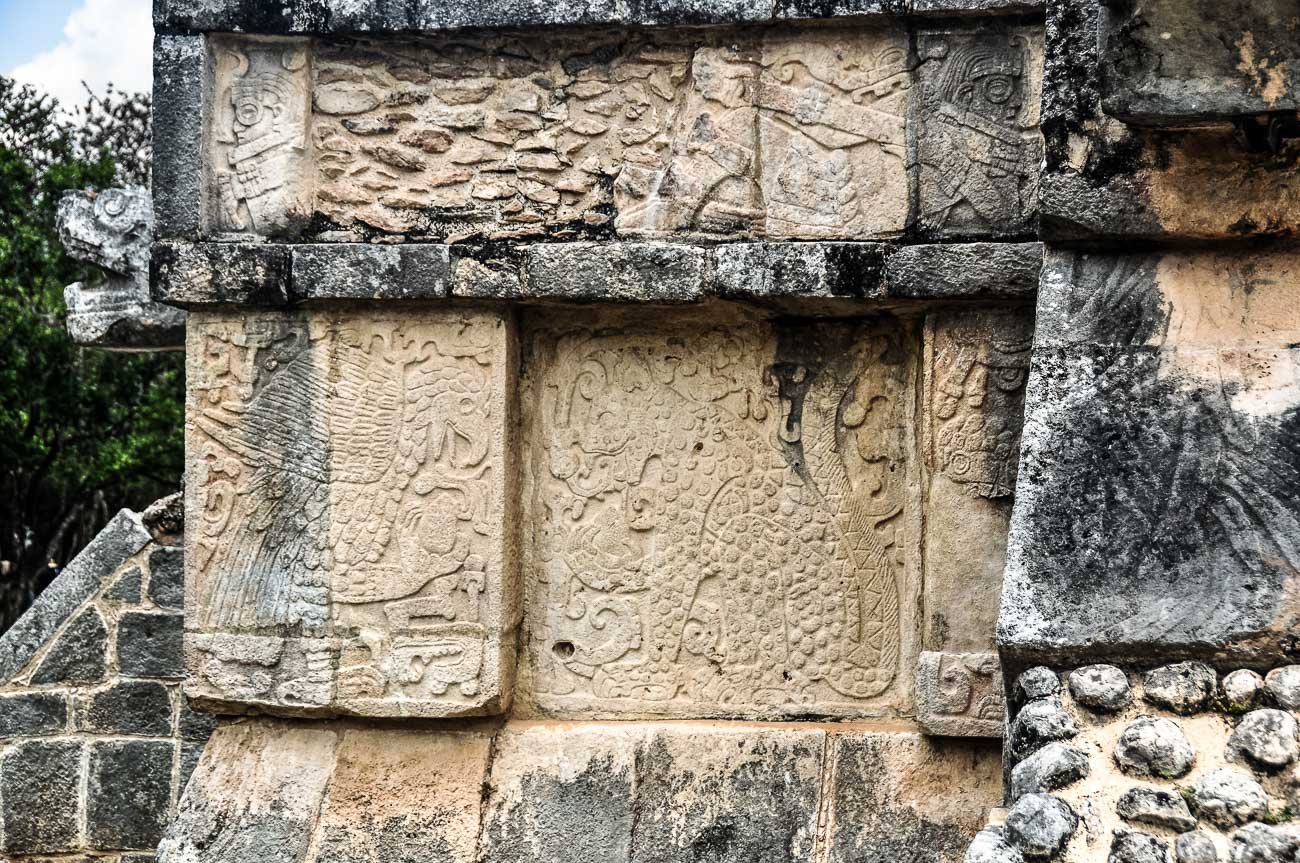
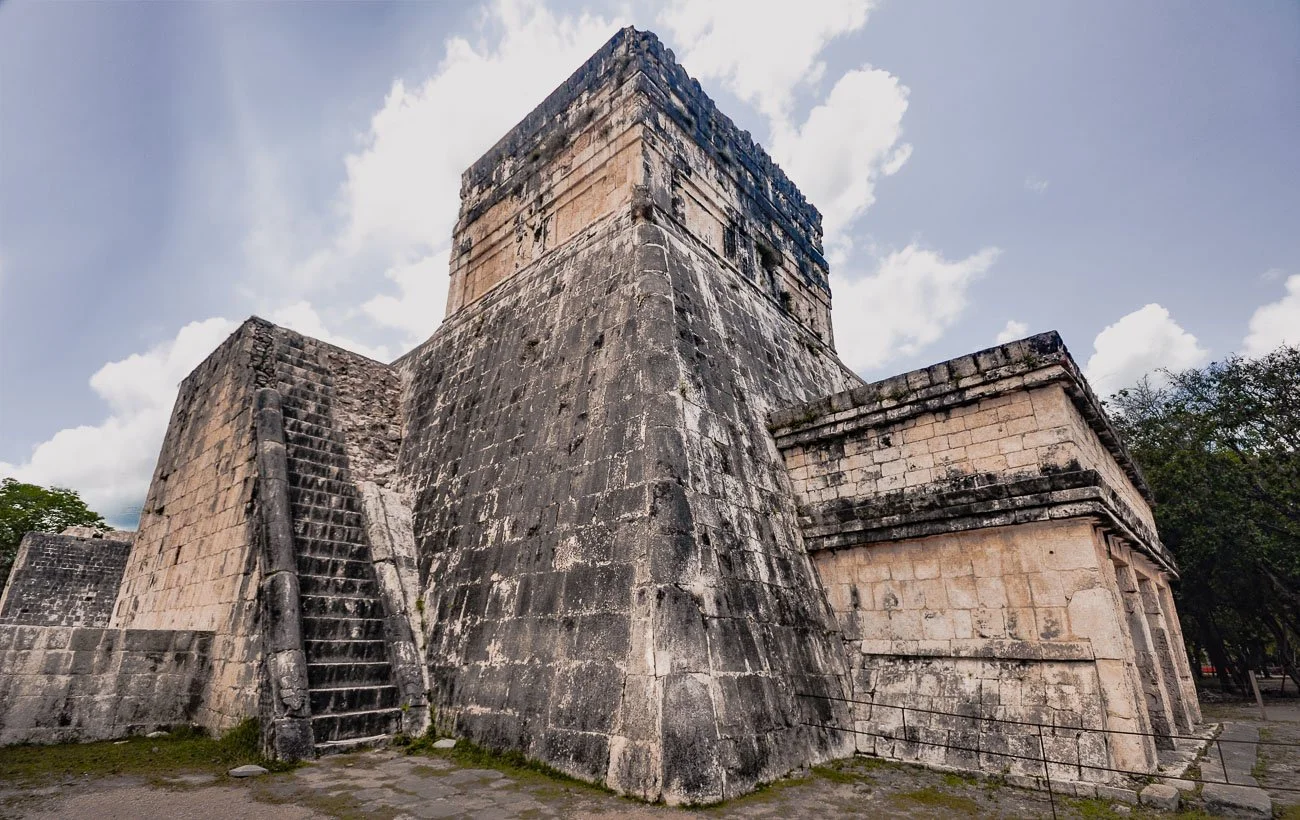
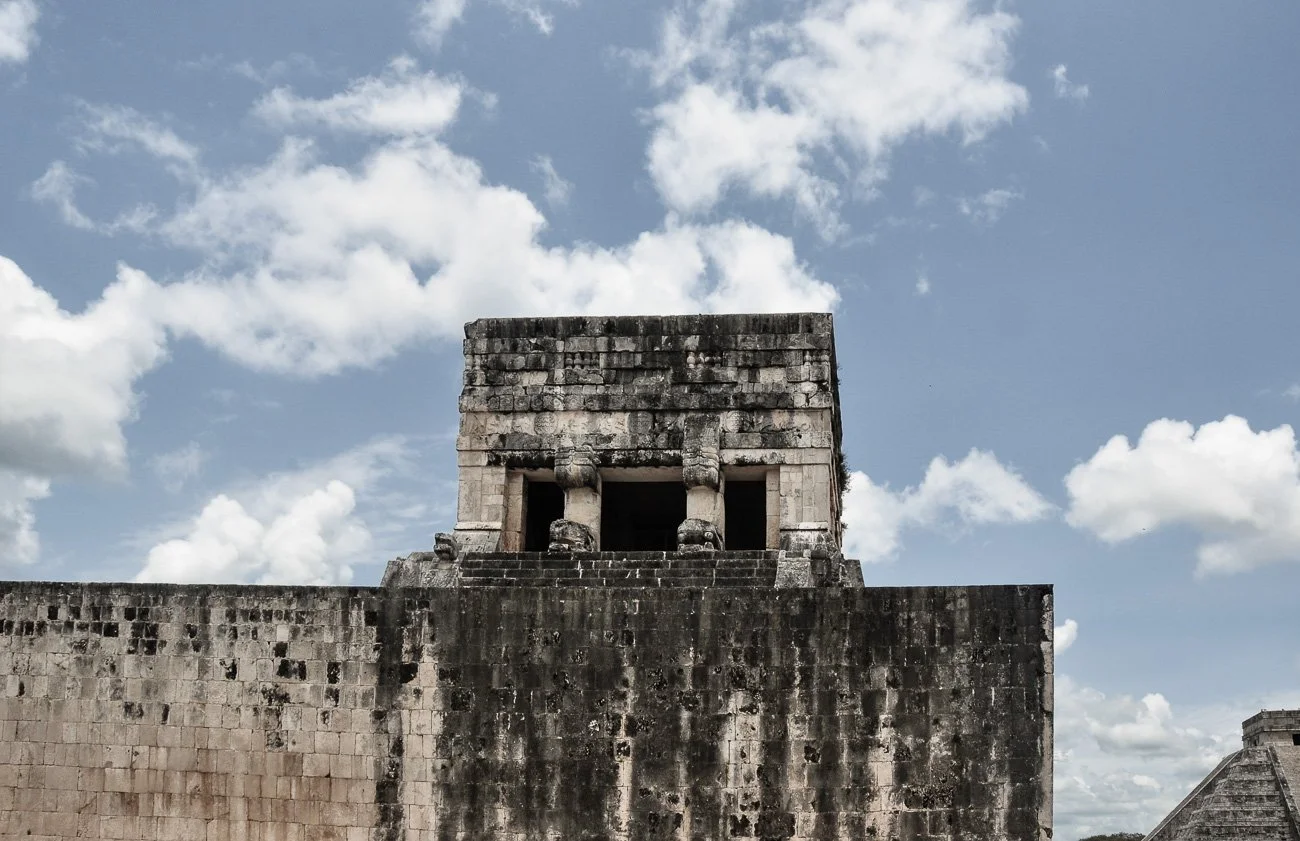
At the north end of the arena stands the Temple of the Bearded Man, while the Temple of the Jaguars overlooks the court from the eastern side.
Tlachtli —The Great Ball Court
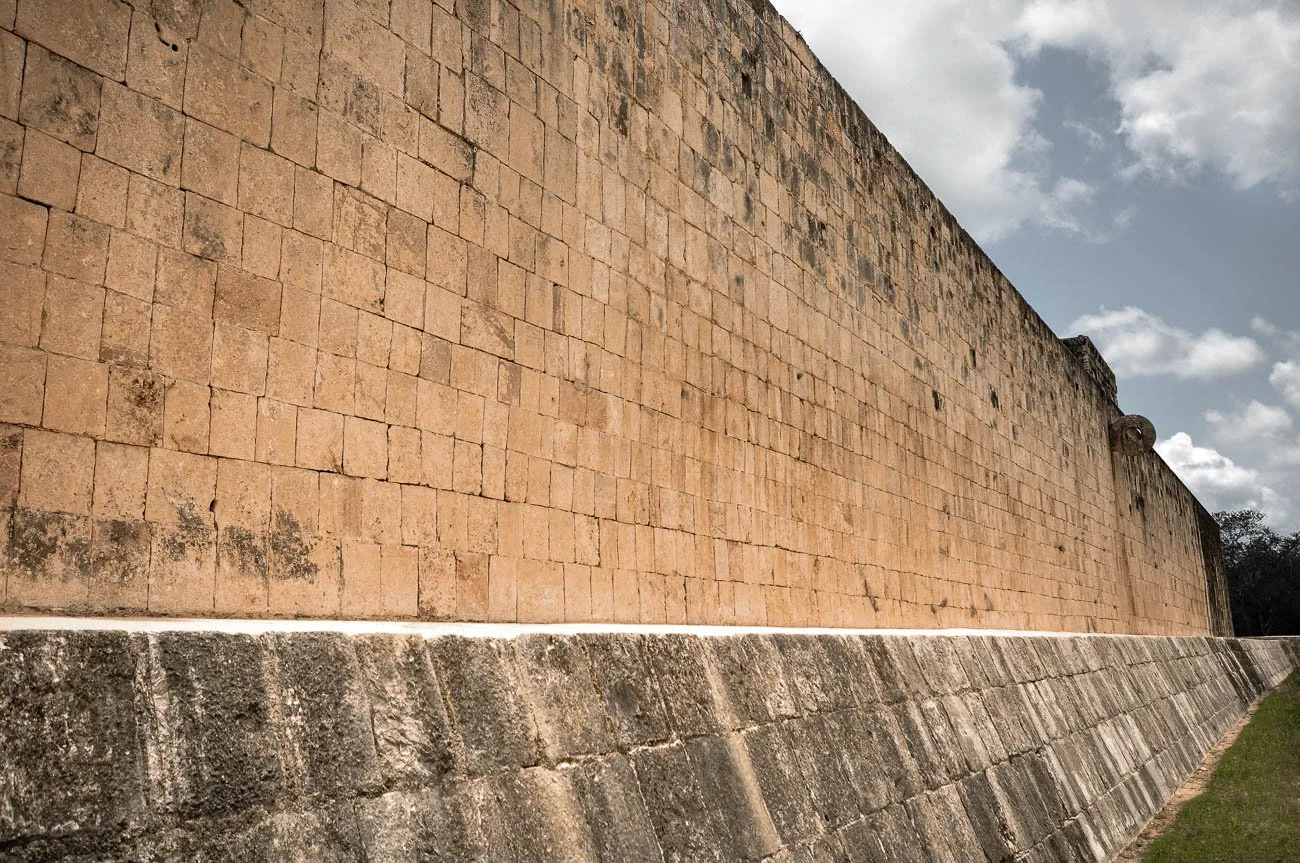
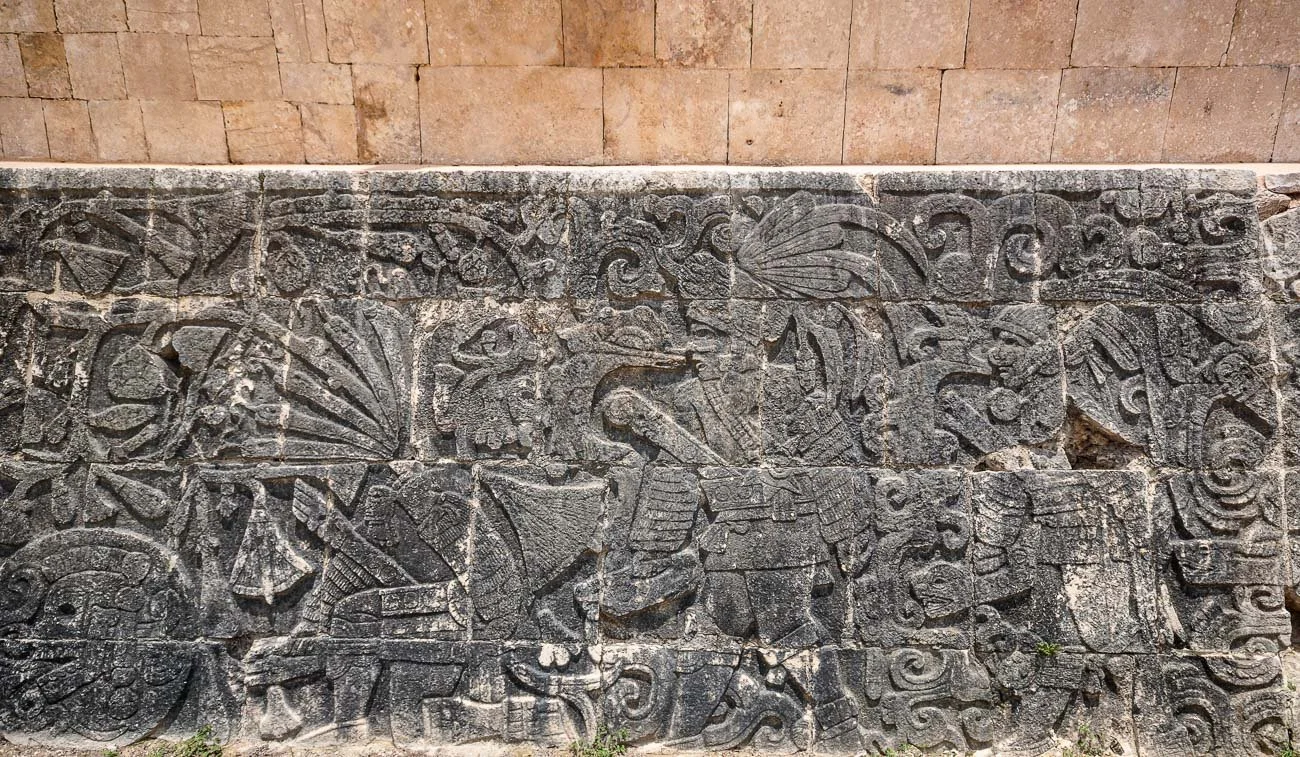
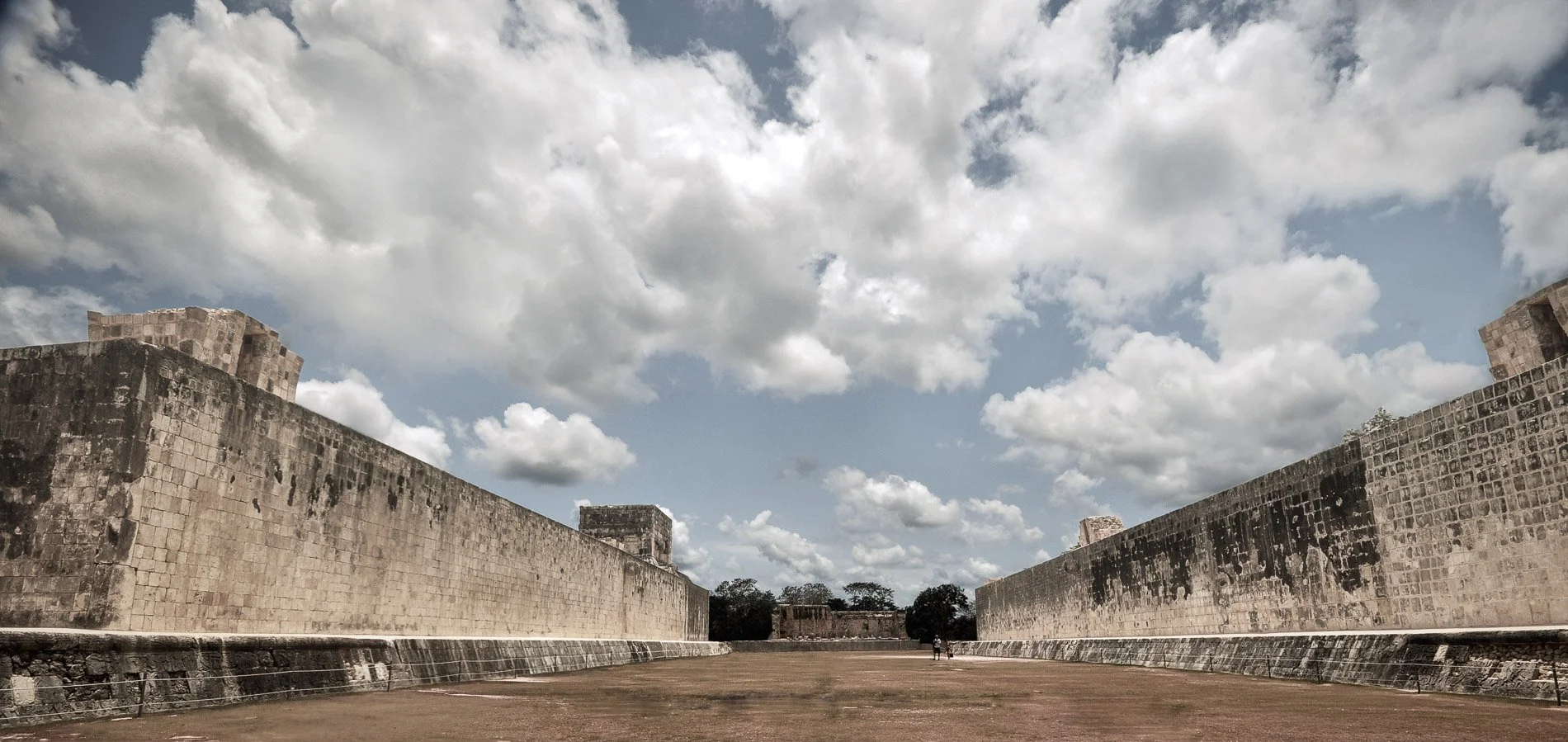
Chichén Itzá is home to the largest and best-preserved ball court from ancient Mesoamerican times. The arena stretches 168 metres long and 70 metres wide, framed by towering parallel walls. Above the walls are the viewing platforms at about eight metres high. Standing at one end, even a quiet voice can carry across the court with supernatural clarity; the acoustics are extraordinary.
Mounted high on the walls are the famous stone rings through which players attempted to pass the ball. The game played here, Ōllamaliztli, was a demanding, high-impact, full-contact team sport. The sport with the primary objective of maintaining continuous motion of a heavy rubber ball (ulli), which could weigh several kilograms. Players wore protective thick leather padding around the hips and thighs, and were forbidden from using their hands or feet to strike the ball
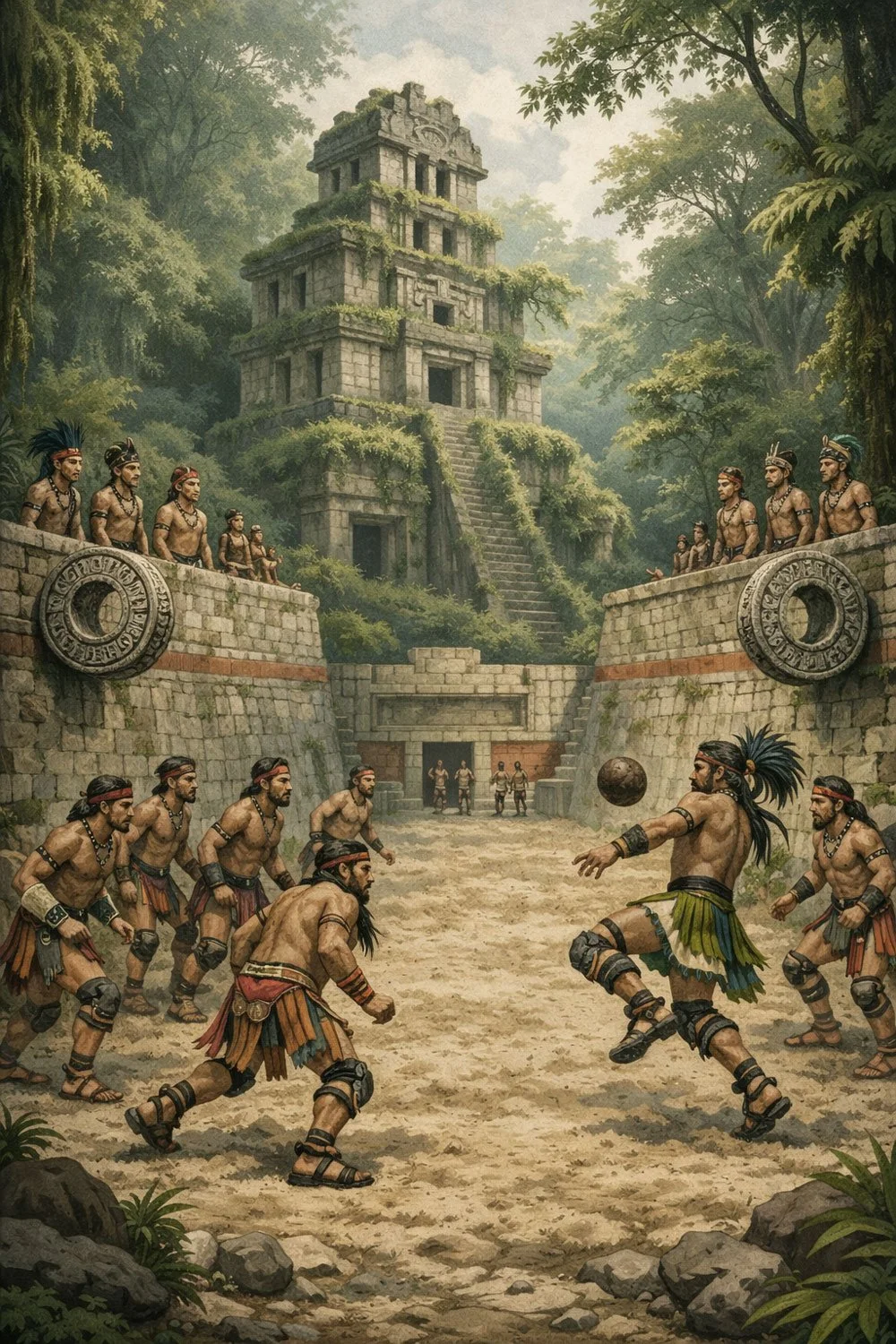
Ōllamaliztli


The Pyramid and Temple of Kukulcán
Temple of the Warriors
The Tzompantli and Temple of the Warriors
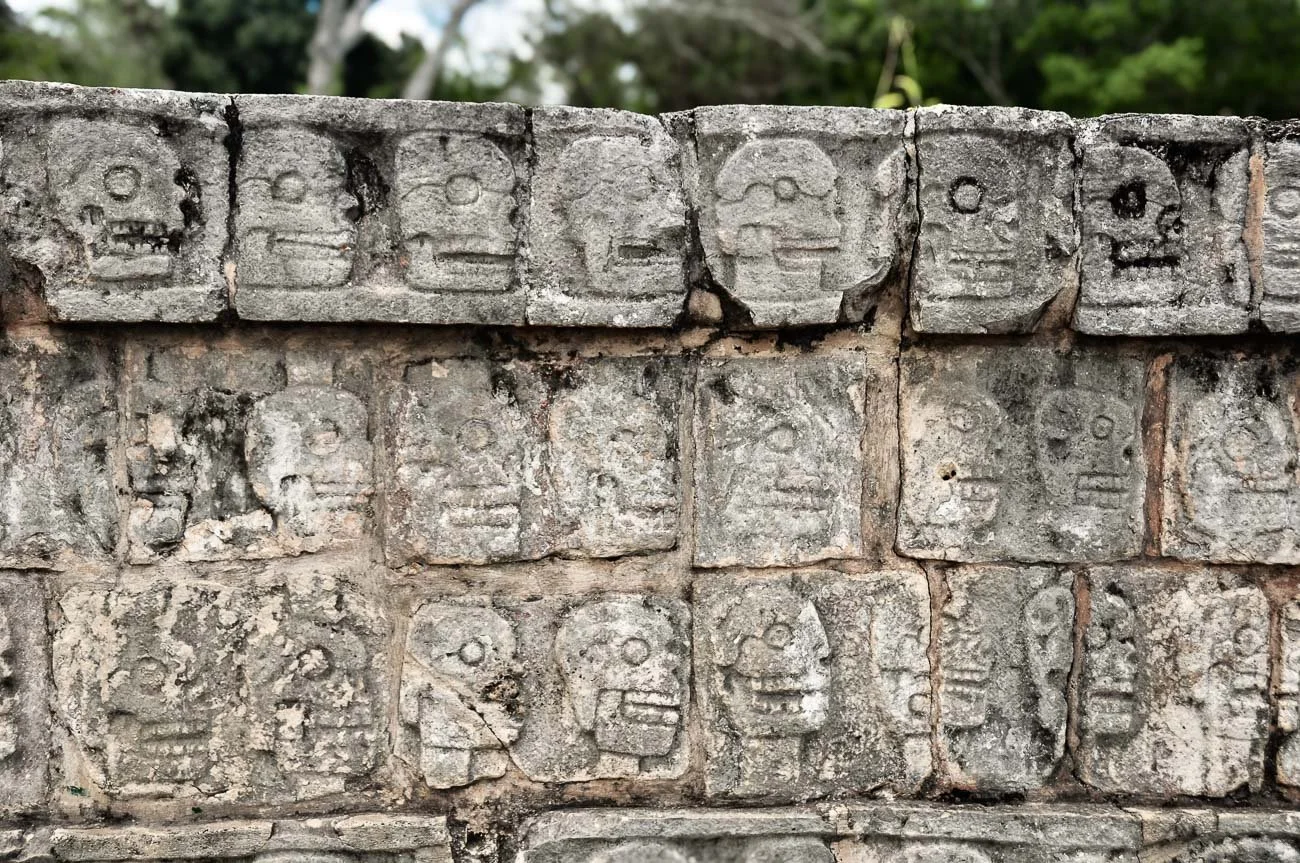
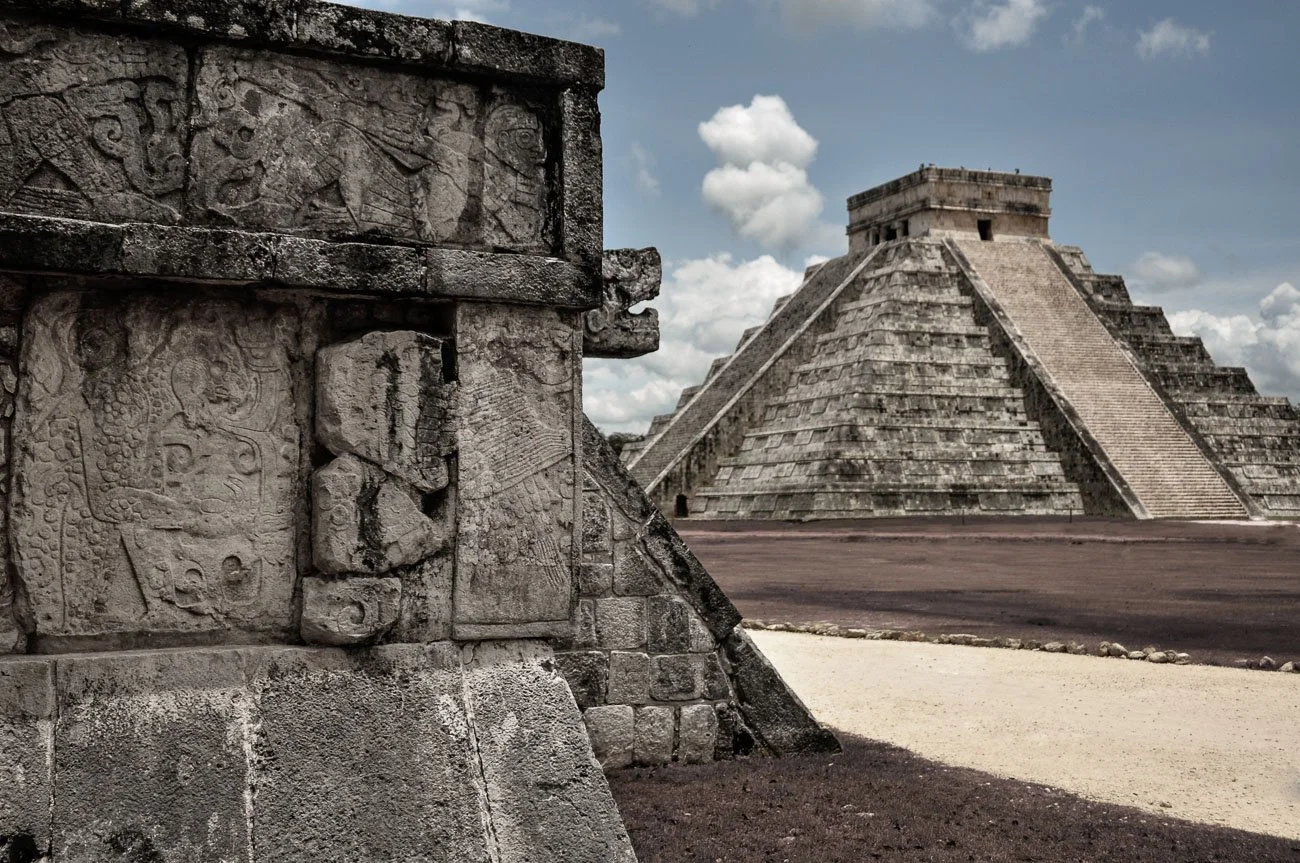
Near the Ball Court stands the Skull Platform (Plataforma de los Cráneos), a rectangular stone elevation with sides decorated with carved bas-reliefs depicting over 500 skulls arranged in horizontal rows. This platform once supported a Tzompantli, wooden racks used to display the skulls of captives and sacrificial victims.
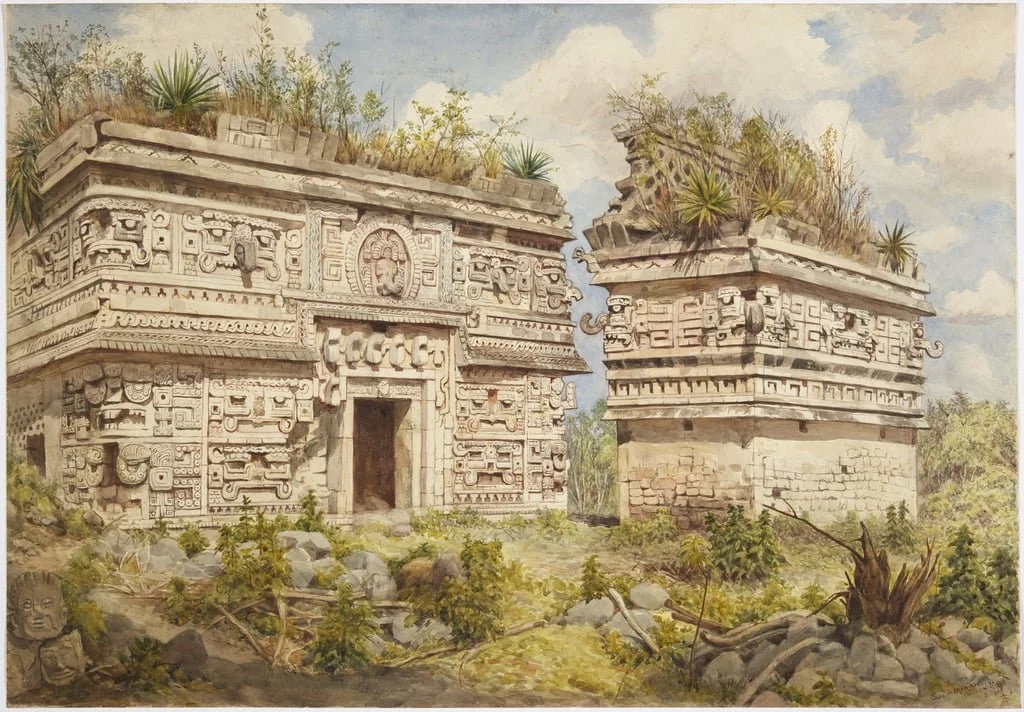
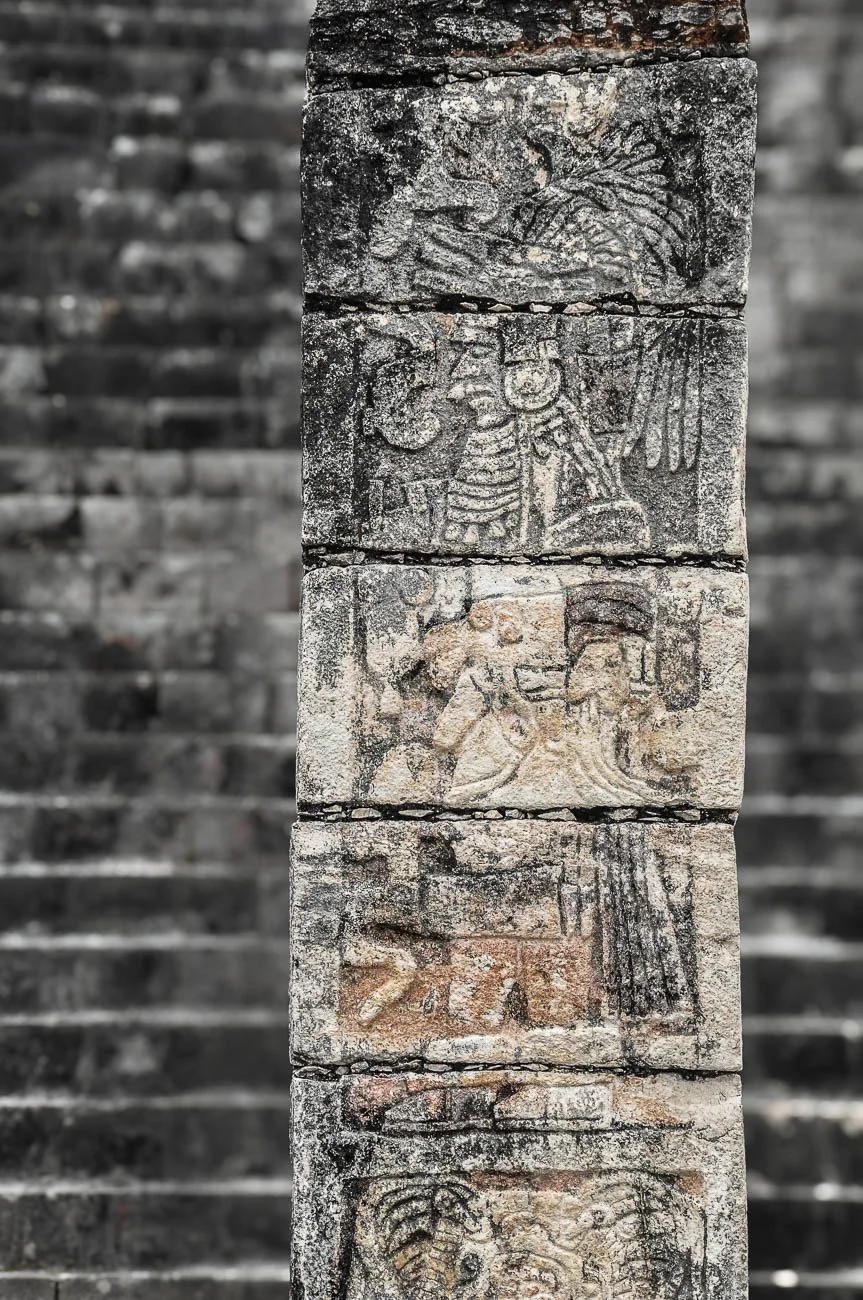
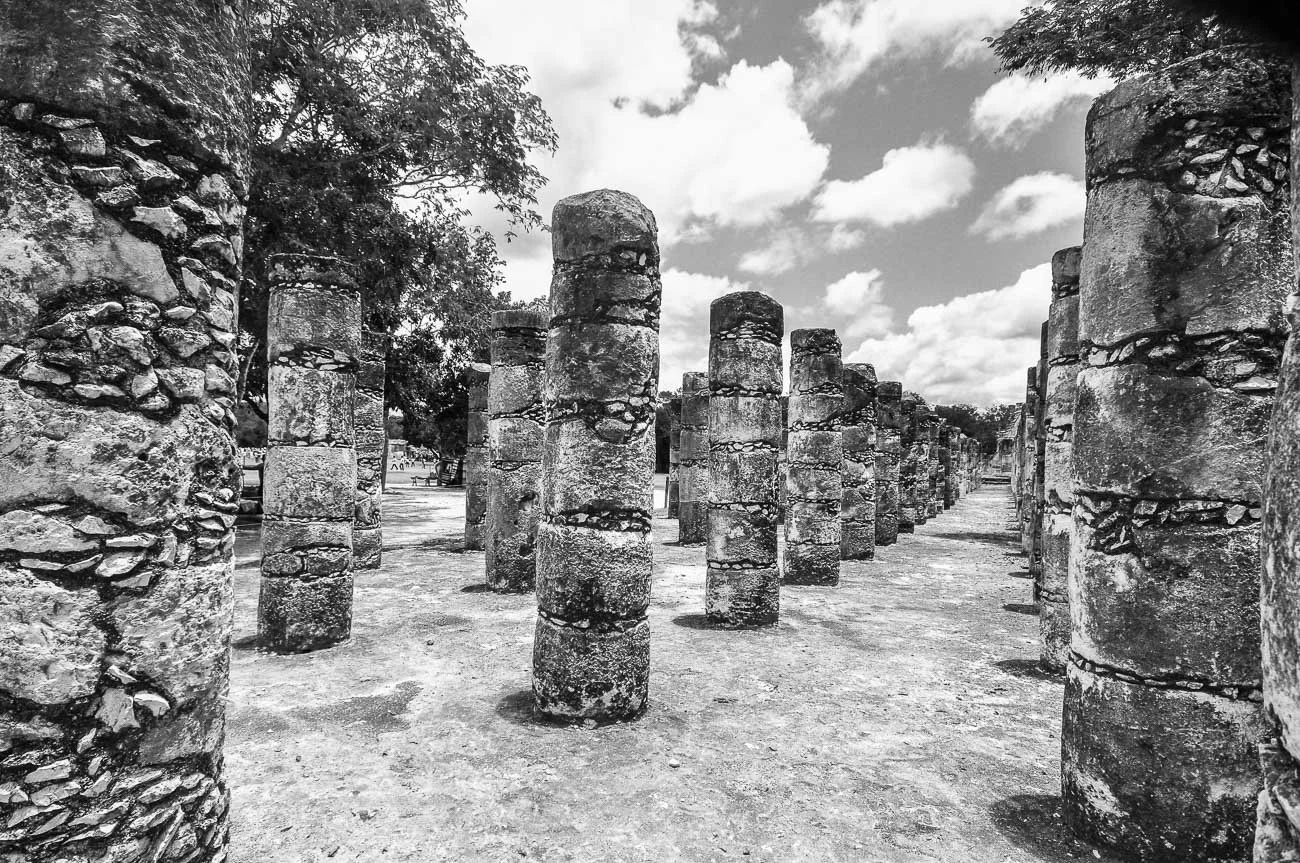
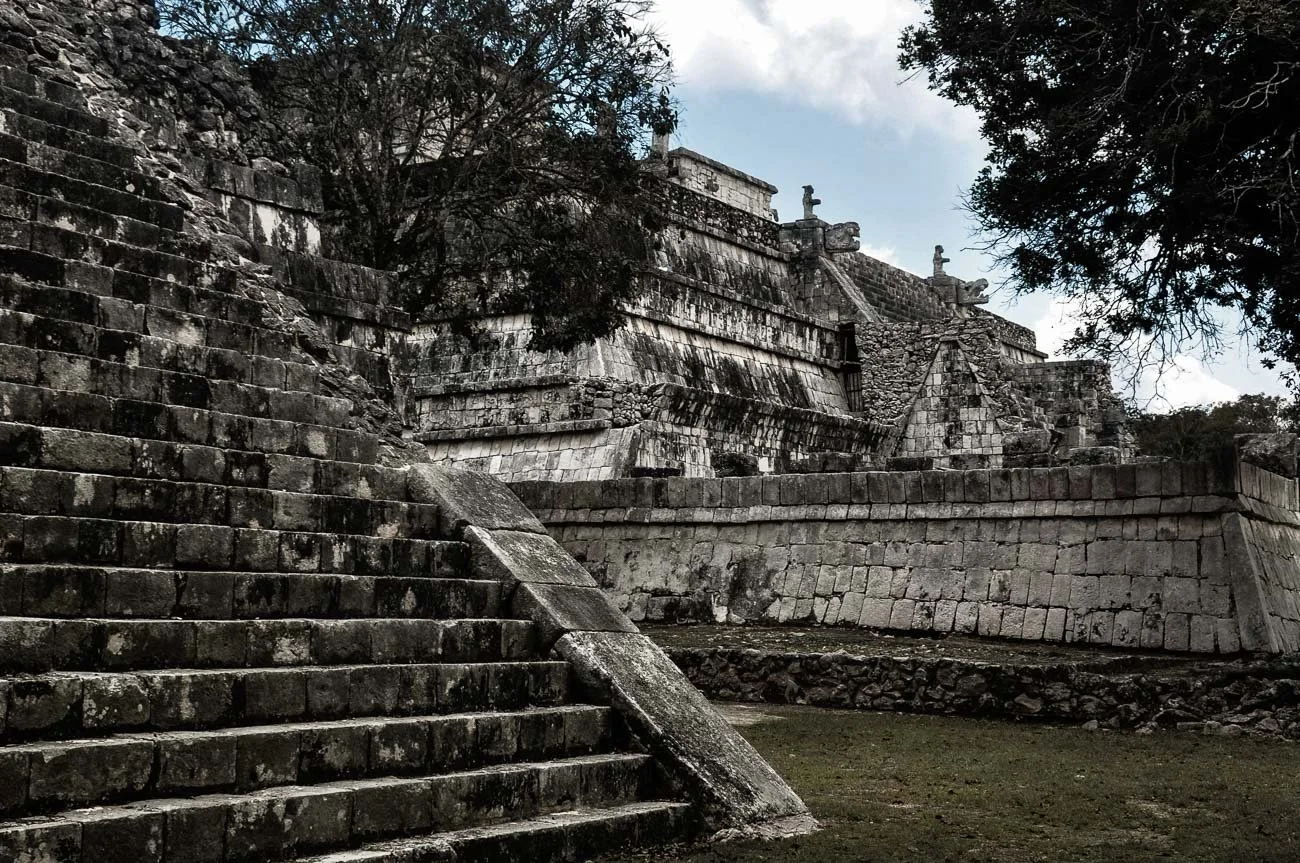
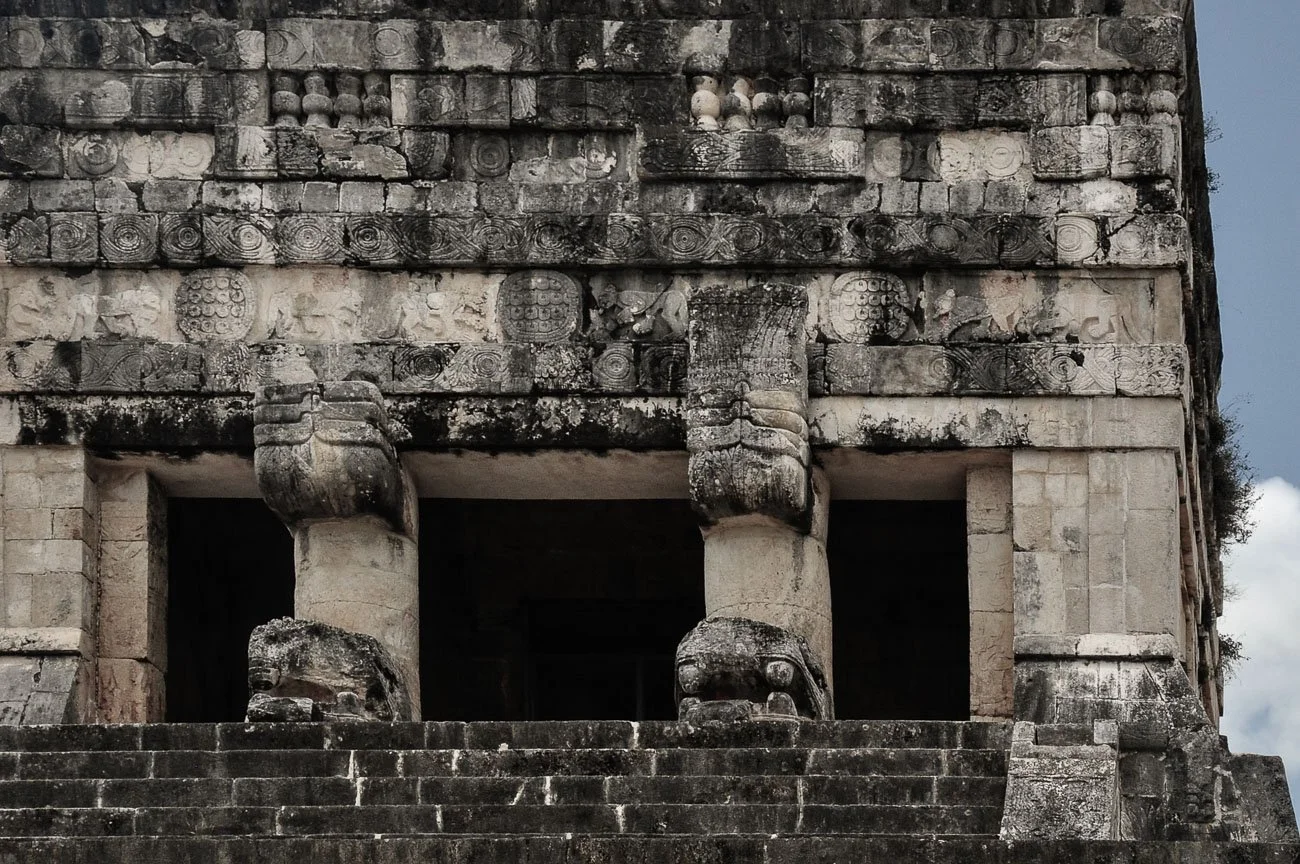
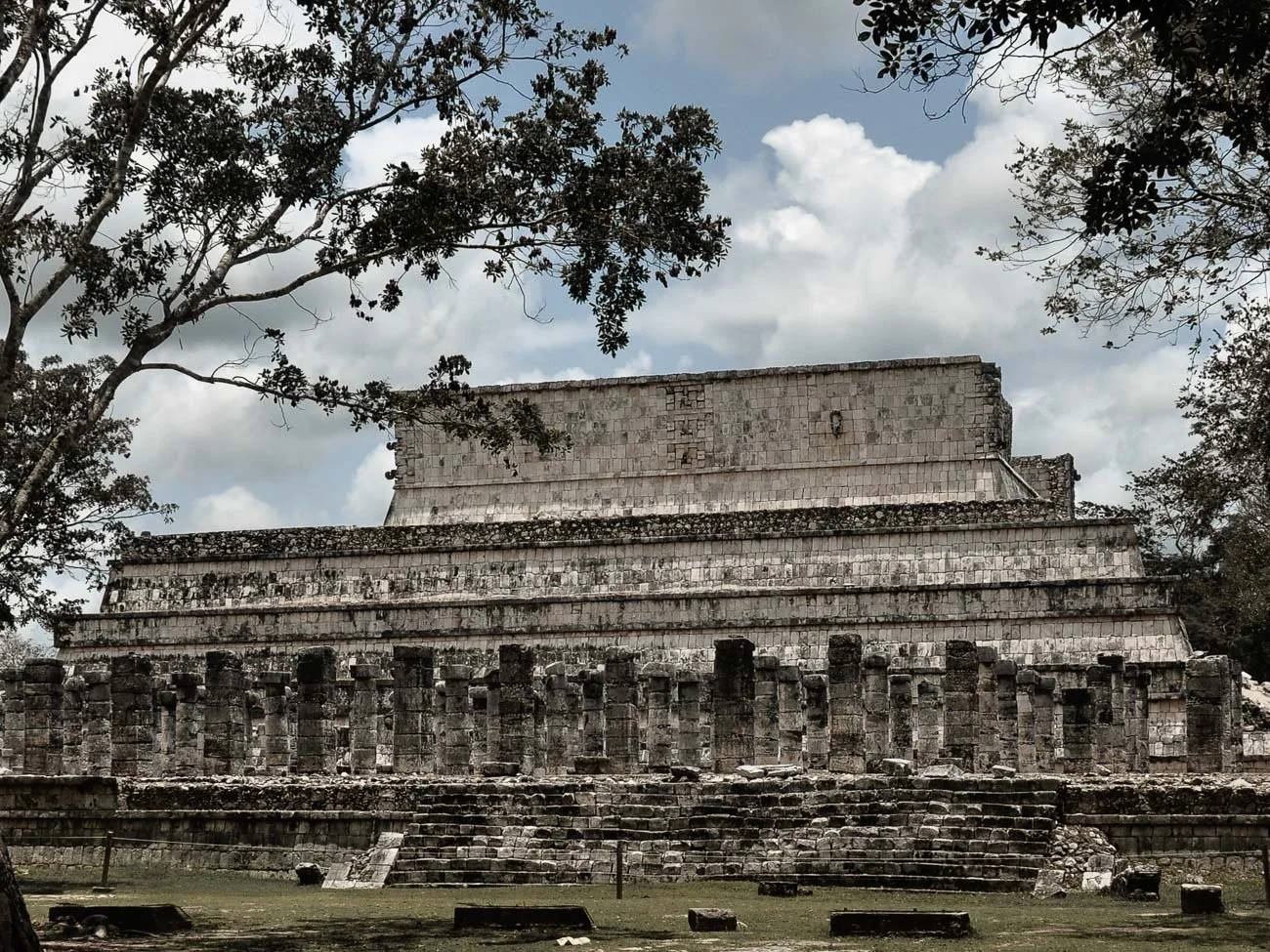
Nearby rises the Temple of the Warriors, a complex of structures that includes a prominent stepped pyramid, fronted by long rows of carved columns known as the Group of a Thousand Columns. These pillars probably supported a large roofed hall and are decorated with images of Toltec warriors.
Similar to Kukulcán, this temple is built upon an earlier structure, most likely the Temple of the Chac Mool. It is important to note that 'Chac Mool' is not an ancient name; rather, it was a designation introduced by the explorer Augustus Le Plongeon in 1875.
Visiting Chichén Itzá:
Arriving involves a somewhat confusing two-step ticket system: purchase entrance tickets at the booth beside the gate, then pay state taxes at a second booth about twenty metres ahead.
Hiring a good guide can enhance your experience. While certified guides are available at the entrance, some are excellent, while others rely on tired routines and questionable humour. Therefore, booking one in advance might be a wise move. Institutions like the Anthropology Museum in Mexico City can connect you with qualified experts. Alternatively, you can browse “Tours By Locals,” a website where local historians and archaeologists offer their services. Although these tours can be costly, they are generally worth the investment.
There is little shade across the site. Wear light airy clothing, comfortable shoes, and bring water, a hat and a fan.
Renting a car is affordable and offers the flexibility to explore the surroundings, such as the picturesque towns of Izamal and Valladolid, and grants the freedom to arrive early, avoiding the crowds of tour buses coming from Cancún and Playa del Carmen. The site is one of Mexico's most popular destinations, and by mid-morning, the crowds can be overwhelming. But even among the crowds, the city retains its charm. Stone pyramids still rise from the flat Yucatán plain, shadows slowly sliding across their terraces. The jungle waits patiently at the edges.
The Pyramid and Temple of Kukulcán
The Pyramid and Temple of Kukulcán
Ball Court

My Illustration of the Chichen Itza Complex
Chichen Itzá
+52 985 851 0137
Coordinates: 20.683180048819697, -88.5725149512291
www.chichenitza.com
