Bath, City of Romans, Georgians, and Golden Stone
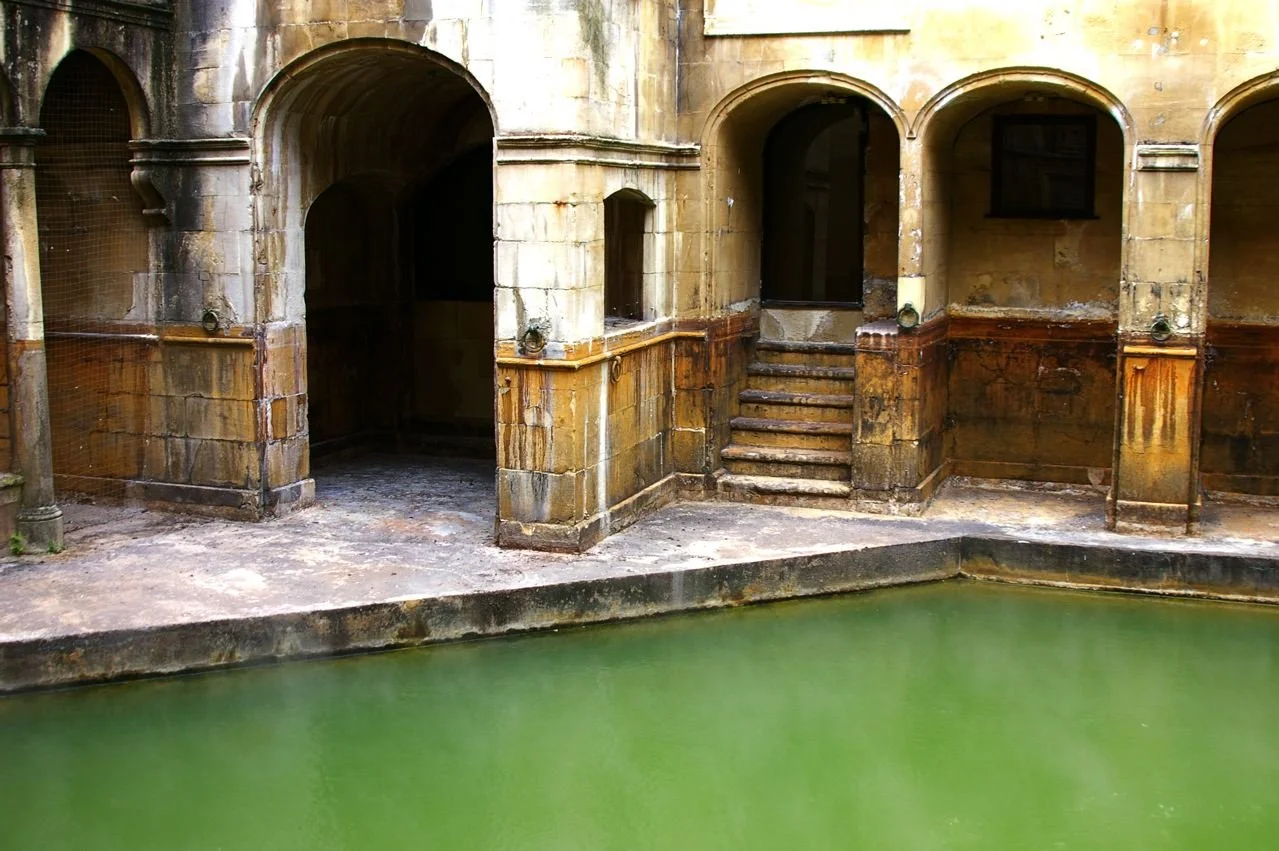
In South West England, there is a city that is too pretty for words, shaped by heat, geometry, and light. Its story begins in the first century AD, when the Romans founded Aquae Sulis around its natural hot springs.
Its story begins in the first century AD, when the Romans founded Aquae Sulis around its natural hot springs. It became renowned for its healing springs, and from that legacy, the city took its name. The city we see today took form much later, in the eighteenth century, when Georgian society adopted the city as its preferred stage.
Architecture became the language of ambition. The guiding minds were John Wood the Elder and his son John Wood the Younger, whose interpretation of Italian Renaissance architect Andrea Palladio (1508-1580)’s concept of picturesque aestheticism, for creating a harmonious urban landscape, produced a city of remarkable coherence. Roman remains of Aquae Sulis, the temple complex, and Georgian invention sit side by side.
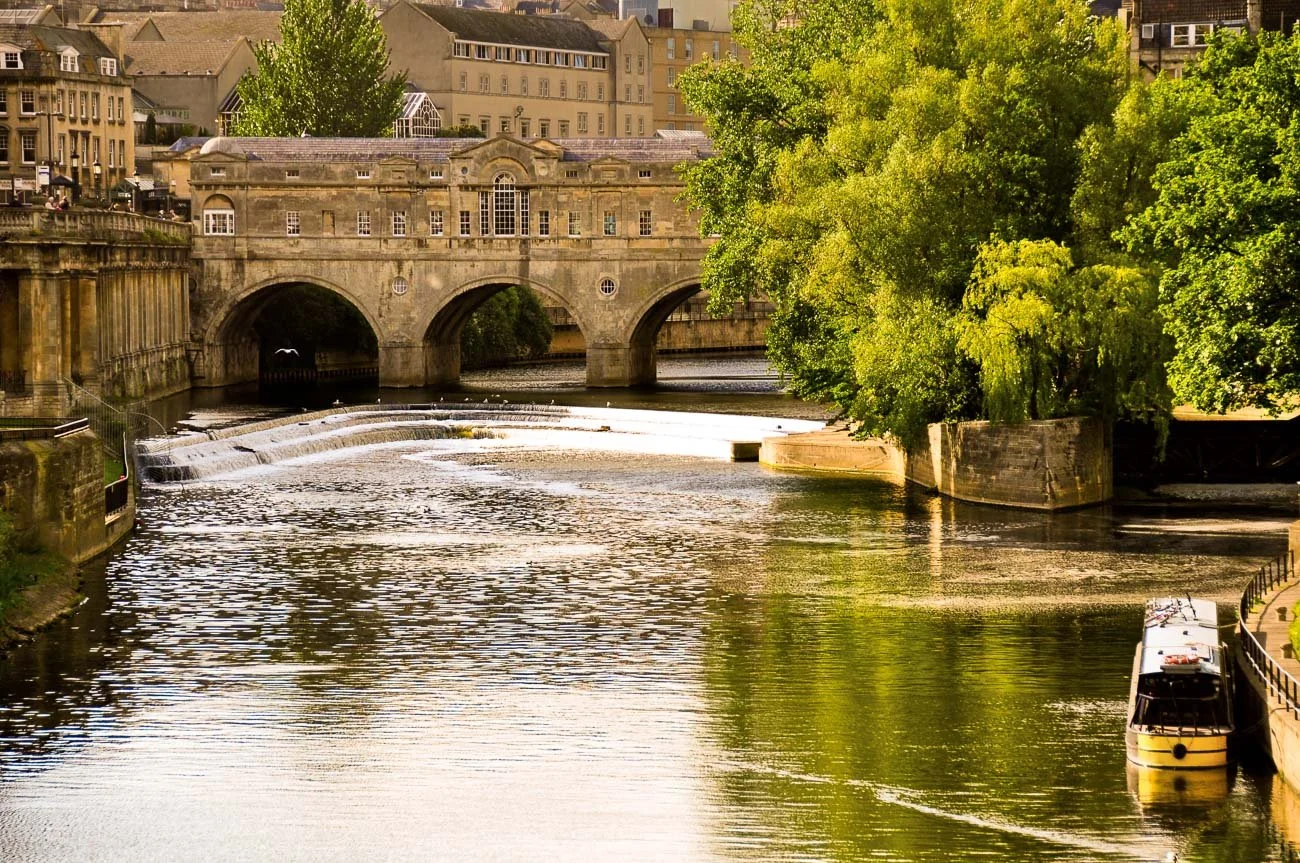
Other visionaries added their voices. Robert Adam, Thomas Baldwin, and John Palmer shaped crescents, bridges, and civic buildings, all crafted from the same honey-toned Bath stone. Collectively, they endowed Bath with its cohesive Georgian character, which ultimately earned the city UNESCO World Heritage status.
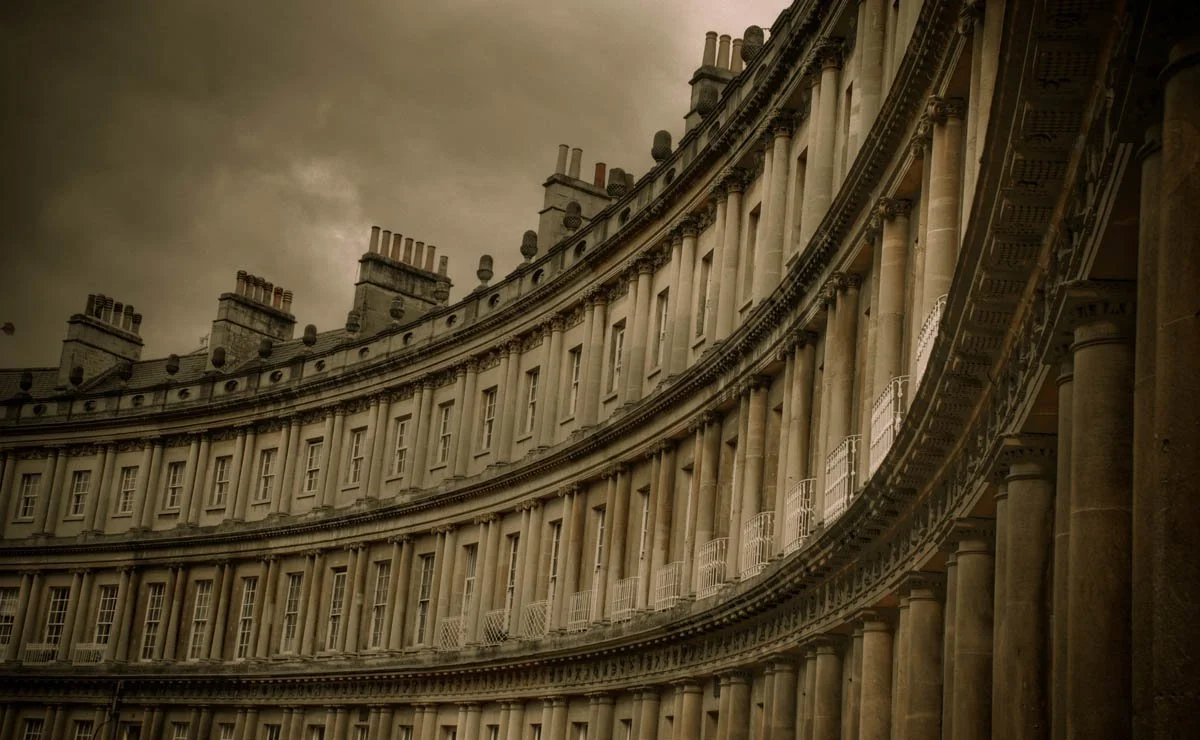
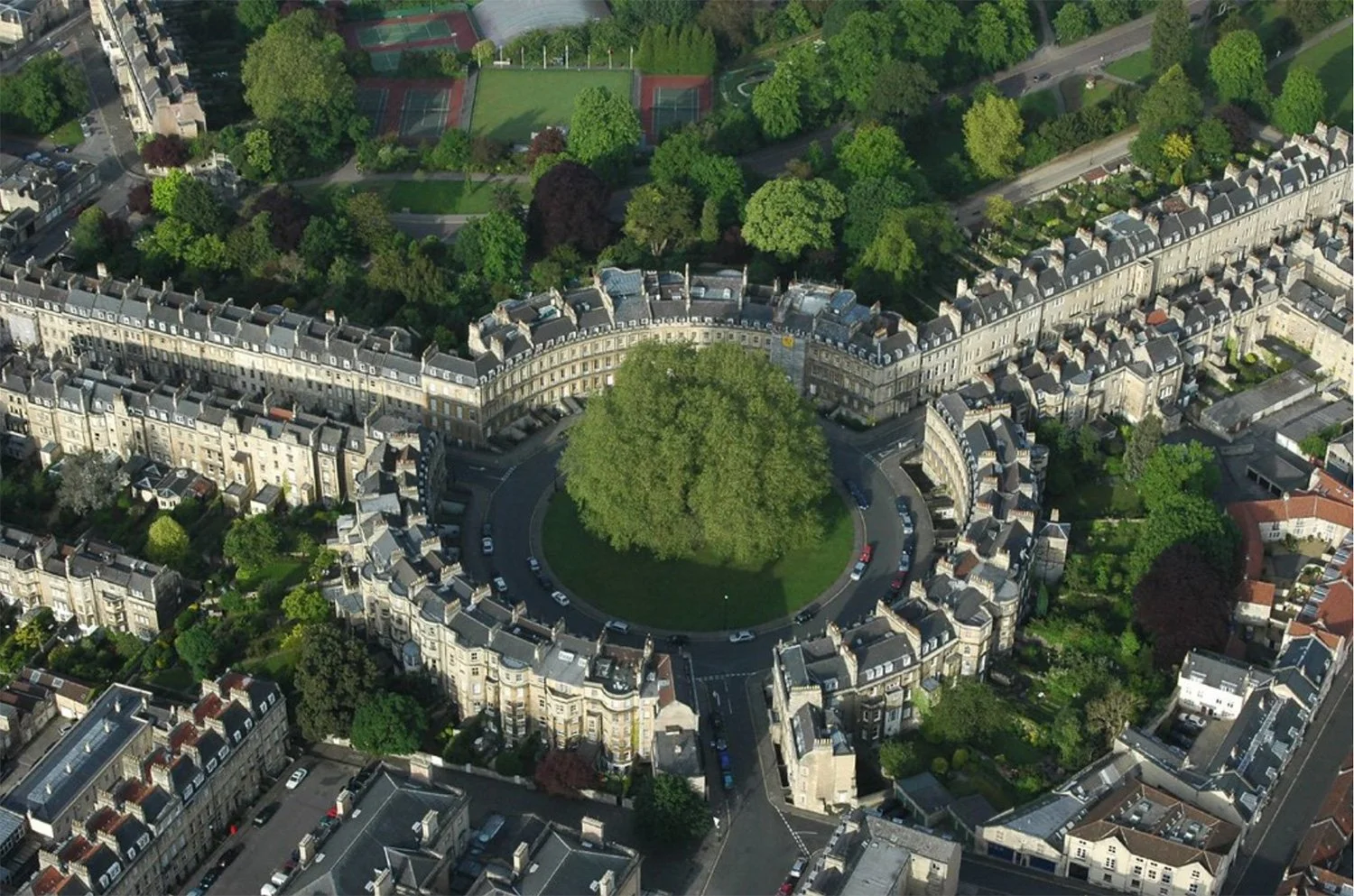
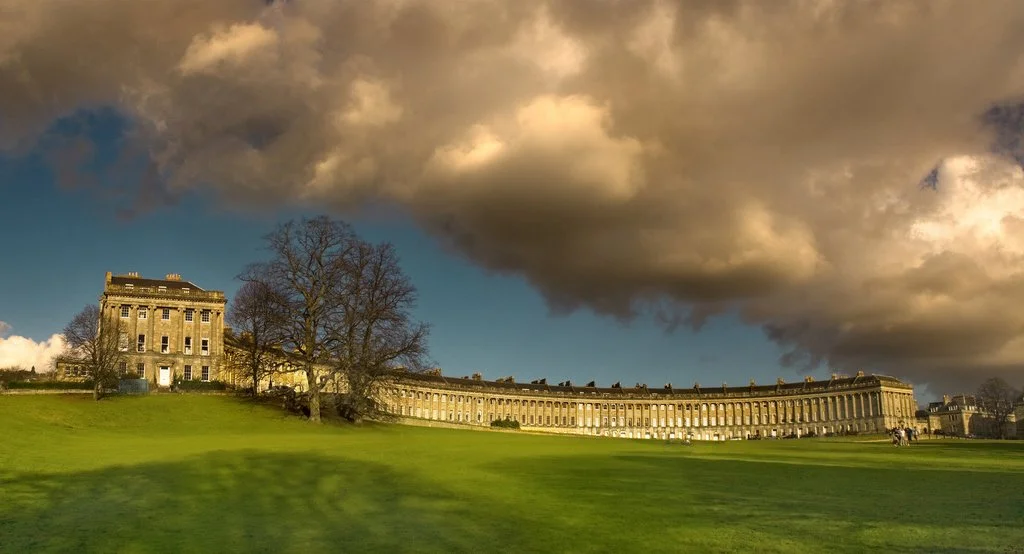
At the heart of Bath’s symbolism lies The Circus. Designed by John Wood the Elder and completed by his son between 1754 and 1768, it was conceived as a perfect circle, its proportions echoing the geometry of Stonehenge. Wood believed that a temple to the Sun and Moon had always existed on Lansdown Hill, and thus the Circus was to form. Its original cobbled surface was left bare and without grass; the Circus was intended as a dramatic architectural stage, with its connection to the open sky integral to its form, serving as a symbolic temple to the sun. Nearby, the Royal Crescent with its sweeping arc of honey-coloured stone that catches light with theatrical flair became his temple to the moon.
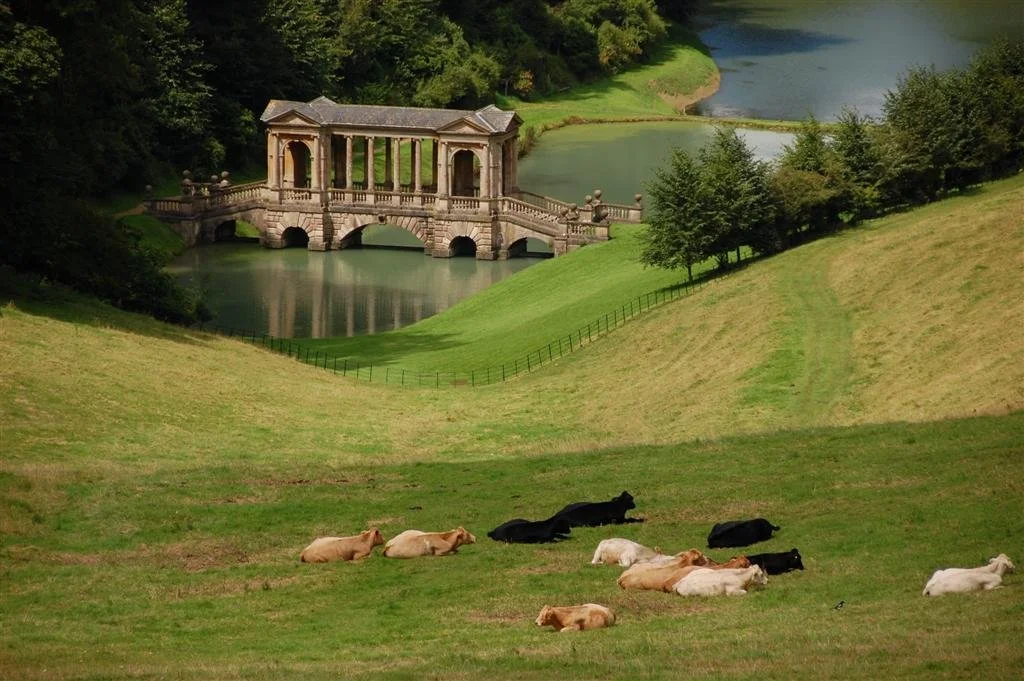
The Palladian bridge in the Prior Park Landscape Garden was constructed in 1755 and is one of only four in the world. It is situated in a sweeping valley with magnificent views of the city of Bath.
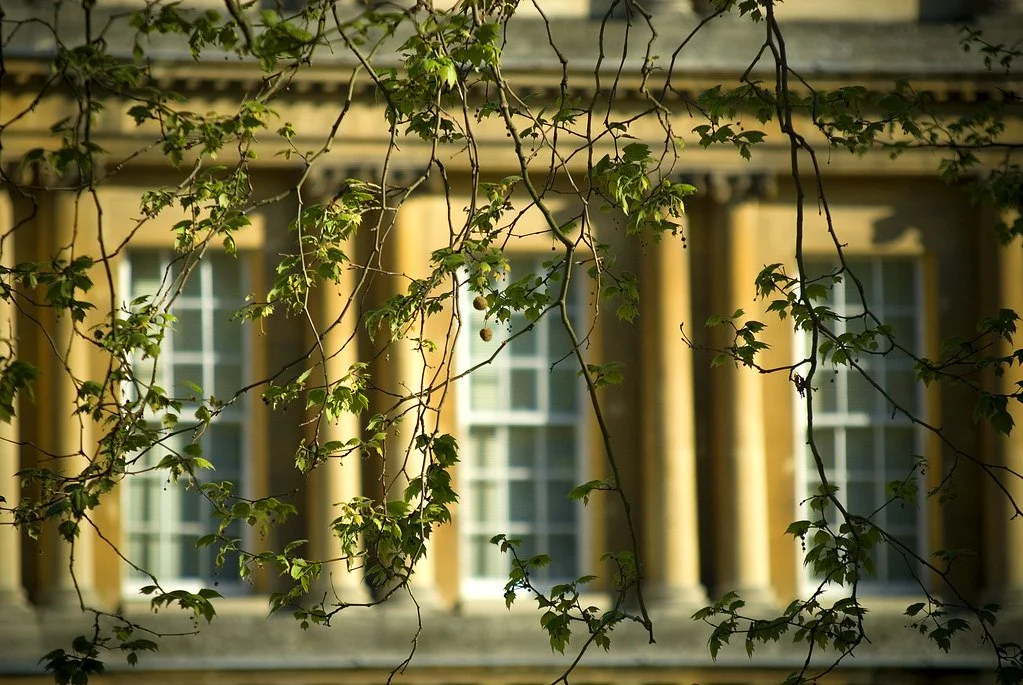
In Bath, light moves across stone, softens edges, and redraws façades hour by hour. Walk the city slowly, and the centuries align: Roman foundations support Georgian dreams, and golden stone holds them together.