
Tulum, a Walled Maya Port Above the Caribbean Sea
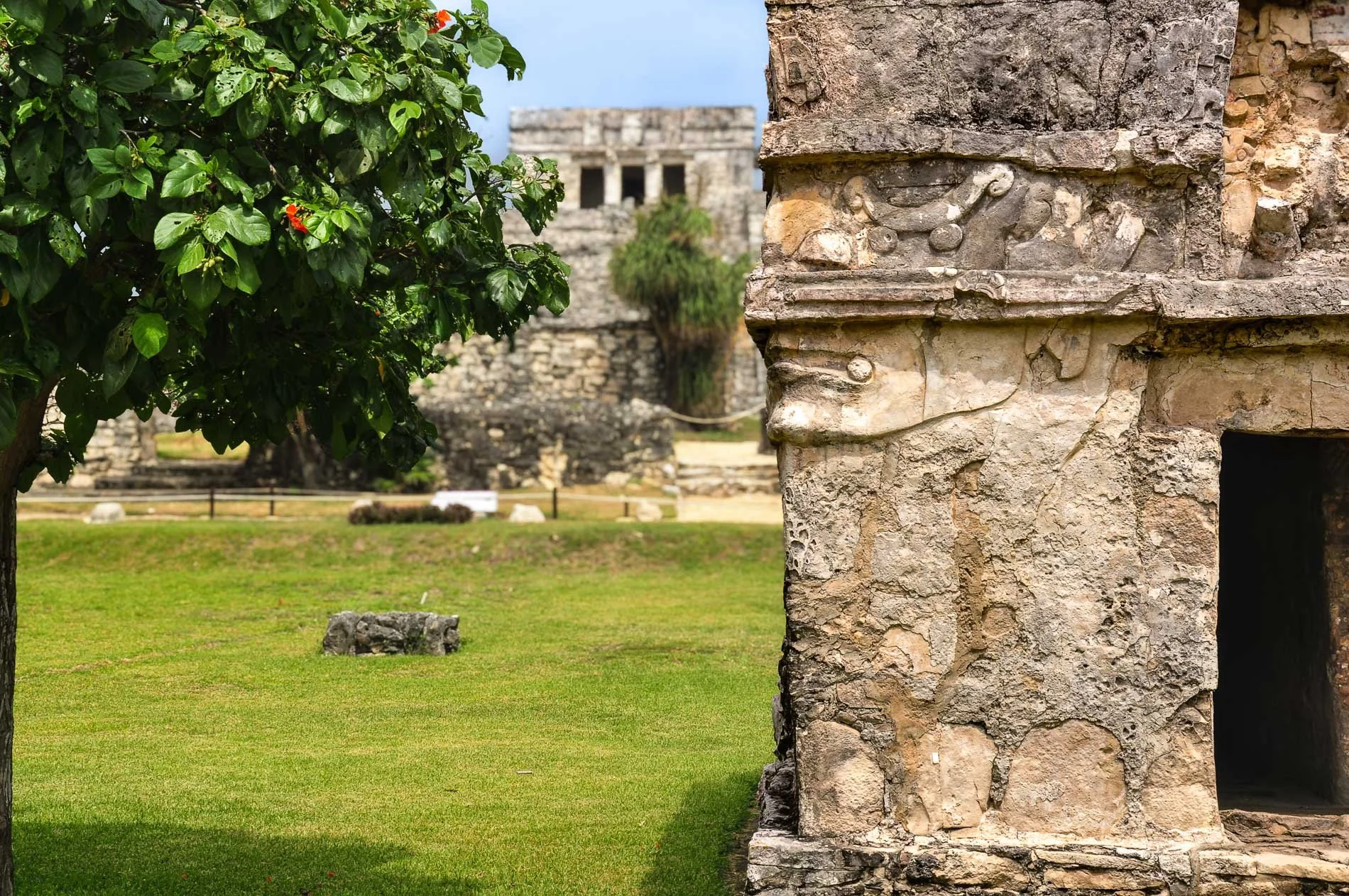
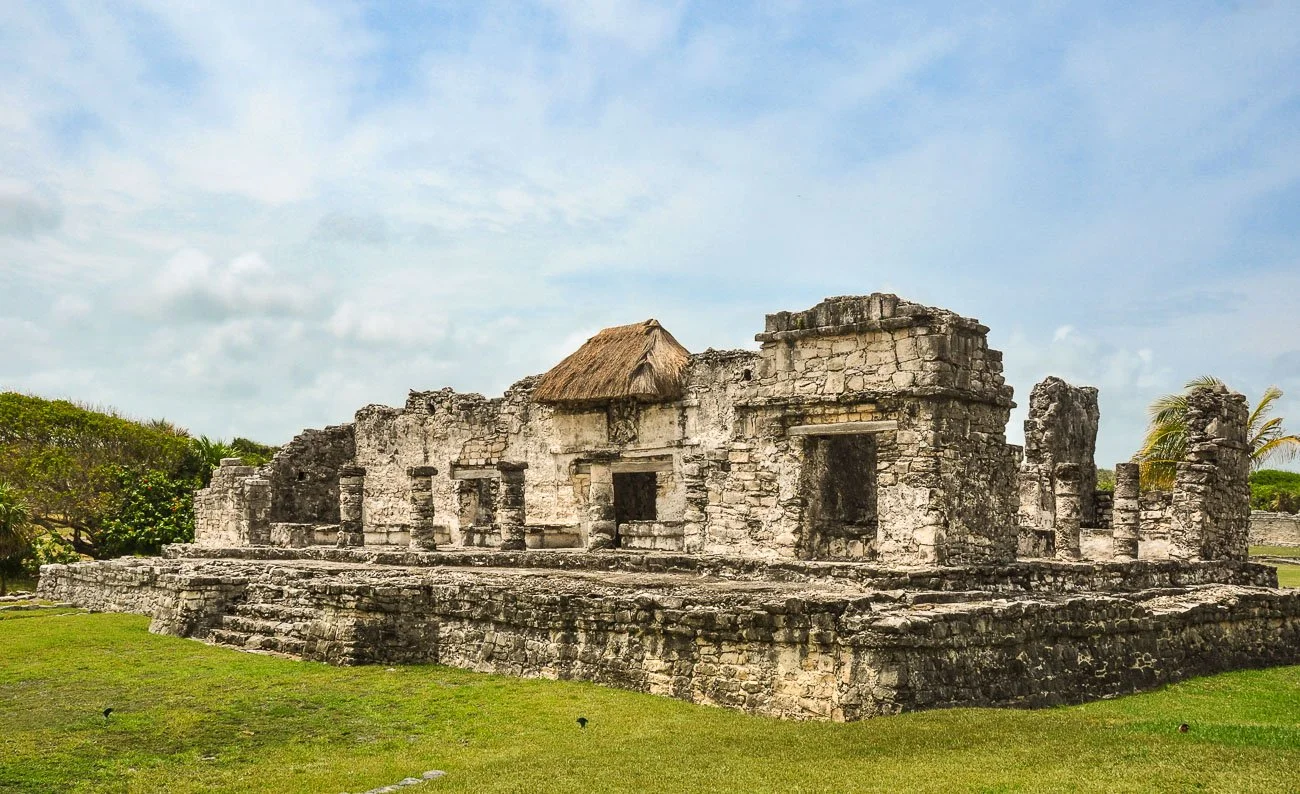
Temple of the Frescoes
Perched dramatically on cliffs overlooking the Caribbean, Tulum is the site of an ancient walled Maya city on the eastern edge of the Yucatán Peninsula. Some scholars believe it was originally called Zamá — the City of Dawn — a poetic reference to its eastward orientation and glowing sunrises. The name Tulum was later given in the mid-19th century by explorers John Lloyd Stephens and Frederick Catherwood, who rediscovered the overgrown site in 1841, surveyed it, and sketched the main structures, publishing the first detailed account of Tulum in Incidents of Travel in Yucatan.
Its setting is both strategic and beautiful. On one side, twelve-metre cliffs descend to the sea; on the landward side, a 784-metre defensive wall with watchtowers once protected the city. Inside this enclosure, brightly coloured buildings in red, blue, and green stood; traces of the pigments are still visible if you look closely.
Archaeological evidence indicates the site was inhabited from the 6th century AD. It also served as a spiritual centre and a place of worship dedicated to the luubul k’uh, a deity linked with diving or descending, a manifestation of Venus. This deity's upside-down figure is depicted through carvings and paintings on several structures.
Tulum developed relatively late in Maya history, reaching its peak between the 13th and 15th centuries, and is often regarded as one of the last great Maya cities. With an estimated population of 1,000–1,600 inhabitants, it served as a major port for inland Cobá, connecting maritime trade routes with the peninsula’s interior. Turquoise, obsidian and jade flowed through here, along with ideas, rituals and stories.
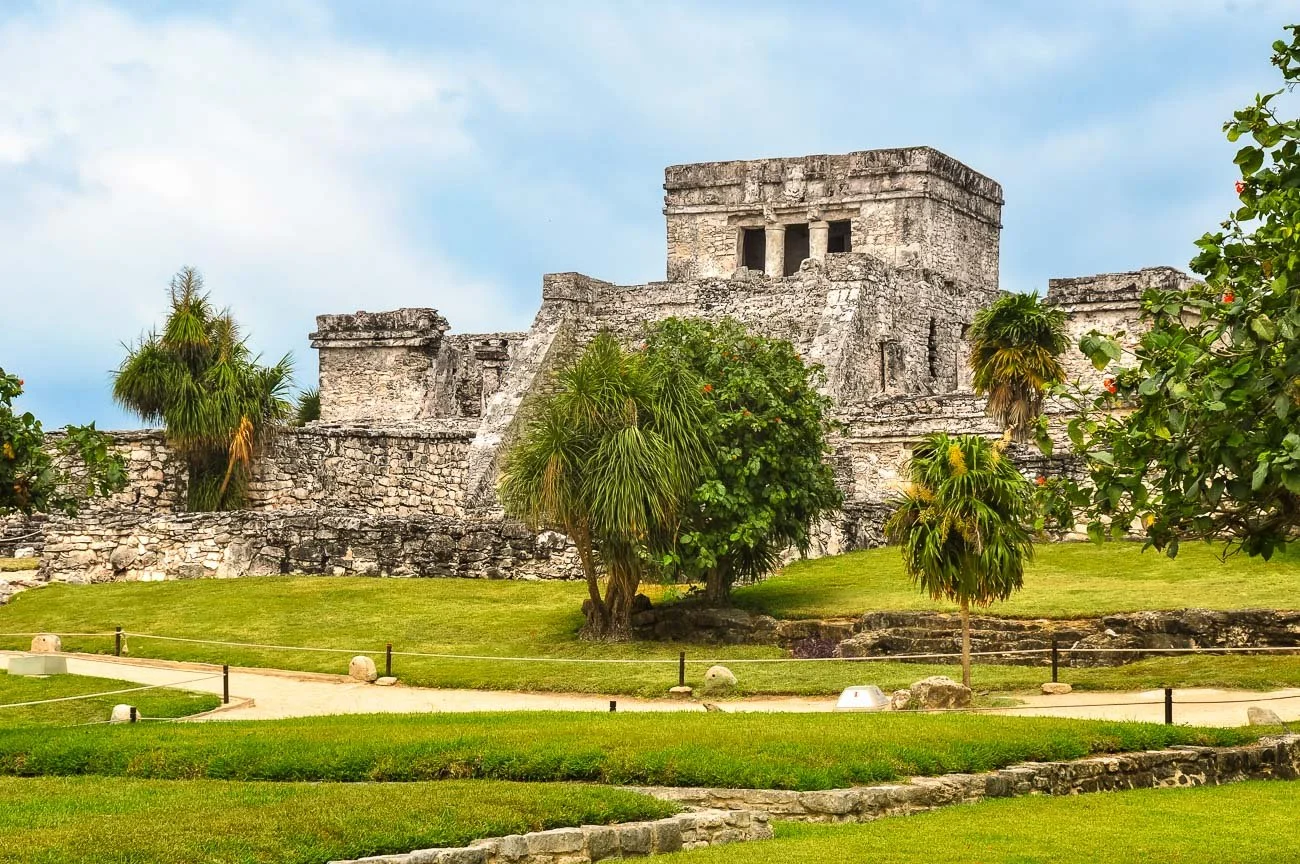
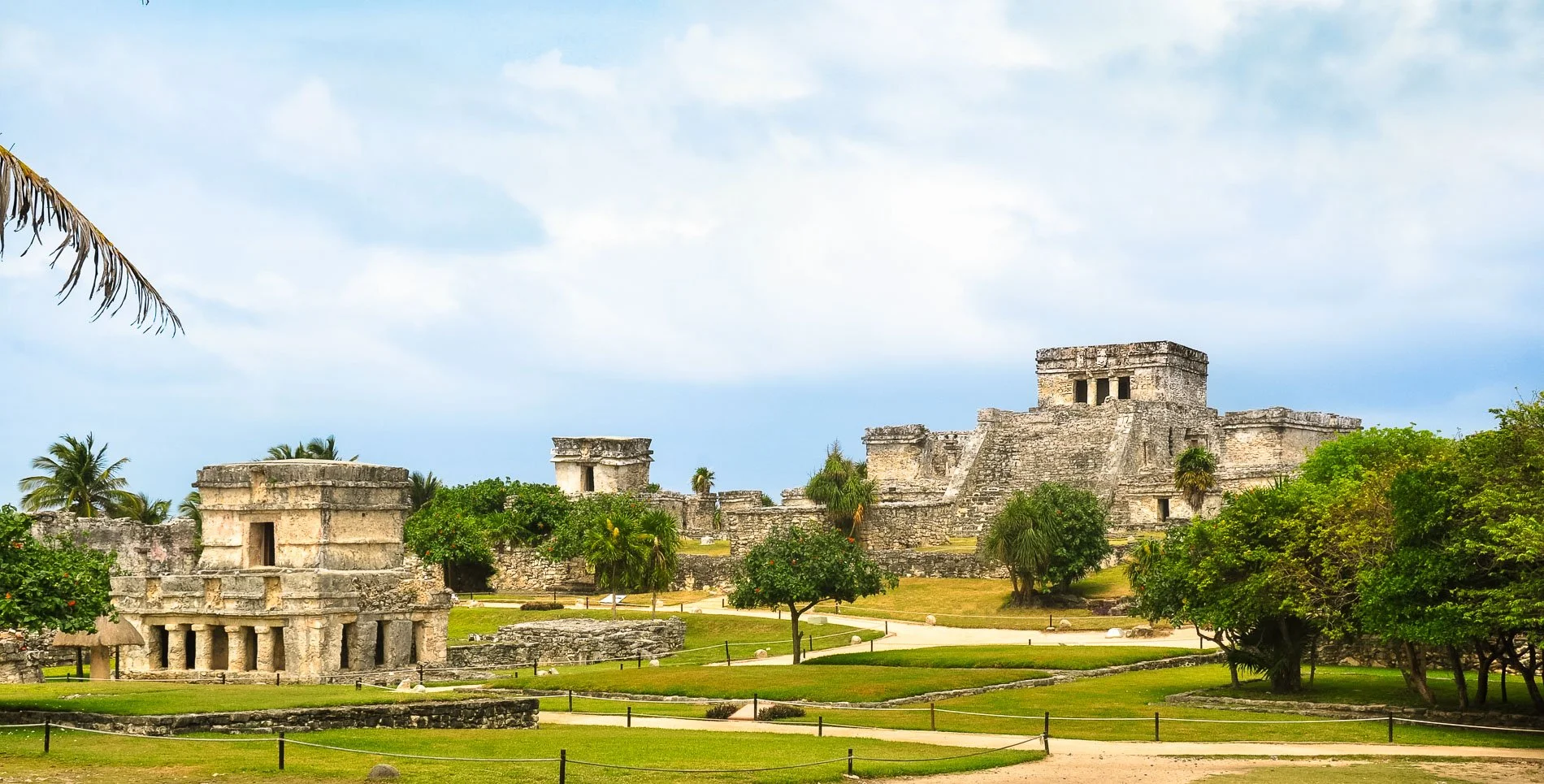
El Castillo
Unlike many Maya cities, Tulum remained inhabited into the early colonial period. Spanish accounts describe local communities still living among the buildings decades after the conquest. By the late 16th century, however, disease, conflict, and social upheaval led to its gradual abandonment, leaving the city to the iguanas and the sea breeze.
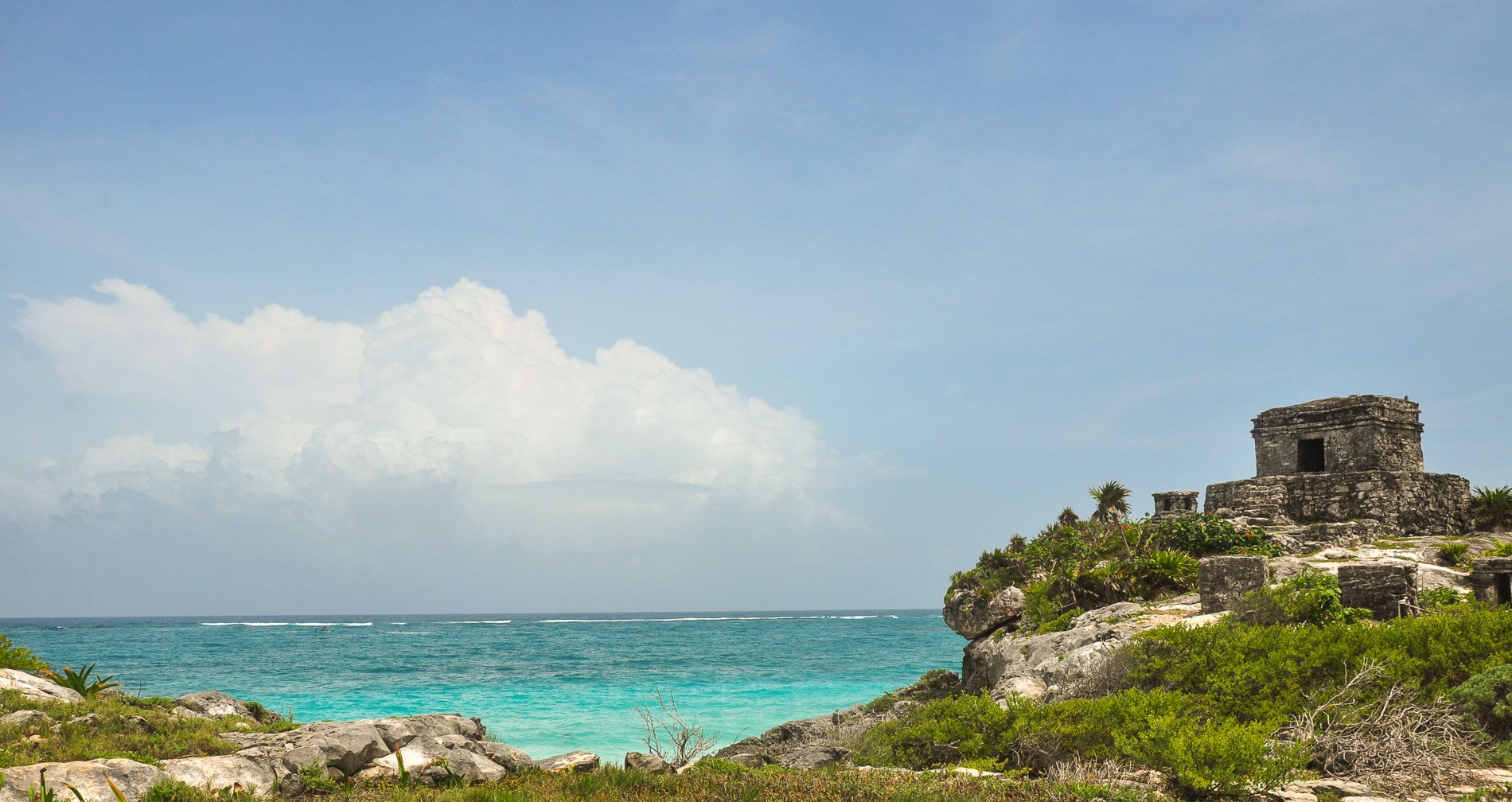
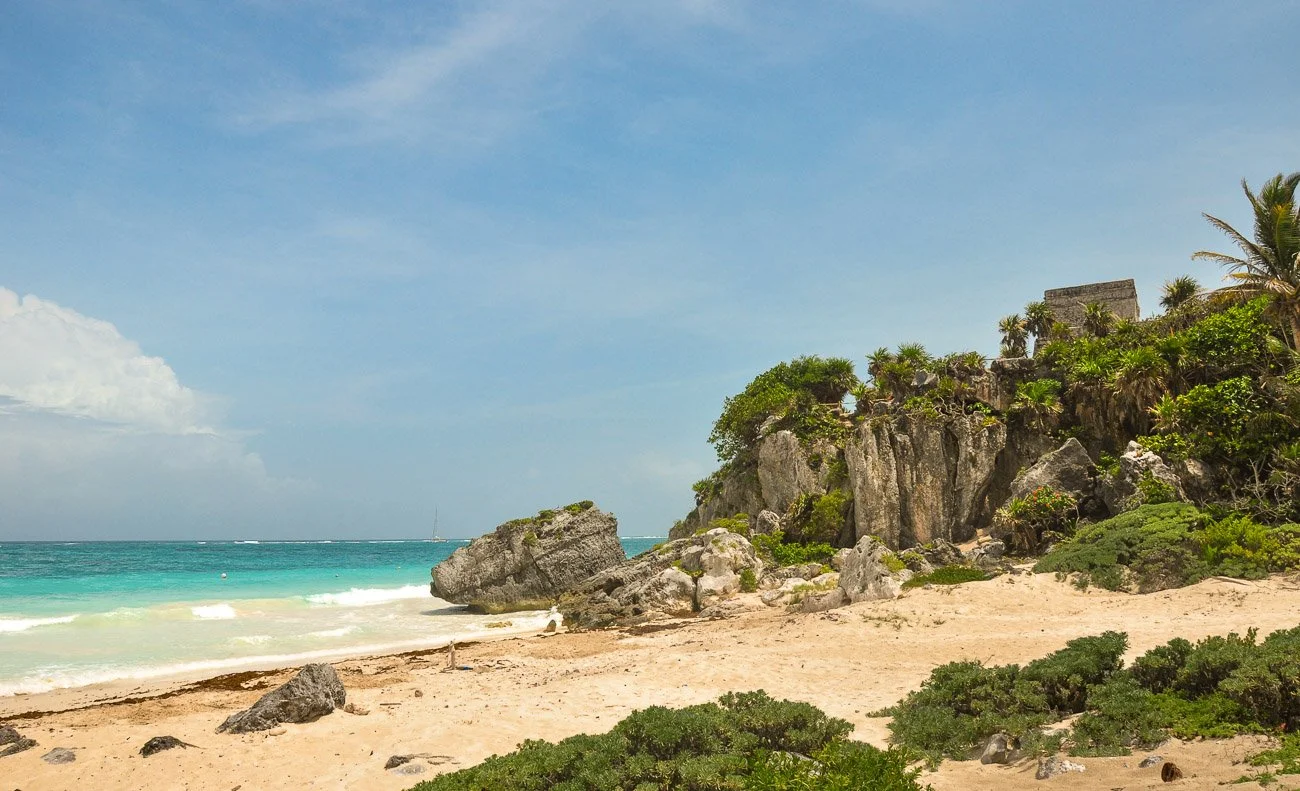
Today, Tulum is one of the rare archaeological sites that almost invites you to go for a swim. A small beach lies below the main temple platform, and the water is crystal clear and wonderfully refreshing after walking the ruins in the heat. The view back up to the cliff-top temples from the sea is unforgettable.
Bring a water-resistant bag for your valuables. Place it on one of the higher rocks to keep it above the splash zone while you swim — and where you can still keep an eye on it from the water.
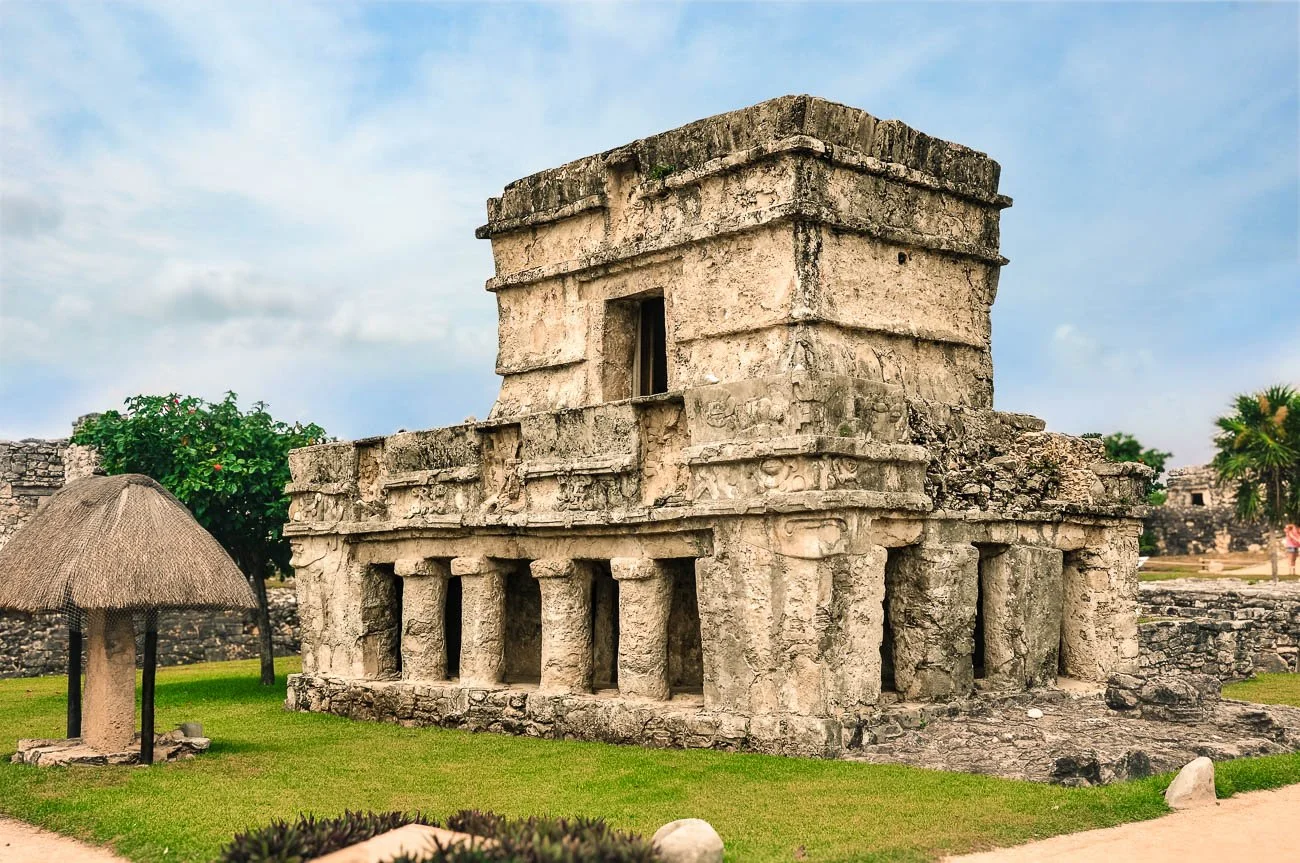
The ‘Temple of the Frescoes’ was used as an observatory, specifically for tracking movements of the sun
Getting There
One of the most magical ways to arrive is by catamaran, often departing from nearby beach hotels like Papaya Playa Project. Approaching the ruins from the sea and watching the walled city gradually emerge above the cliffs feels cinematic. The boat does not dock, so you swim ashore and walk up the path – part of the adventure.
Alternatively, hire a car and arrive early in the morning before the tour buses start to arrive. If you have the time, fold in a second stop at Cenote Dos Ojos, just up the coast. Don’t forget to bring swimwear, sarongs, and plenty of water. It makes for a near-perfect Yucatán day: ruins above the sea in the morning, underwater cathedral in the afternoon.
Major Structures
El Castillo
The main temple, called El Castillo by the Spanish, is the largest structure at the site and once functioned as both a ceremonial temple and a navigational marker for coastal traders.
Temple of the Frescoes
Decorated with images of deities and celestial motifs, this structure likely served as both a temple and an observatory. During solstices and equinoxes, sunlight enters the structure in carefully aligned patterns, reflecting the Maya civilisation's profound interest in cosmic cycles.
Tulum Zona Arqueologica
+52 983 837 2411
Quintana Roo, Tulum, Mexico
Coordinates: 20.21510633674273,-87.43128061294556
