
Class at Criollo Oaxaca, Vol. III — The Language of Tortillas and Salsas
Tortillas
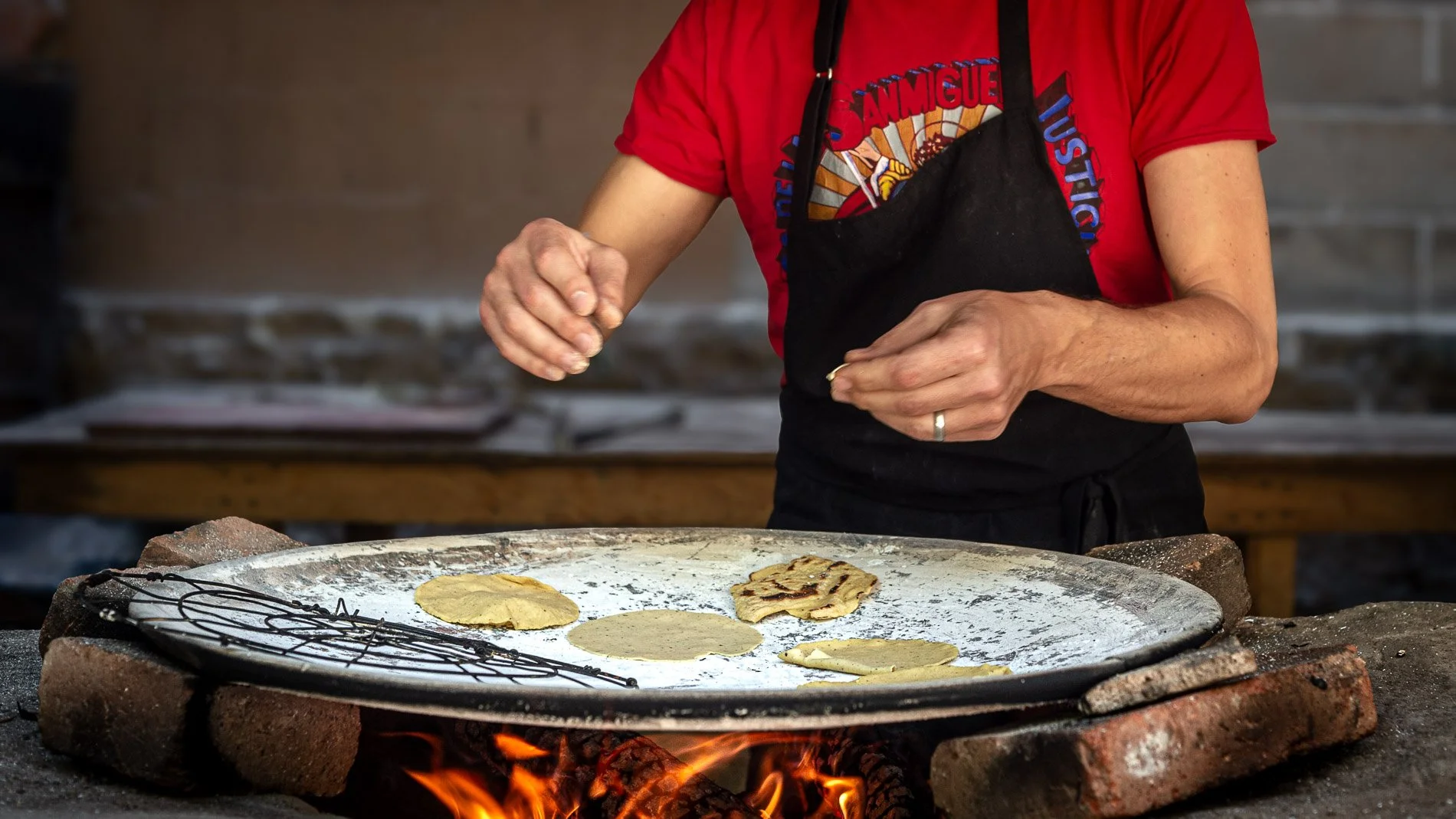
Set up a tortilla press, lining it with plastic to prevent sticking. Avoid cling film, as it easily creases and leaves wrinkles on the tortilla. Instead, cut two flat rectangles from a regular plastic bag; do not use thicker garbage bags. This small detail came from one of our instructors, a Capitana — an extraordinary woman who once ran a legendary street tortilla stand in Oaxaca. The title “Capitana” is a mark of respect, given to women with decades of experience in cooking and mentoring.
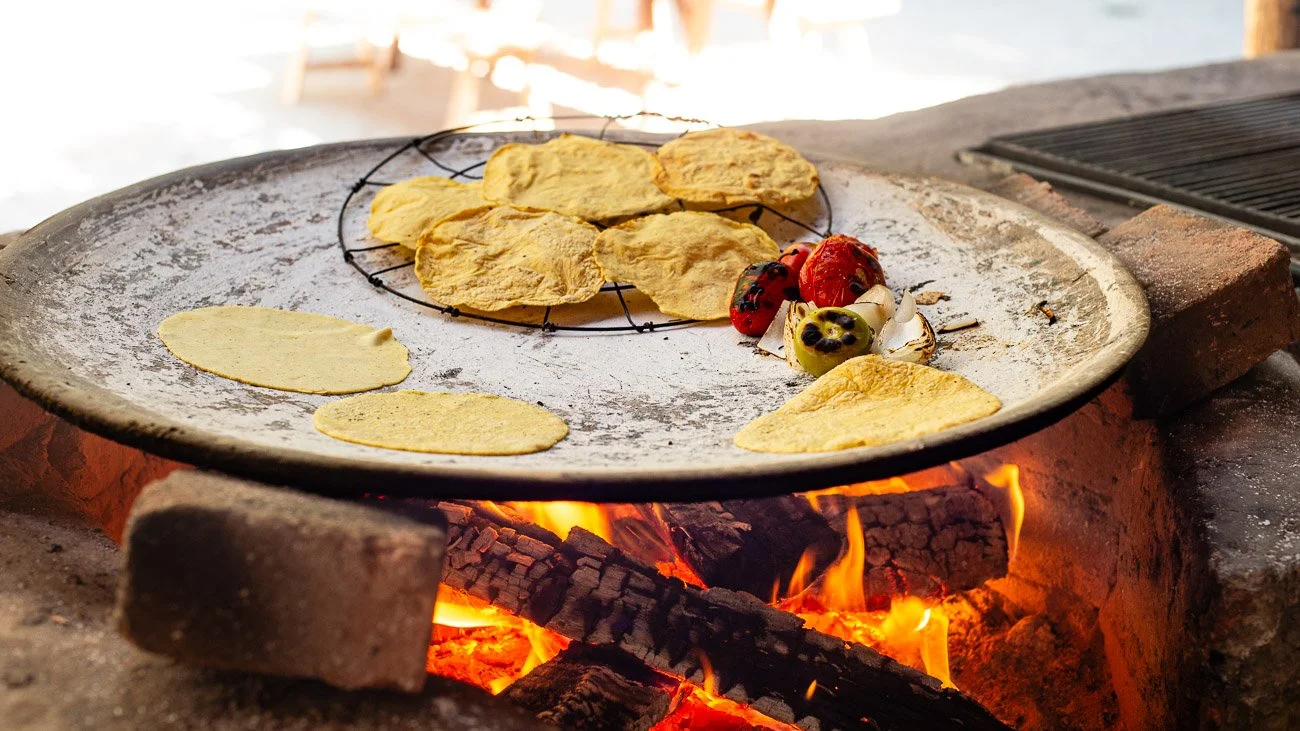
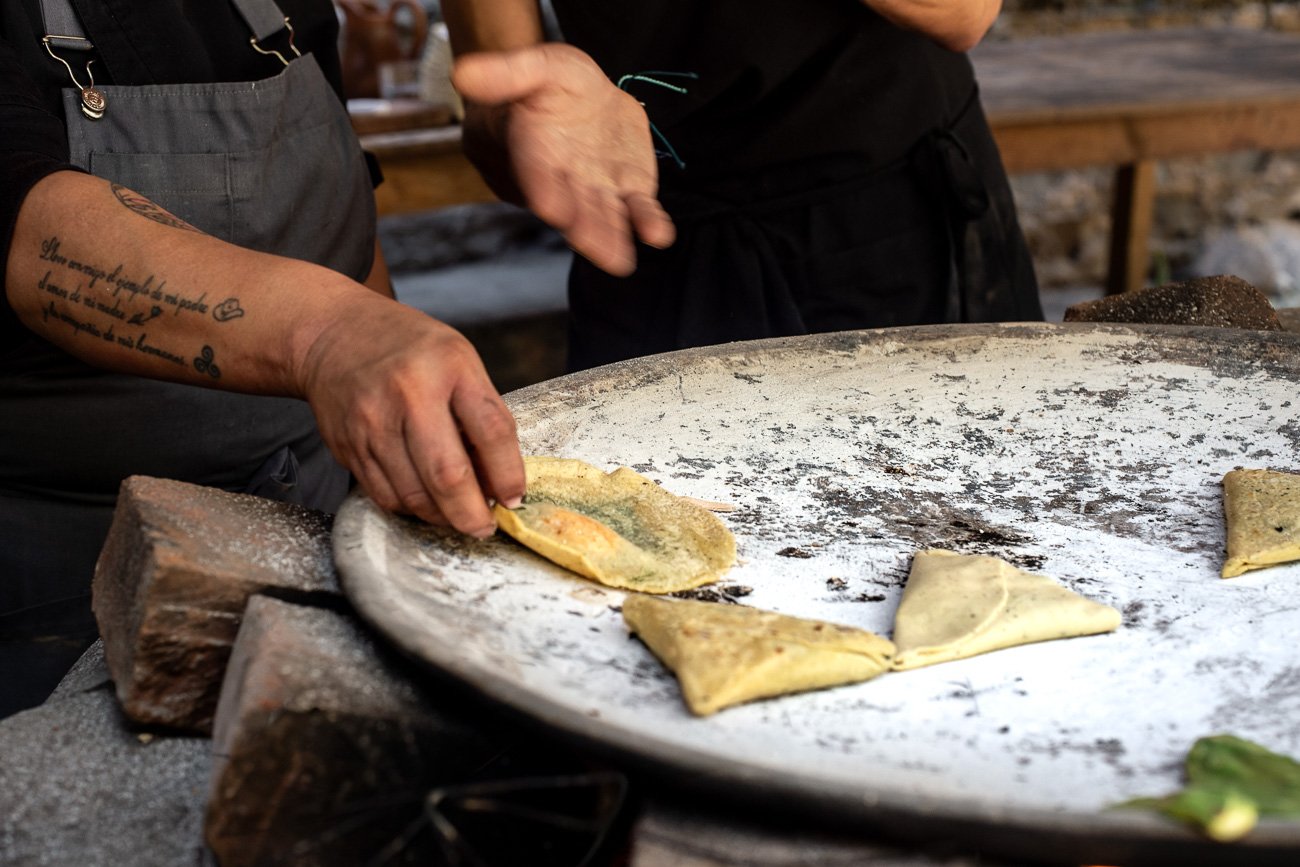
Tortillas at different cooked stages and tostadas at the back
Method
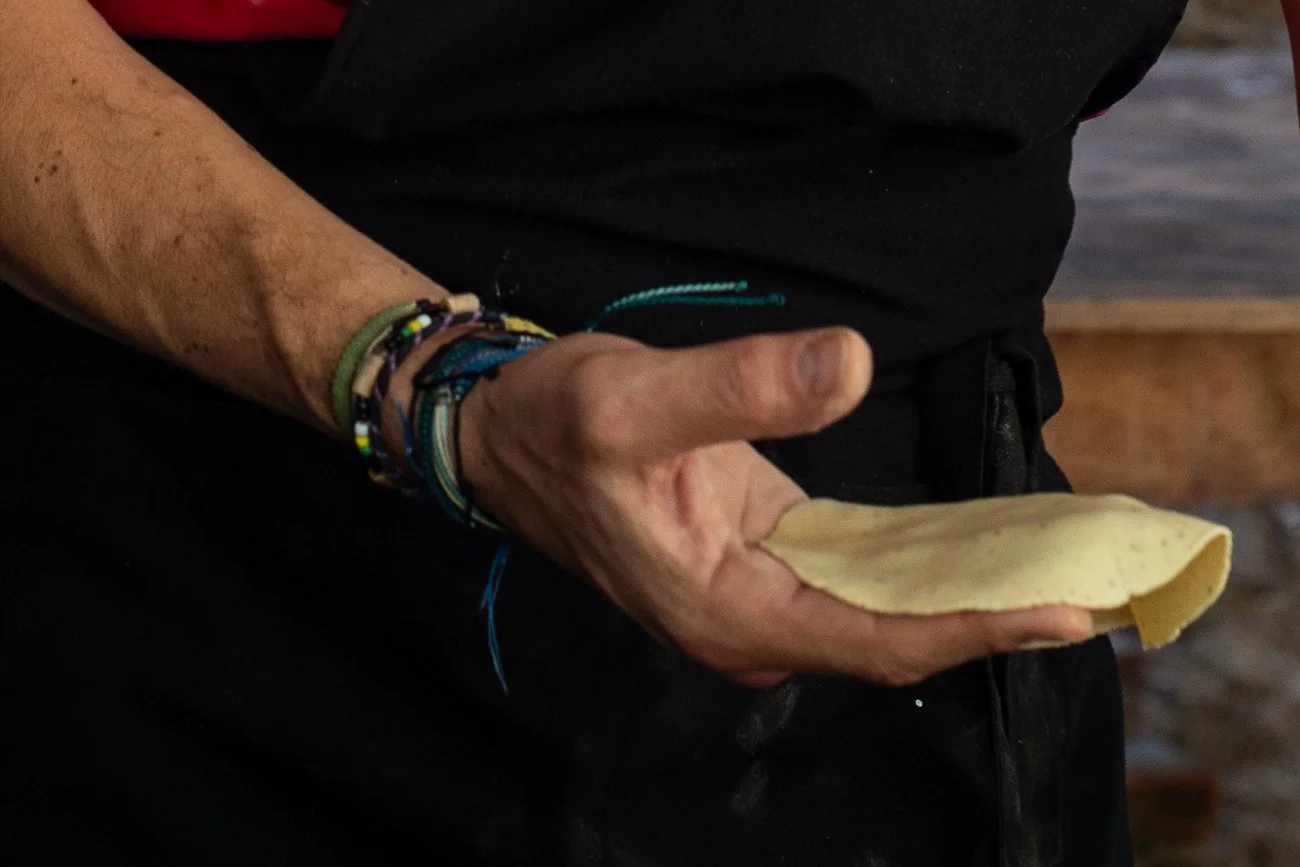
Shape a small ball of fresh masa by placing it between your palms and gently rolling it until smooth. It should be soft and slightly tacky to the touch. The size of the ball depends on how big you want the tortilla.
Position the masa ball between the plastic sheets in the press and flatten it in one firm motion. The goal is even thickness, not force.
Lay the tortilla onto the dry comal in one confident movement. It should land flat without hesitation. You can use the bottom sheet of plastic to lift and transfer the tortilla to the comal.
Let it cook undisturbed for 30 to 45 seconds, watching as the edges begin to dry and the surface turns matte.
Flip it. Cook the second side slightly longer; small bubbles will begin to form.
Flip it again. At this point, the tortilla might puff up as steam expands inside, lifting it into a dome.
After another 20 to 30 seconds, remove it from the comal.
Stack the tortillas in a cloth-lined container or basket and cover them to retain heat while you continue cooking. They can be reheated later on the comal.
If cooked longer until completely dry, they become tostadas — literally “toasted” in Spanish. Traditionally, tostadas are dried on the comal, preserving both the flavour and texture of the corn, rather than being fried, as the name suggests. The fried versions common in fast food completely miss the point.
Push it Further
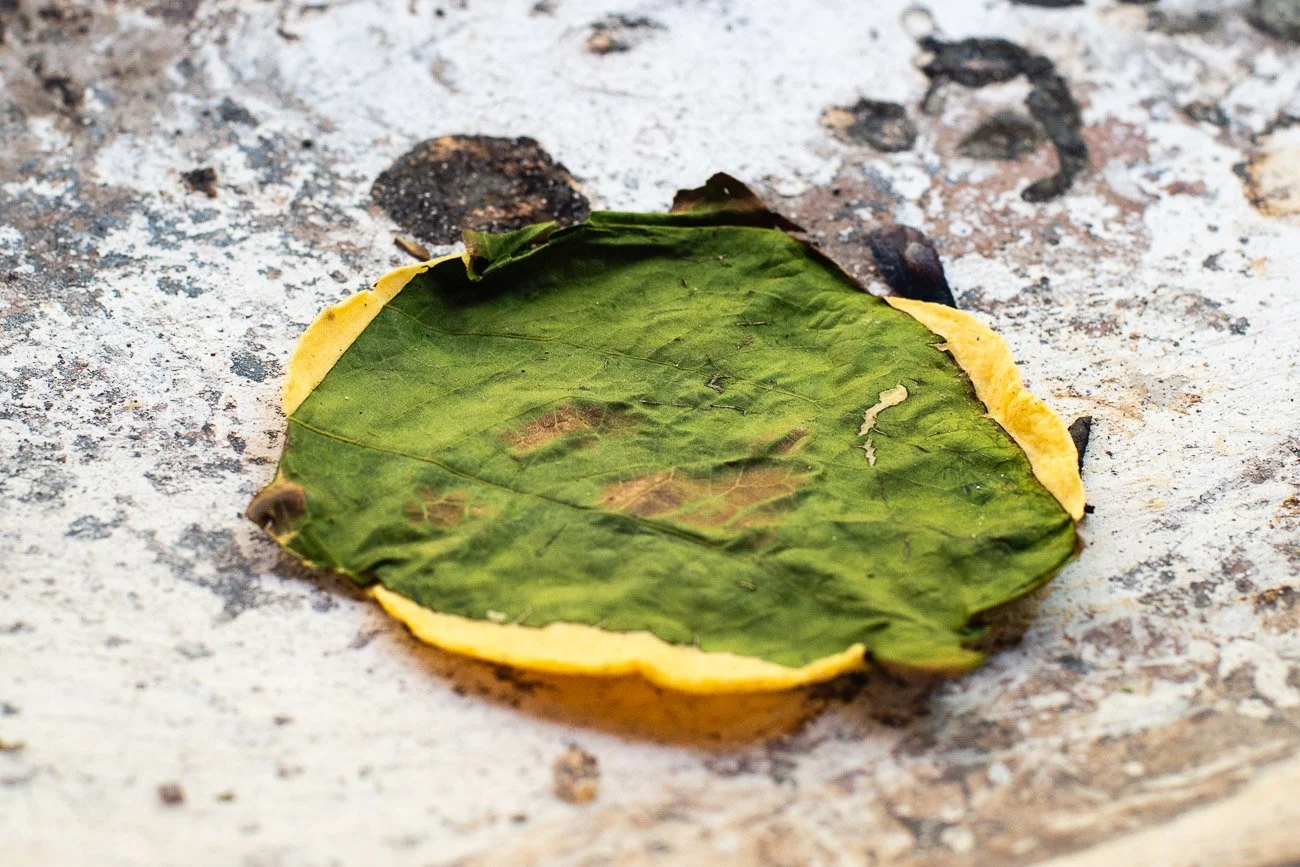
Once you’re confident in making tortillas, you can start experimenting. Mix different coloured masas into a single ball to make marbled tortillas, or place a flat herb leaf on the dough before a second press to imprint a pattern. The leaf can remain embedded, adding both flavour and visual detail.
If the tortilla puffs, you can make a small incision and slide in a raw egg. The egg should be ready in a container for easy pouring unless you are a Capitana. We managed this a few times, though they disappeared too quickly to photograph.
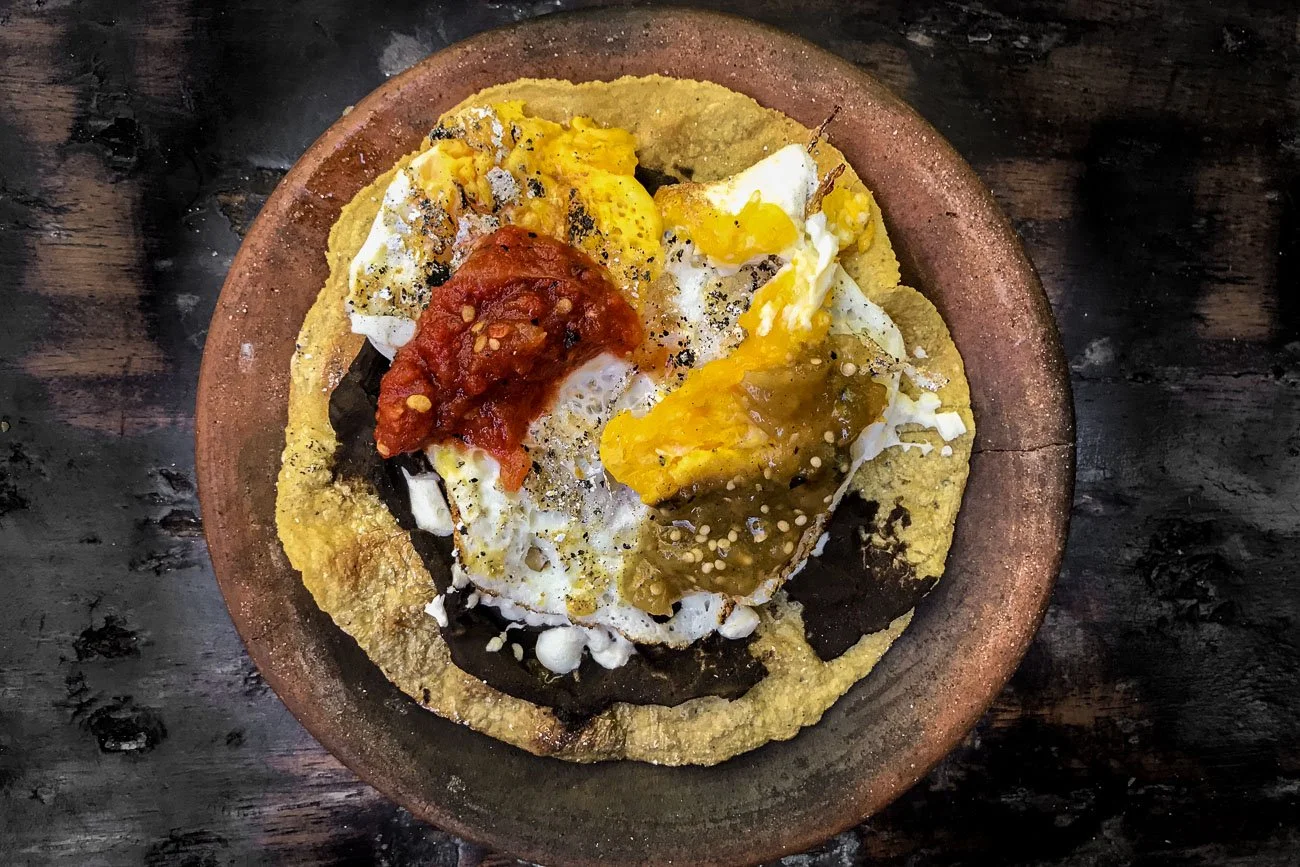
Other preparations that begin with a tortilla include:
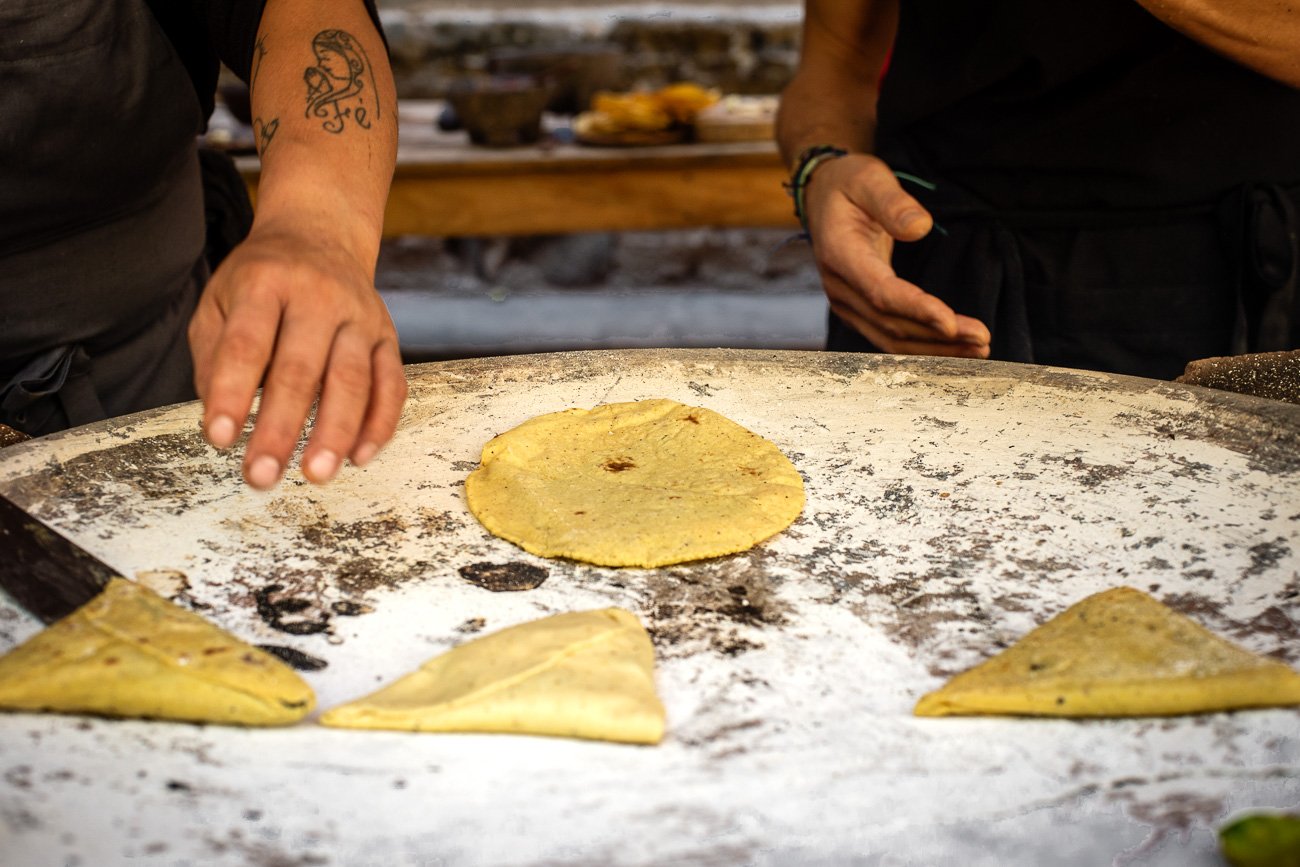
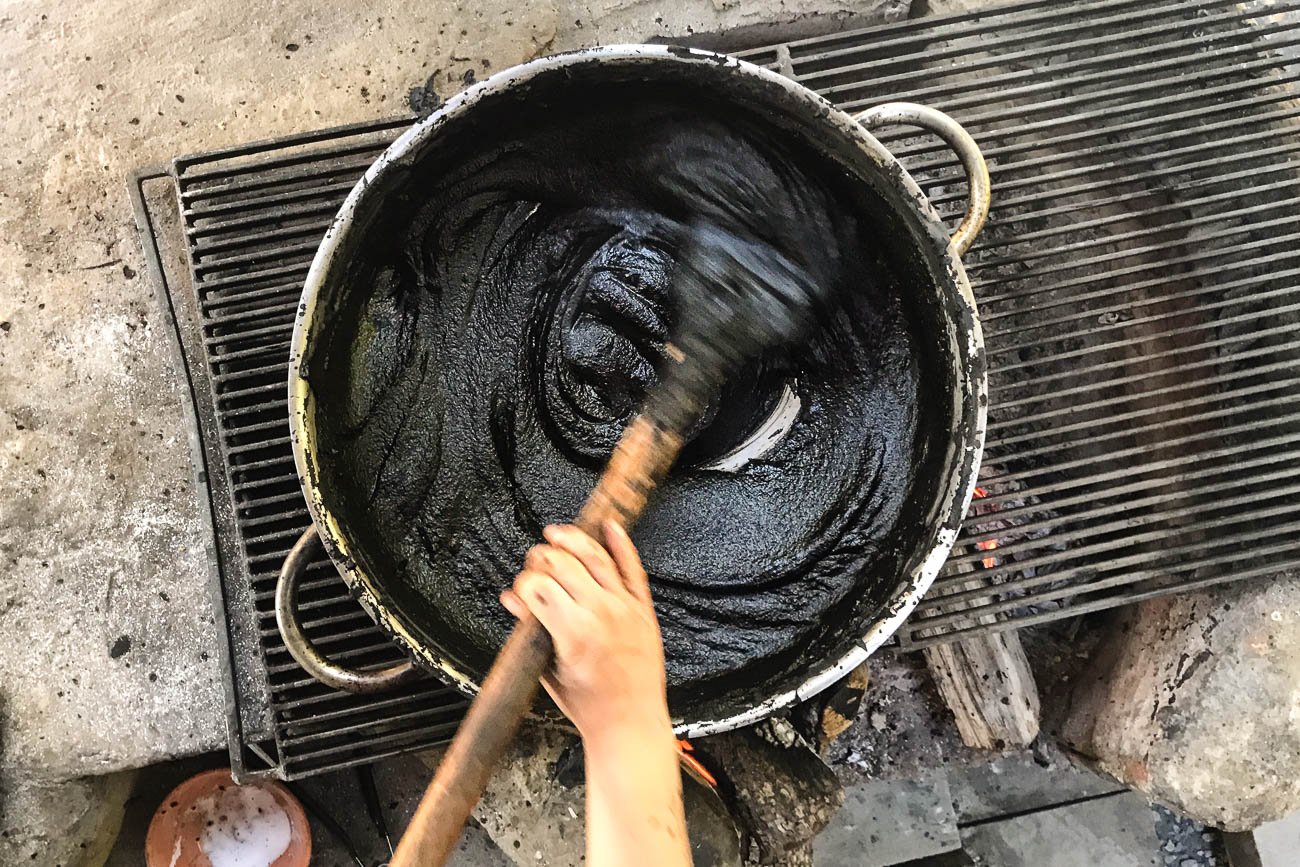
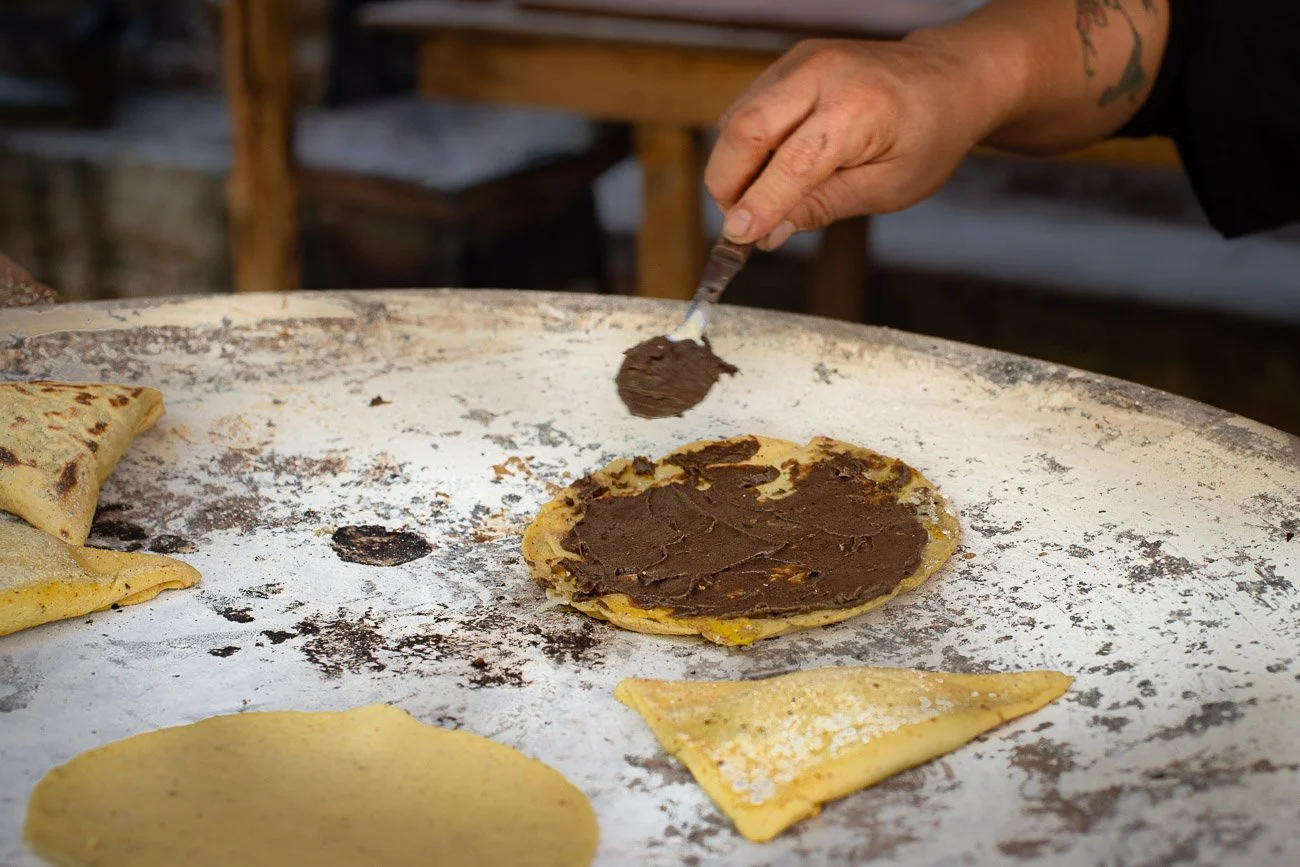
Tetelas are indigenous to Oaxaca. They start with a raw tortilla, which is typically filled with bean purée, cheese, or both. The edges of the tortilla are folded towards the centre, covering the filling to create a triangular pocket, then cooked on the comal.
Tlayudas, also native to Oaxaca, are large tortillas cooked longer until semi-crisp and then topped generously. They can be served open, almost like a pizza, or folded in half like a quesadilla.
Salsa Preparation
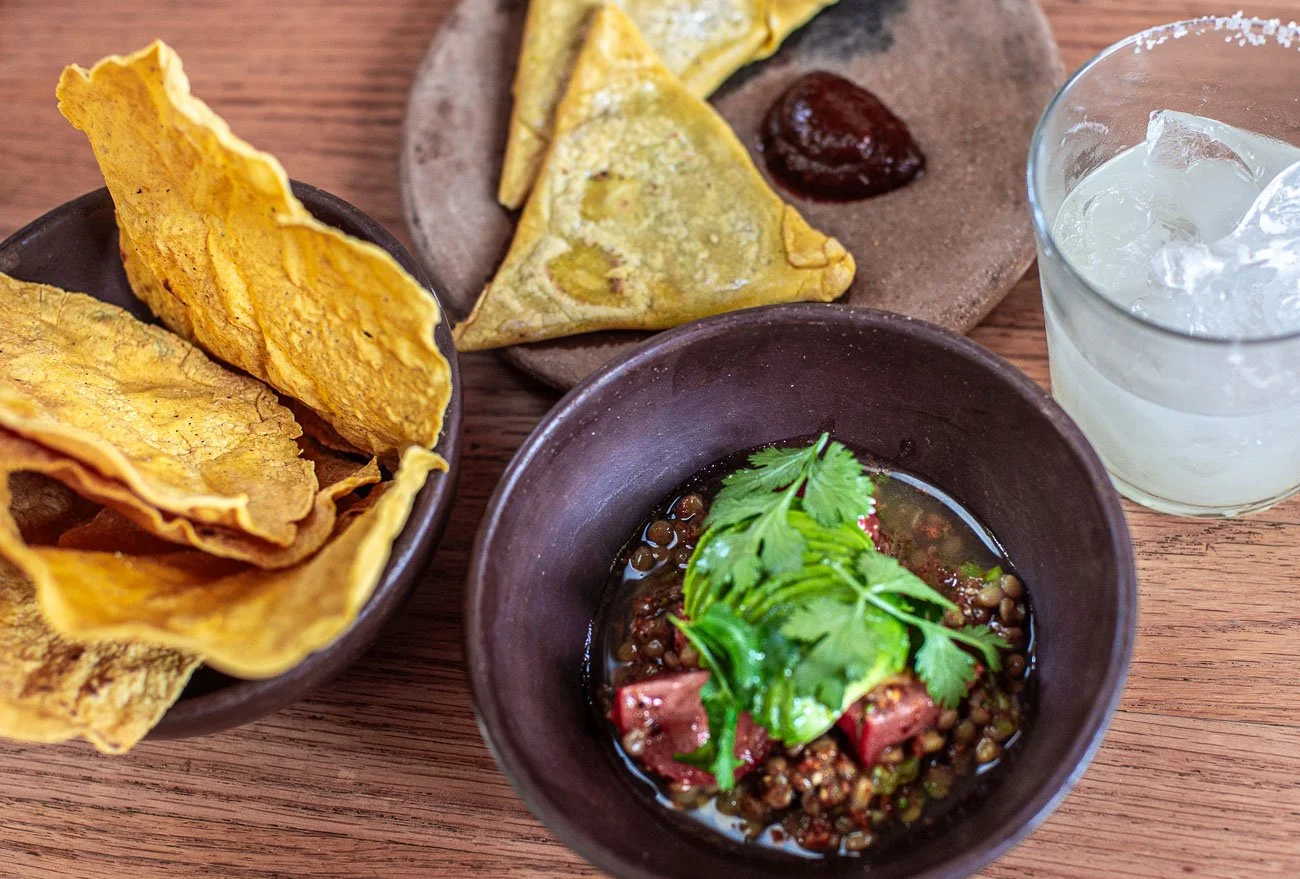
No Mexican table feels complete without salsas. They are the magic that binds everything together, the place where we can enjoy the width and breadth of Mexican chillies. Making traditional salsa requires a modest investment of time, and each moment of preparation should be savoured.
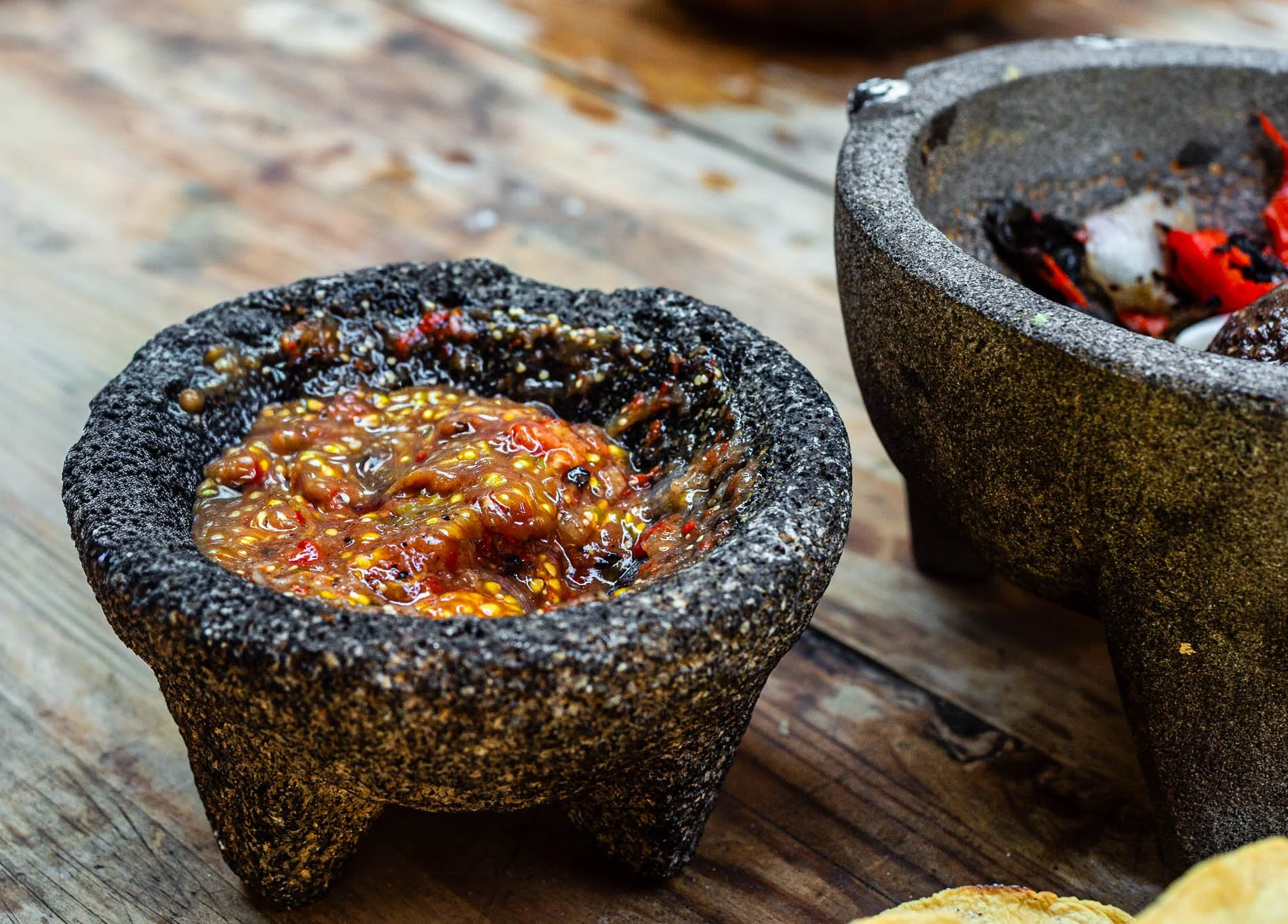
On the comal, charred tomatoes, garlic, onion and fresh chilli until blistered and fragrant. Once cooled, remove the burnt skins and hopefully compost them.
Using a molcajete, the volcanic stone mortar, mash the ingredients, starting with the onions, then the garlic, fresh and dried chiles and finally the tomatoes.
Take your time here. You grind until the mixture thickens into a pulpy paste. The longer you work on it, the more the flavours meld together. It is a delicate dance between impatience and desire to taste, and knowing that waiting will deepen the final result.
A Class Worth Crossing Borders For
Our time at Criollo left us with far more than recipes. It gave us a tactile understanding of why these processes matter not only technically but also culturally.
We are deeply grateful to the chefs and the capitana for their generosity, patience and clarity. What could have been a demonstration became a wonderful exchange.
If you are looking for a cooking class in Mexico, this is among the most meaningful experiences available. Classes are arranged by request rather than on a fixed schedule, and many are designed for professionals, often extending over more than a single day. It is not a casual activity, but a serious and rewarding immersion for those who want to understand Mexican cooking at its roots.
Criollo
01 951 320 07 09
Calzada Madero 129 - Oaxaca de Juárez.
info@criollo.mx
Did you know?
Mexico’s contribution to global food culture runs far deeper than is often acknowledged. Beyond maize, which underpins many diets, there is an extraordinary constellation of ingredients that have quietly shaped global eating habits. Cacao and vanilla, native to Veracruz, influence many of the world’s confectionery and sweet traditions. While tomatoes, originally from the Andes but later domesticated in Mesoamerica, went on to transform entire European cuisines, it’s hard to imagine Italian food without them. Additionally, ingredients like avocado, beans, chillies in their many forms, and squash now seem universal, yet all trace back here. Even less visible elements, such as amaranth, chia, annatto, numerous herbs, and a wide diversity of fruits, continue to influence kitchens across continents. Collectively, these ingredients underline Mexico's significant yet often unrecognised influence on global eating habits..
