
Hősök tere – Hungary Cast in Stone
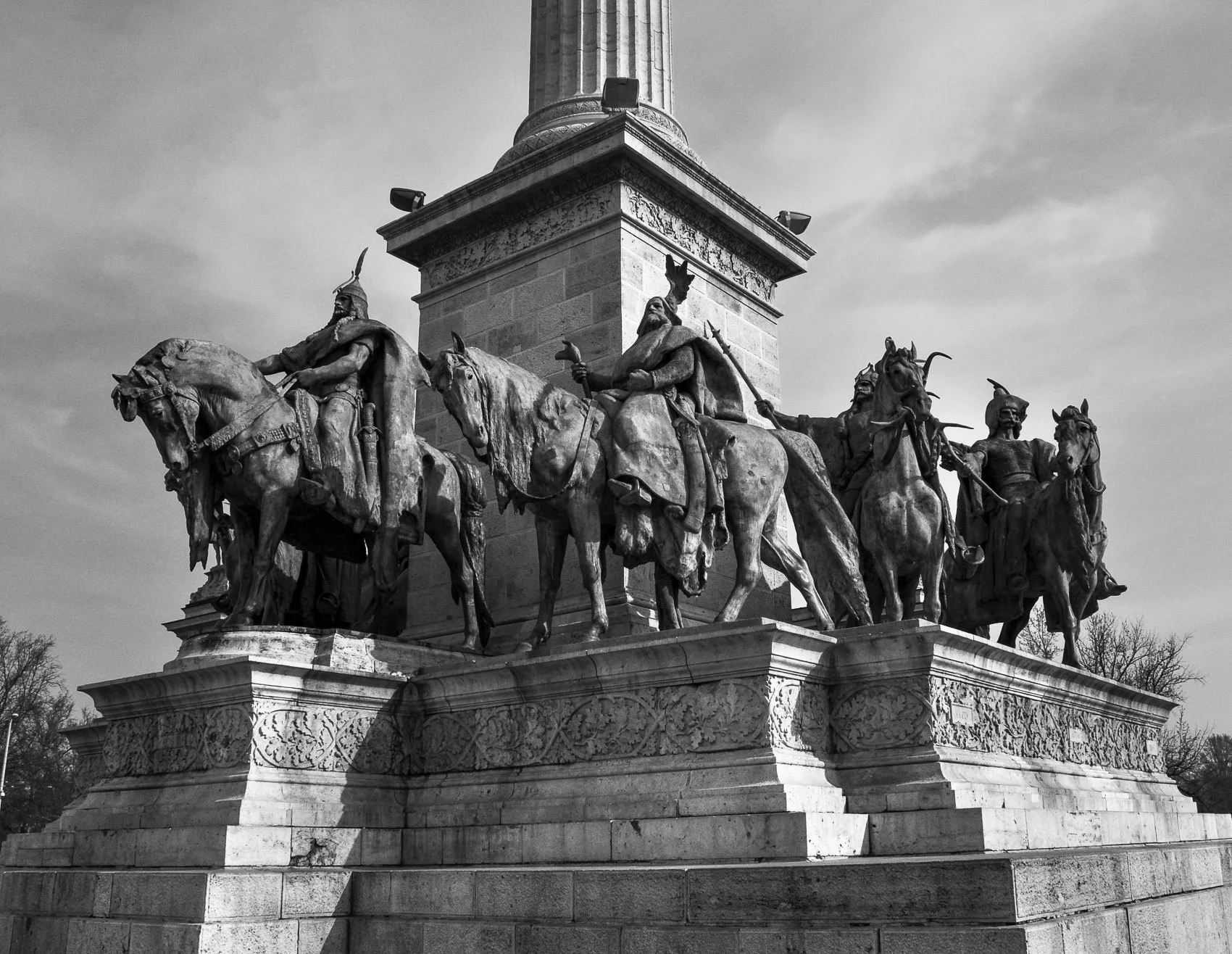
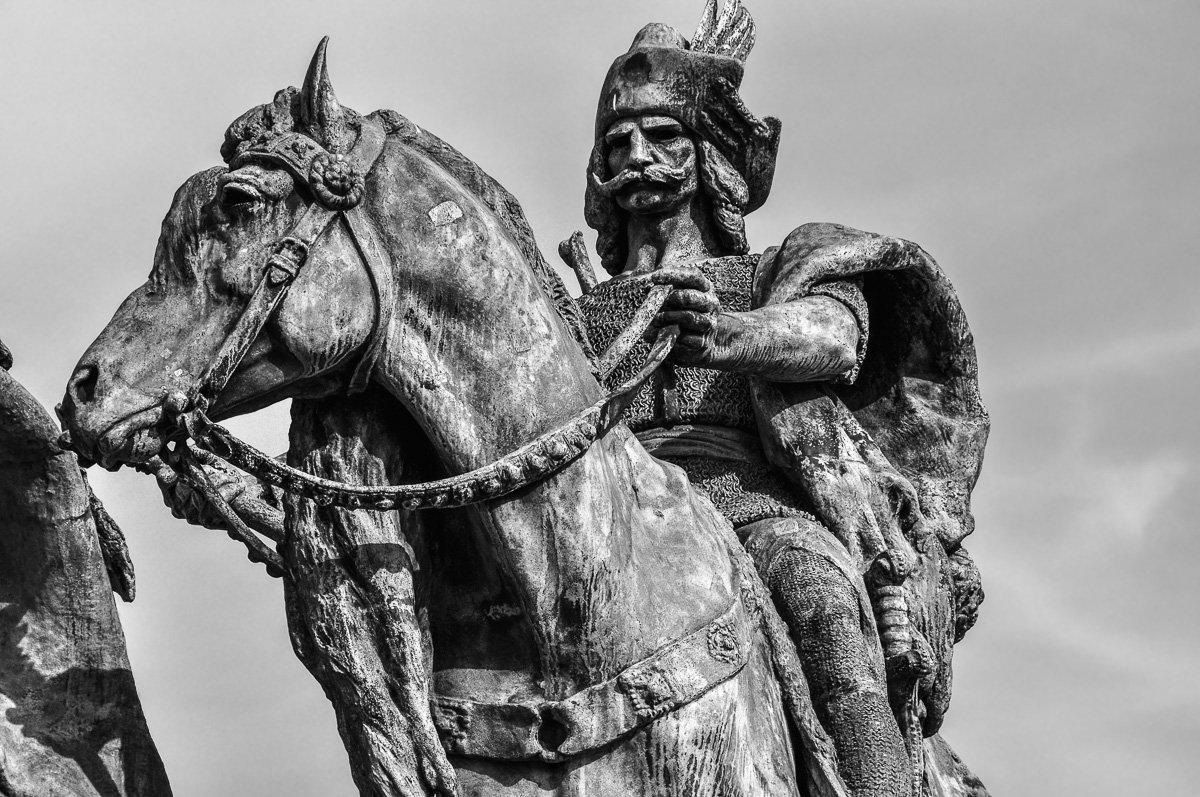
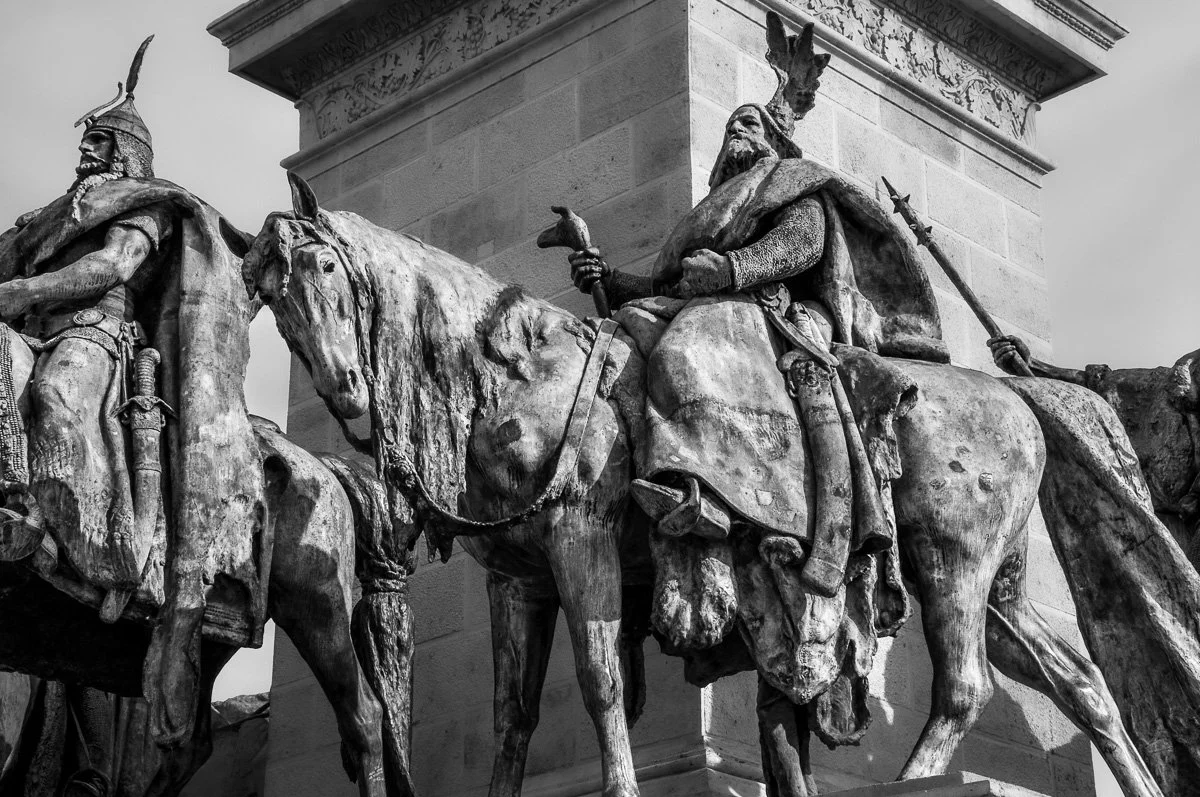
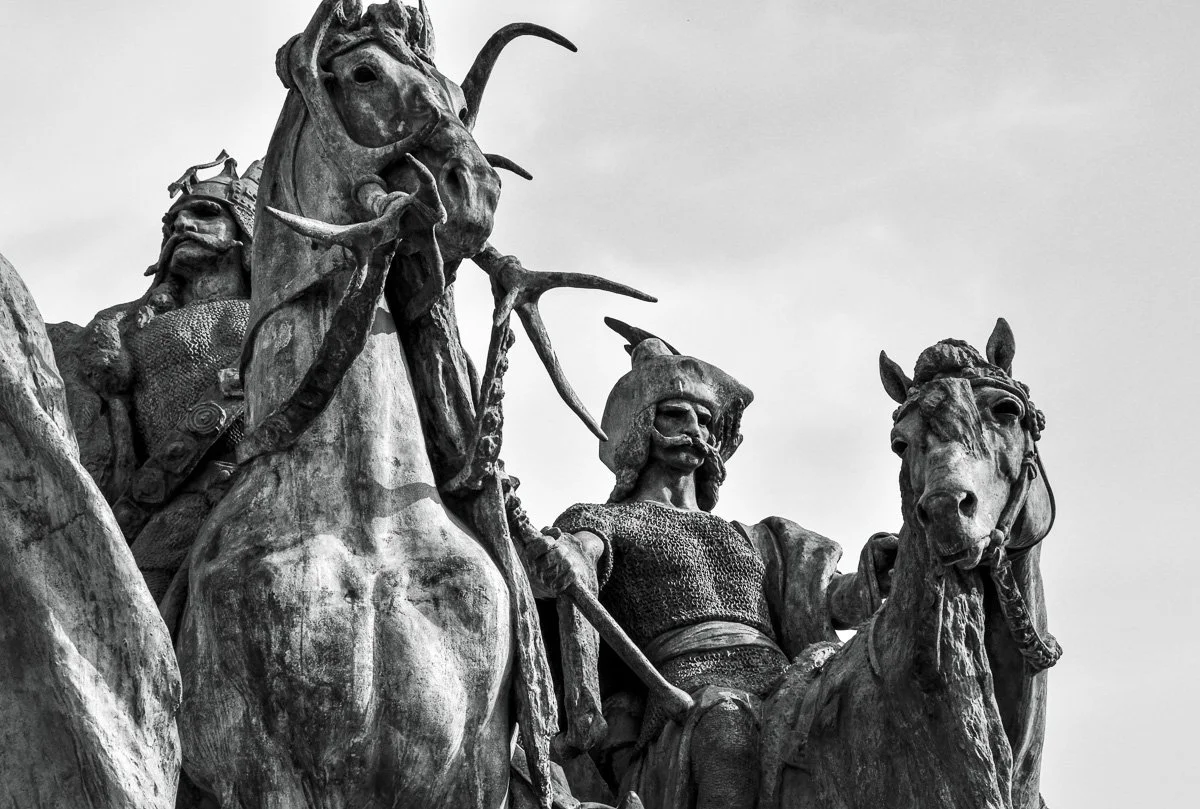
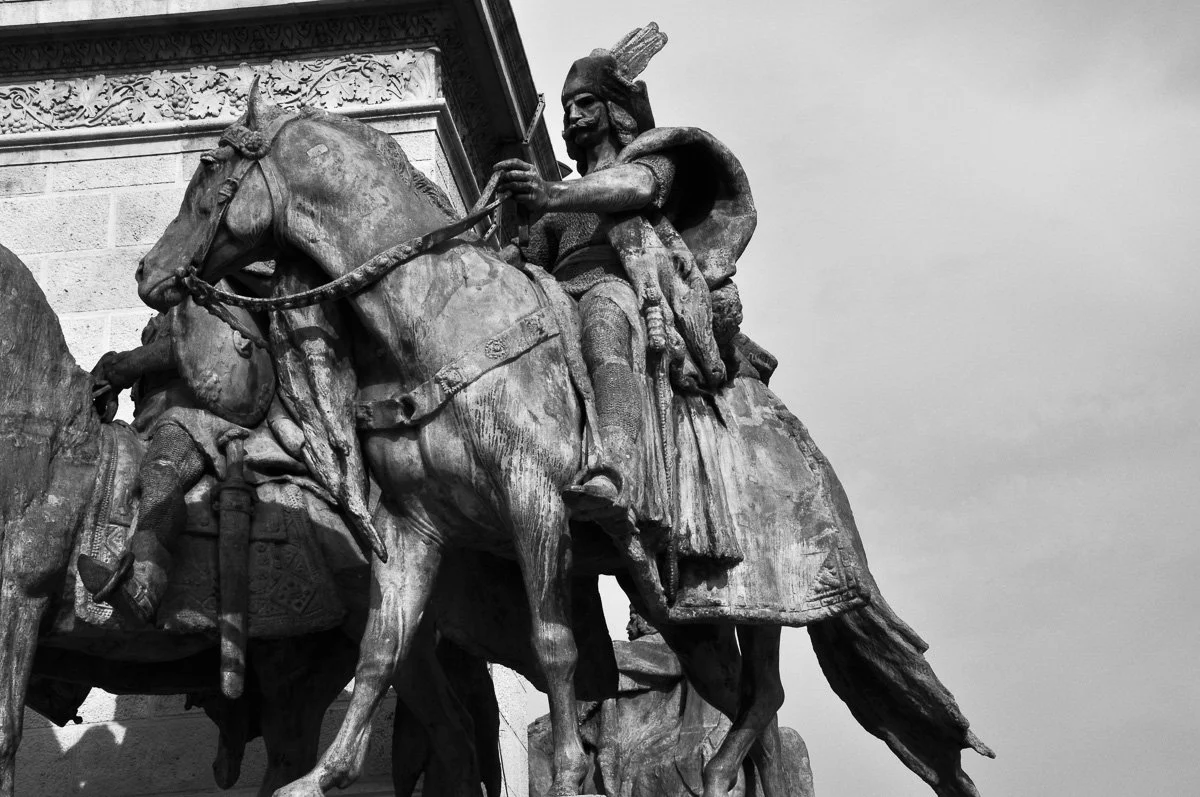
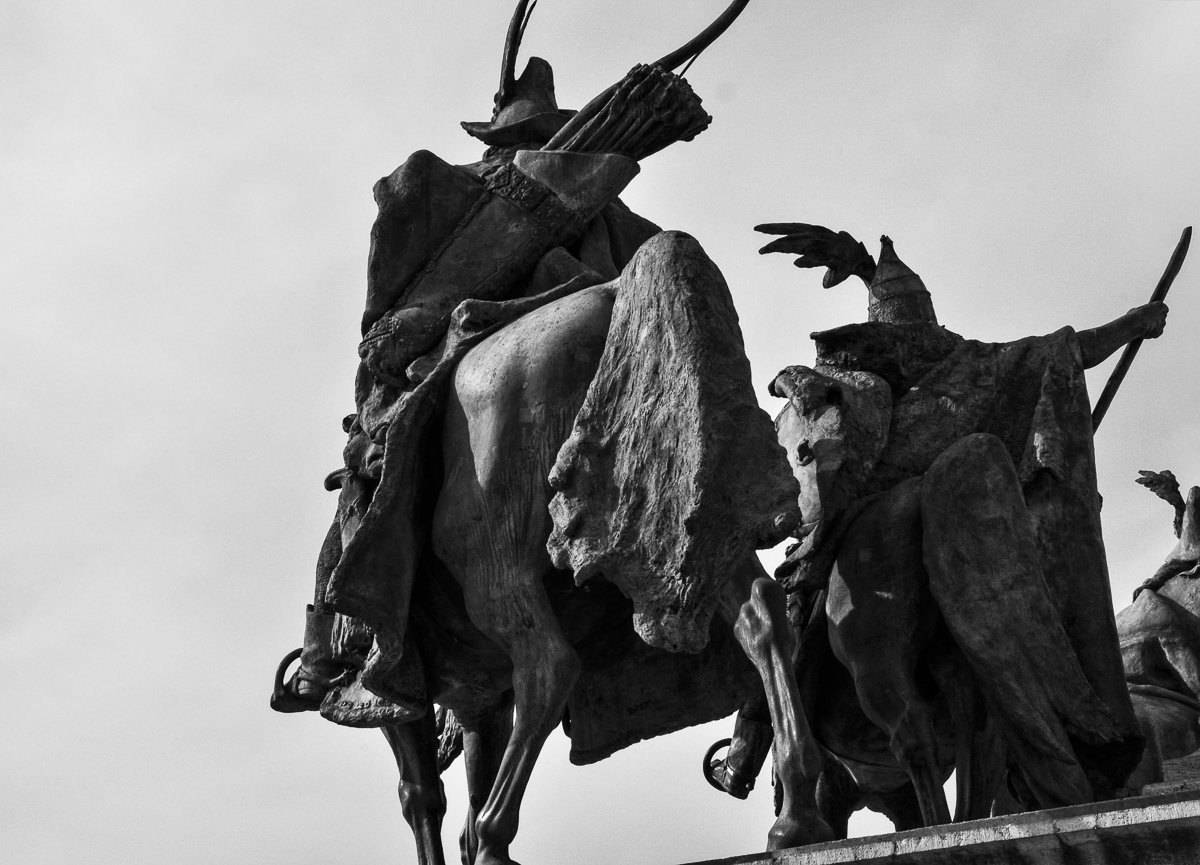
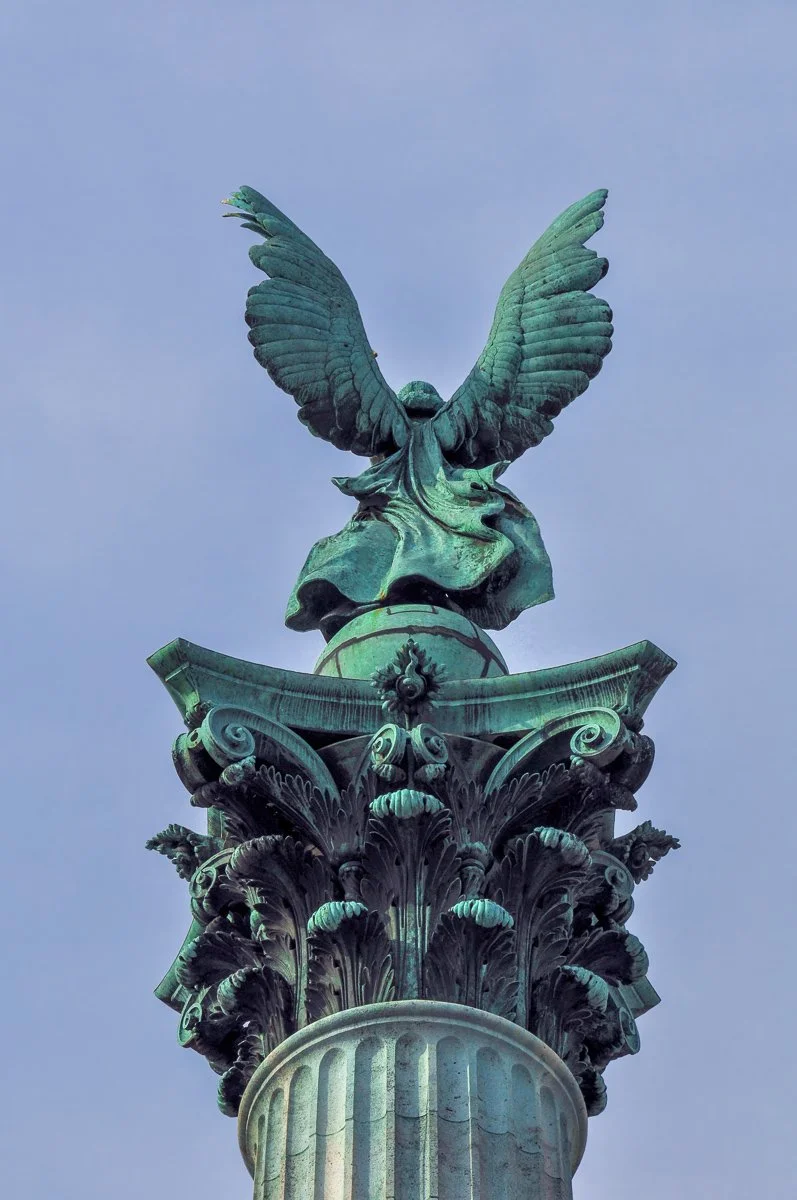
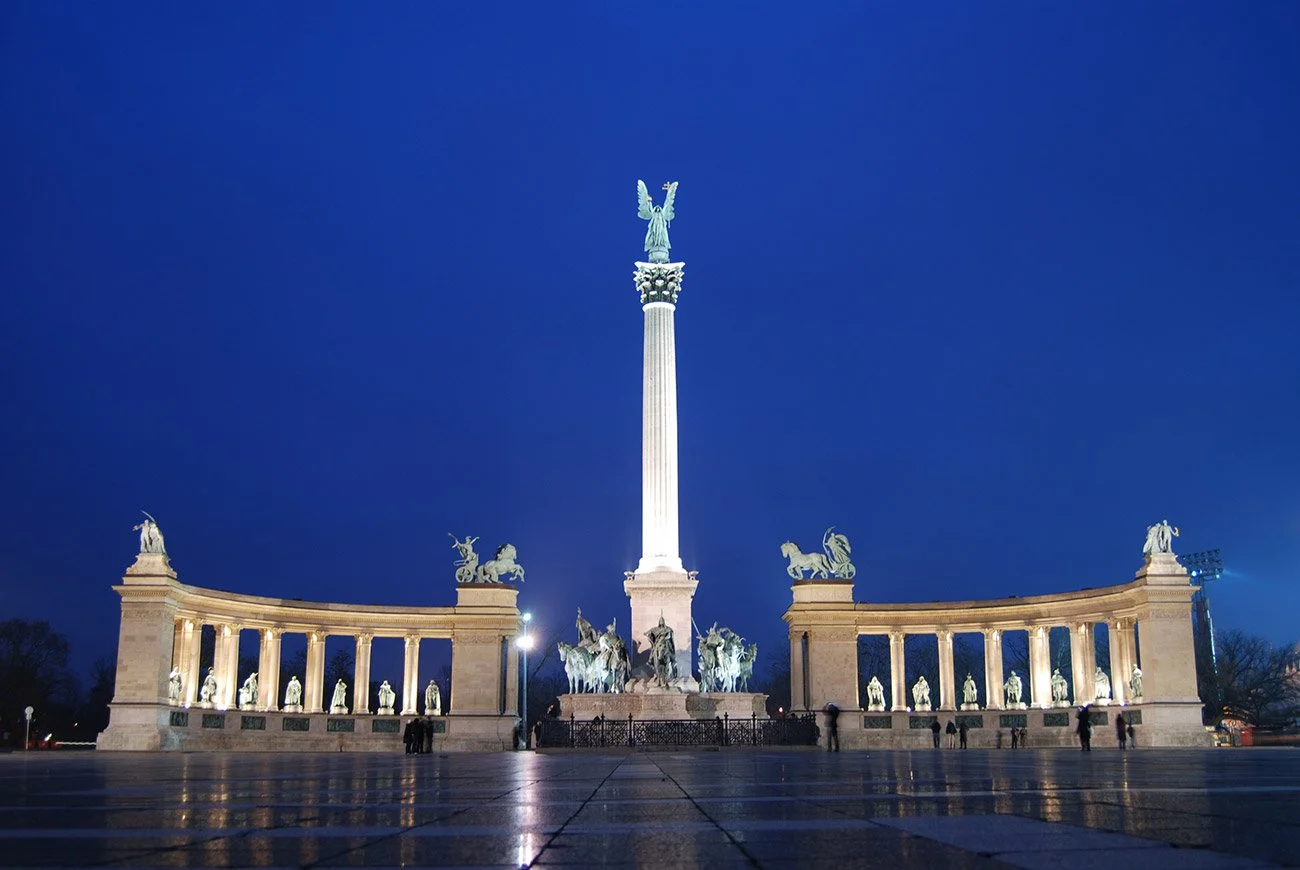
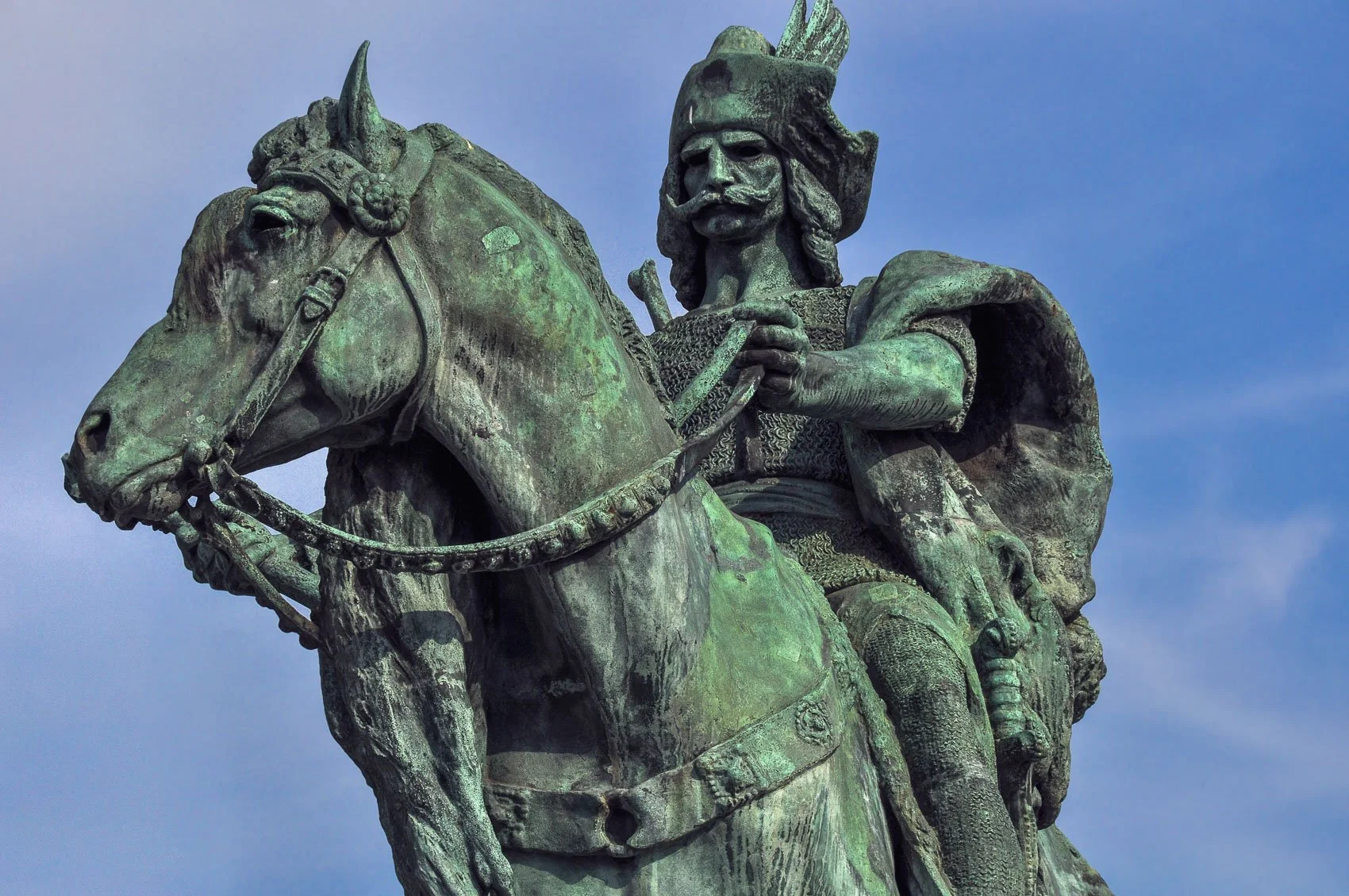
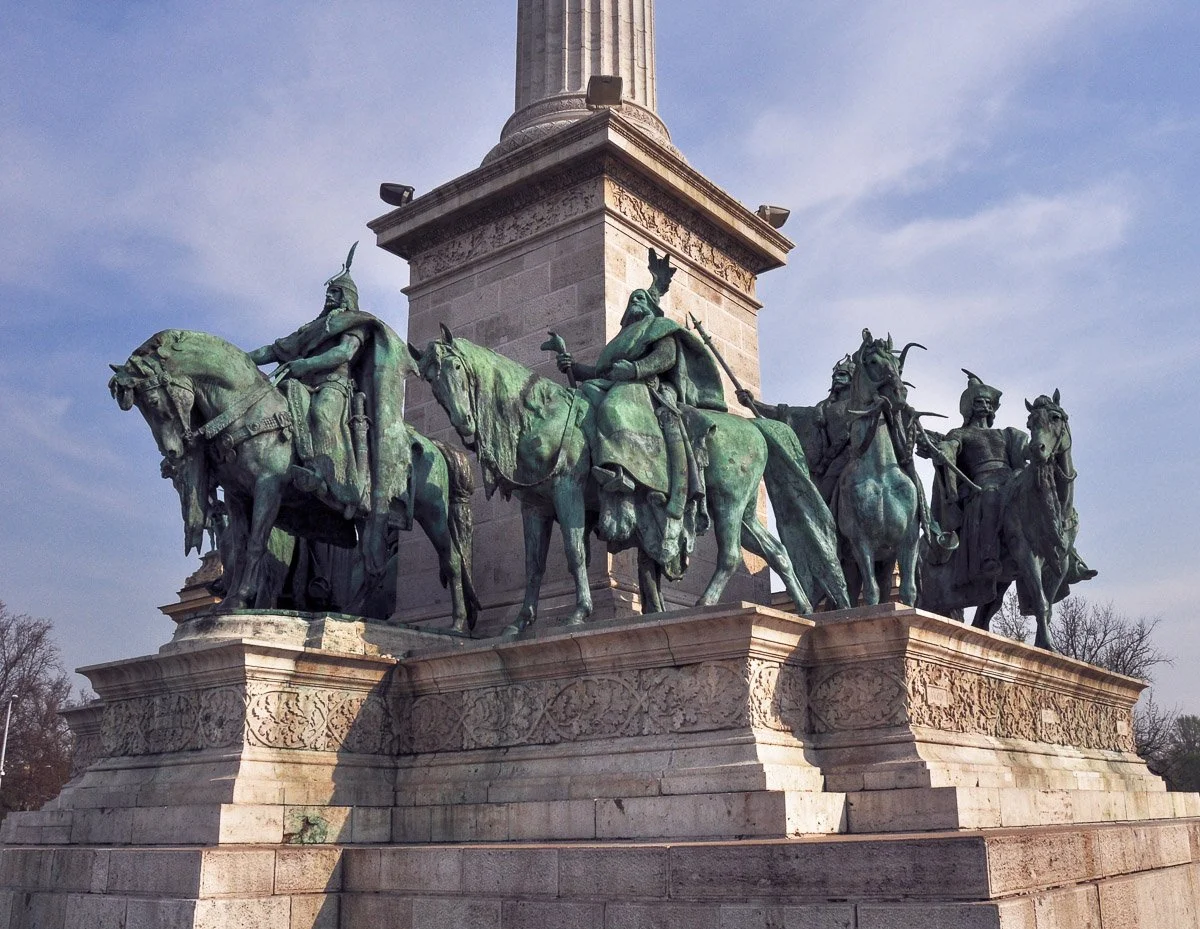
At Hősök tere, history does not whisper. It stands, gathers, and holds its ground. The Millennium Monument rises with a solemn, almost mythic force, its figures drawn inward beneath the Archangel Gabriel, who lifts skyward with quiet authority. Below him, the seven Magyar chieftains gather in a tight ceremonial circle, the founders who entered the Carpathian Basin in 896 and shaped the first contours of Hungary. Together they project a fierce, forward-looking resolve that still defines the square —this is history presented without softness.
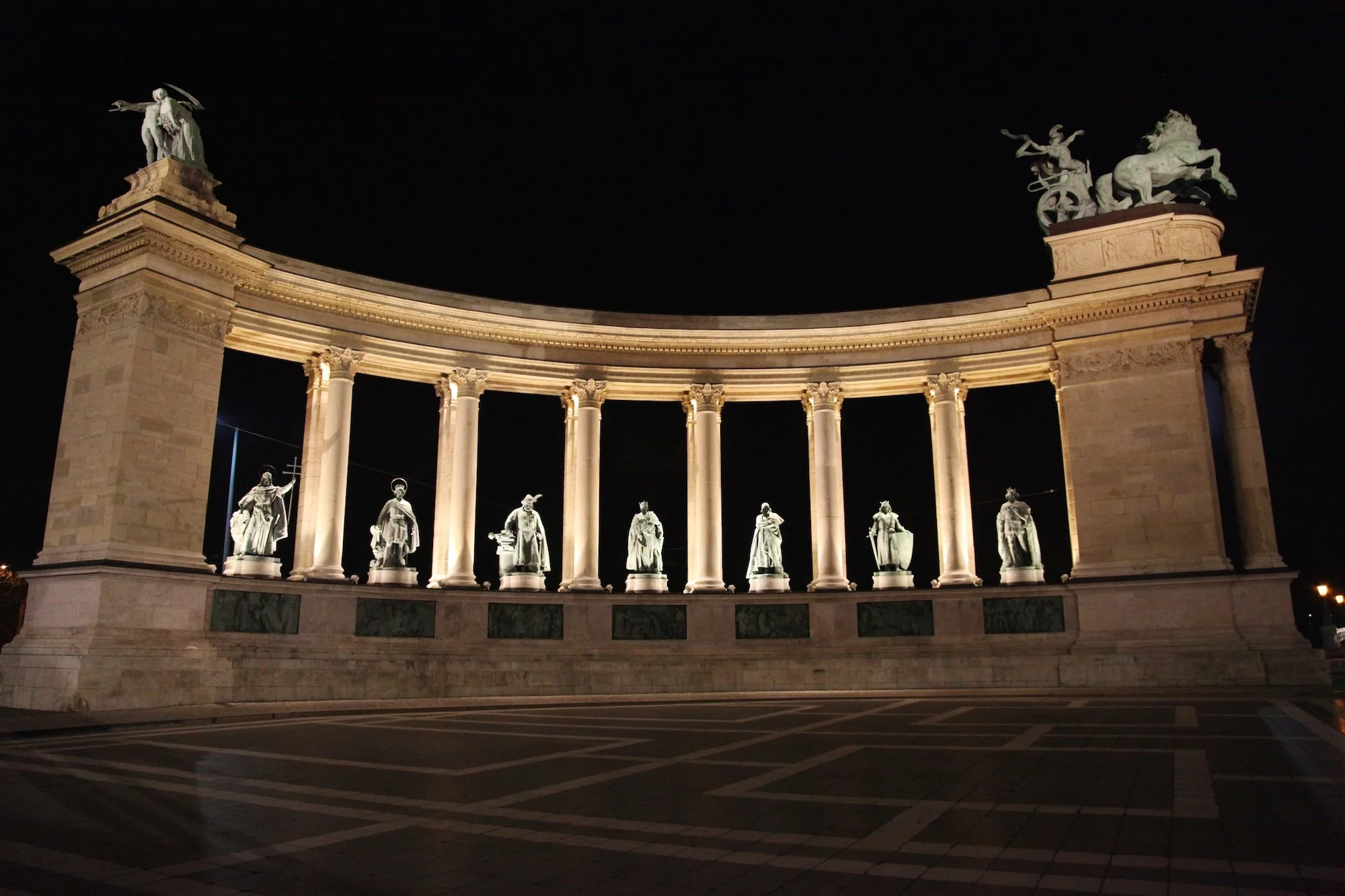
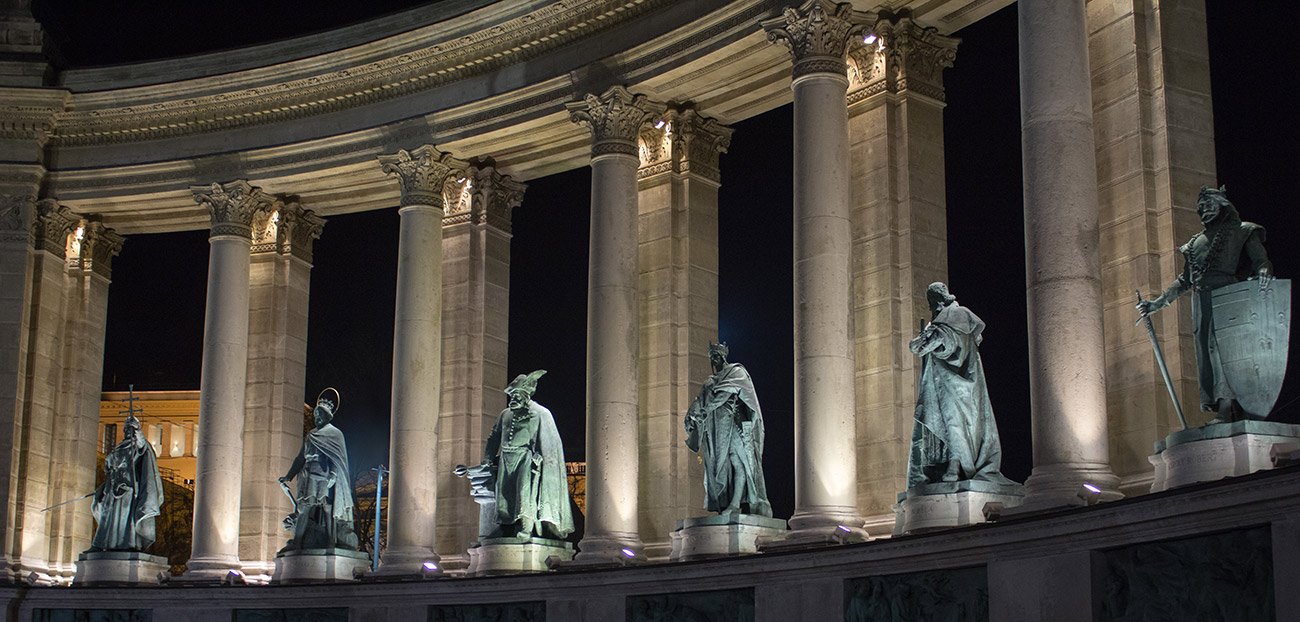
There is something elemental in their presence; bronze and stone seem to take on the weight of flesh. The statues feel less commemorative than watchful. They are magical, powerful, and captivating, much like the once mighty Ringwraiths in Lord of the Rings. Encircling them, the great colonnade opens like an embrace. Along its curve, modern Hungary’s rulers span across centuries, weaving together legend, monarchy, and modern statehood into a single, continuous arc from early kings through the Habsburg era, connecting ancient origin myths to the shape of modern Hungary.
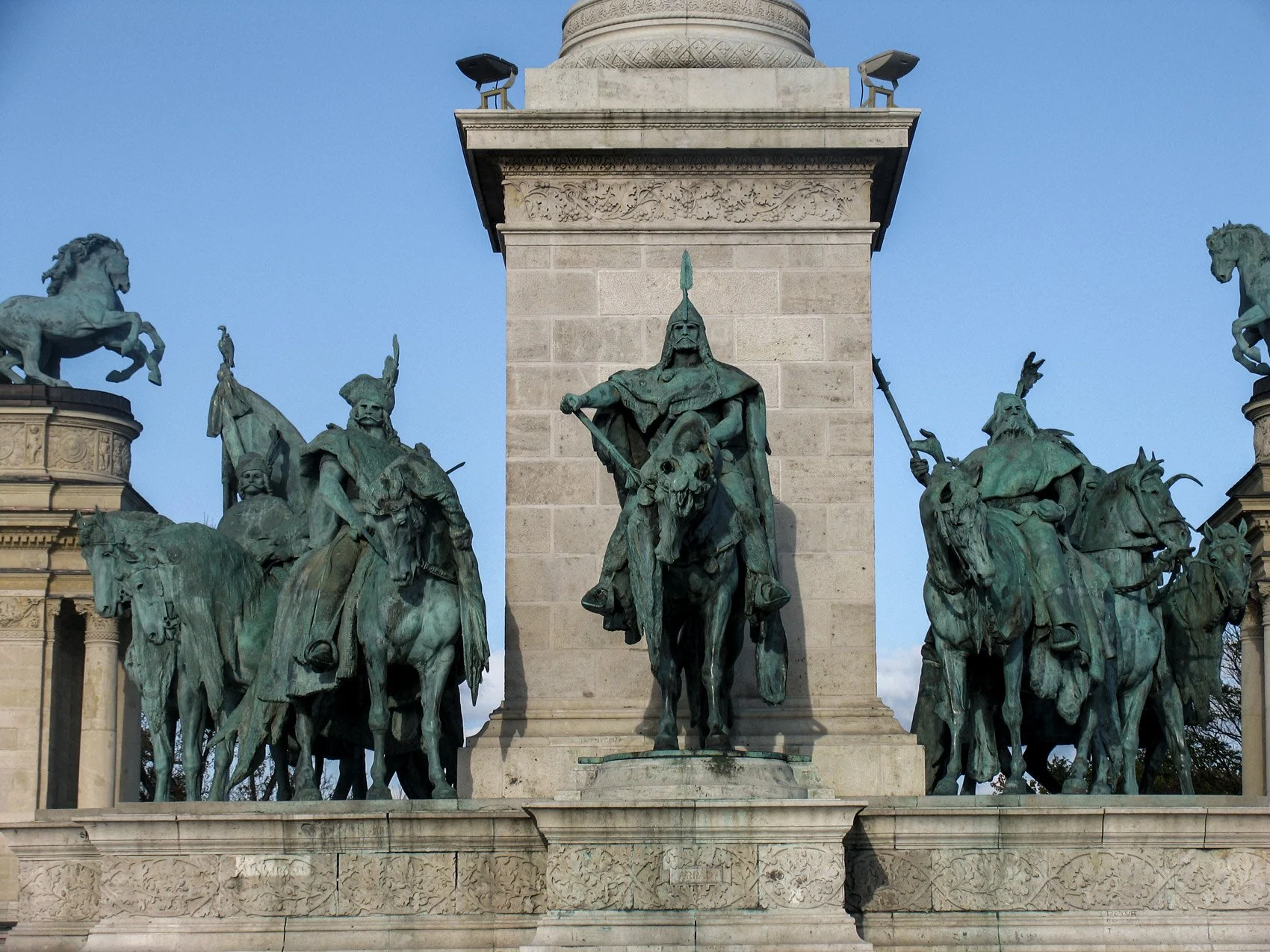
photo © Kevin Hoogheem
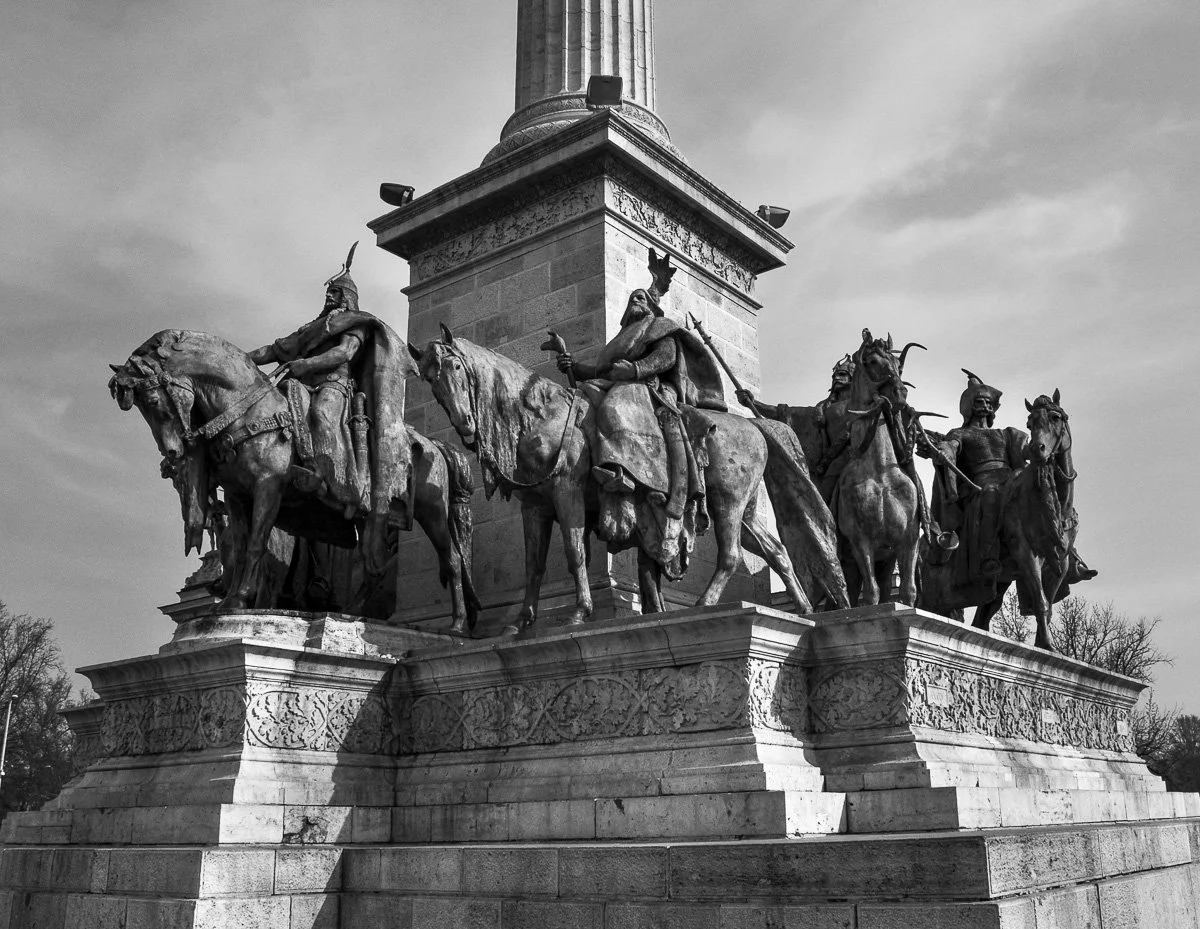
Completed in 1896 to commemorate a thousand years of Hungarian history, the square occupies a thoughtfully chosen threshold. To one side lies the Szépművészeti Múzeum (museum of fine arts), while on the other is the Műcsarnok (palace of arts). Behind, Városliget city park softens the stone with trees and water, guiding the eye towards Vajdahunyad Castle and, further along, the inviting plumes of the Széchenyi Baths. The city seems to breathe here; a leisurely walk amongst all these sights makes for a perfectly planned day out.
Light completely transforms the square. In the early morning, it brings clarity and space before tour buses arrive; the figures gradually emerge from shadows, their edges sharpened by silence. At night, illumination erases the surrounding city, light carves the figures from shadow, and the square takes on a solemn, almost mythic calm and leaves only form and story. Seen after dark, Hősök tere feels suspended between centuries, less a place than a state of mind.
Hősök tere
1146Budapest, Hungary