
Museo Nacional de Antropología — Mexico in Stone, Water and Myth
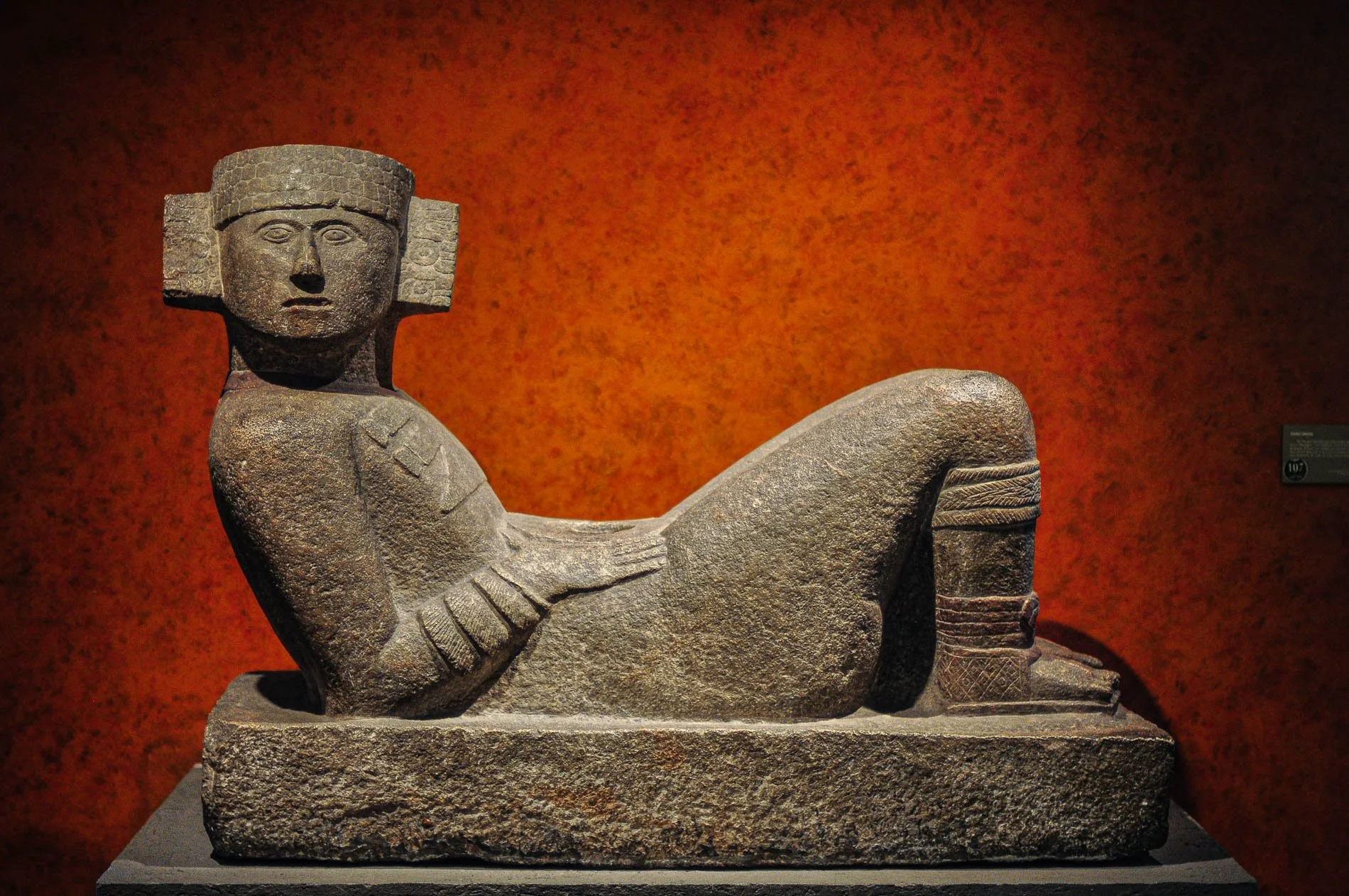
Chac Mool *
There are museums you visit, and there are museums you enter almost ceremoniously. The Museo Nacional de Antropología belongs to the latter. Opened in 1968 and designed by Pedro Ramírez Vázquez, Jorge Campuzano, and Rafael Mijares, the building was so architecturally assured that it won gold at the 1965 São Paulo Biennial based solely on drawings and renders before construction even began. It remains one of modern Mexico’s most striking structures, more than merely a container for history.
As you approach the entrance, whether from the car park or Parque Tamayo, the Danza de los Voladores unfolds. A ritual rooted in pre-Hispanic cosmology, where four men suspended by one foot from a 30-metre pole, descending in widening circles as a fifth man plays music from the top. This first view can be a welcome introduction. A few steps further stands Tlaloc, the colossal statue of the water god, weighing 168 tons and transported from Coatlinchan. Behind him, water falls continuously, enhancing the myth.
Then you enter the courtyard.
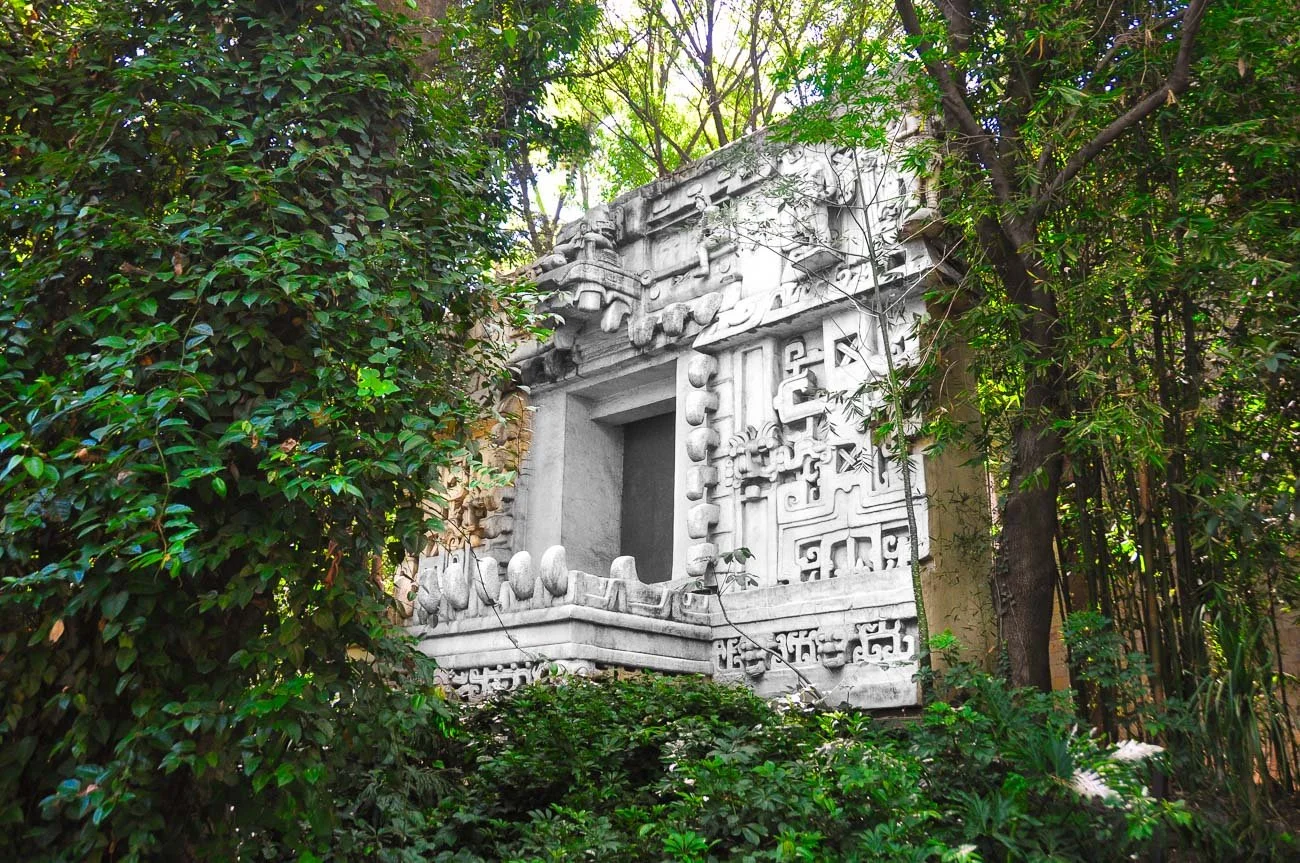
At its centre stands El Paraguas — “the umbrella” — a vast concrete canopy supported only by a sculptural pillar, from which water flows in a continuous sheet. The courtyard’s distinctly modern design is modelled on the ancient quadrangles of the Cuadrángulo de las Monjas in Uxmal.
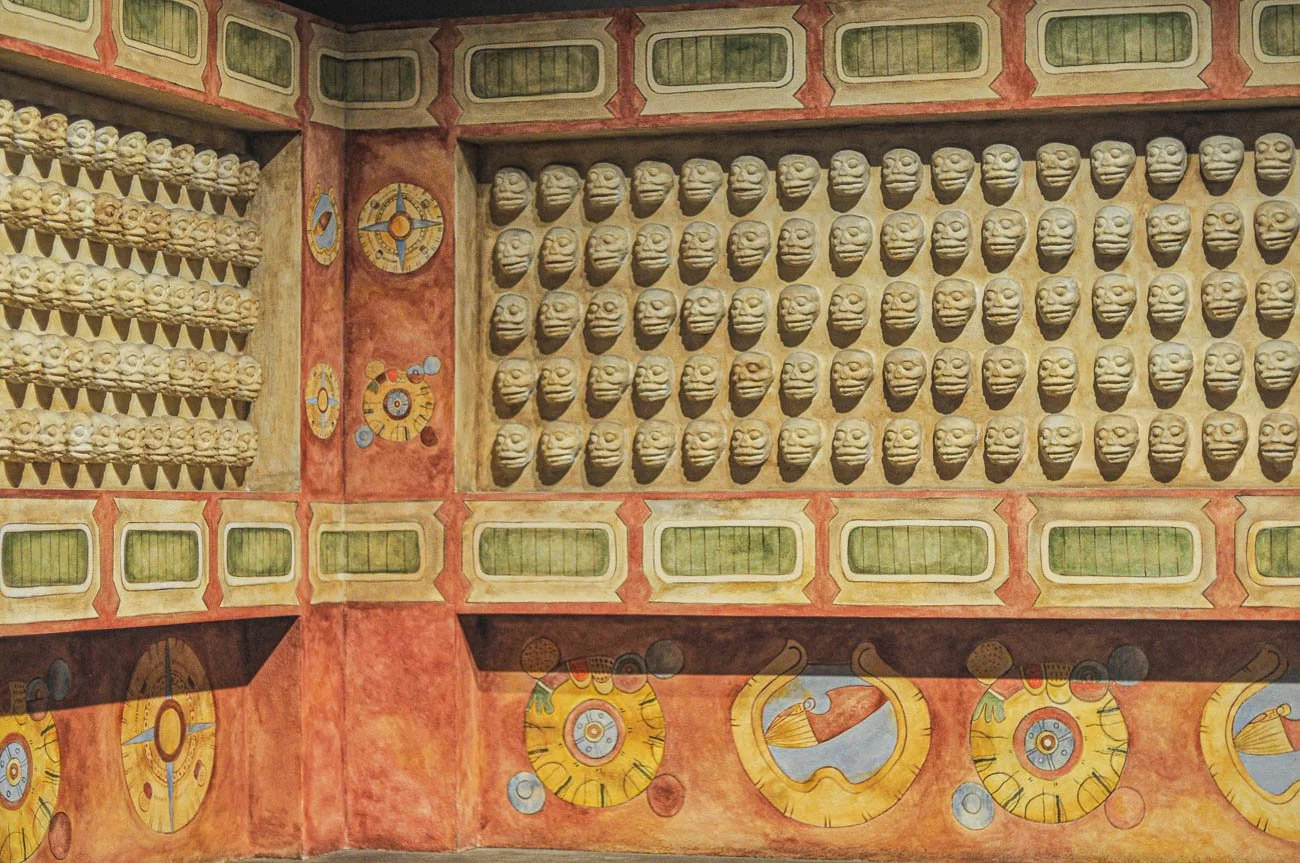
Inside, the museum unfolds as a civilisational journey. If time is limited, start with the Teotihuacan hall in the north wing. Its mural fragments and geometric arrangements lay the foundation. Then proceed to the Mexica hall, where the stone darkens and the atmosphere becomes more intense. Follow the rooms on the ground floor, and if time allows, at the end visit the second floor to see a sample of Mexico's ethnolinguistic diversity.
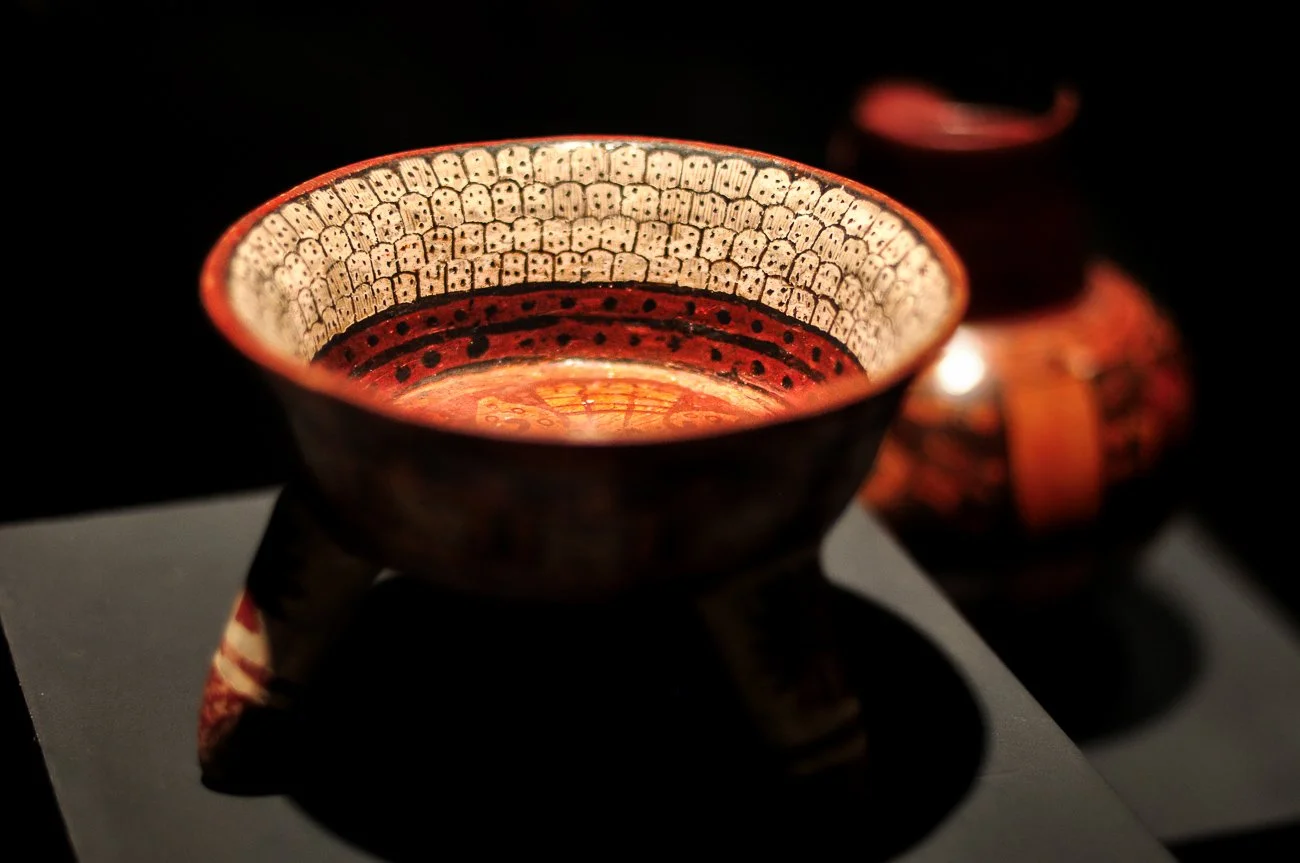
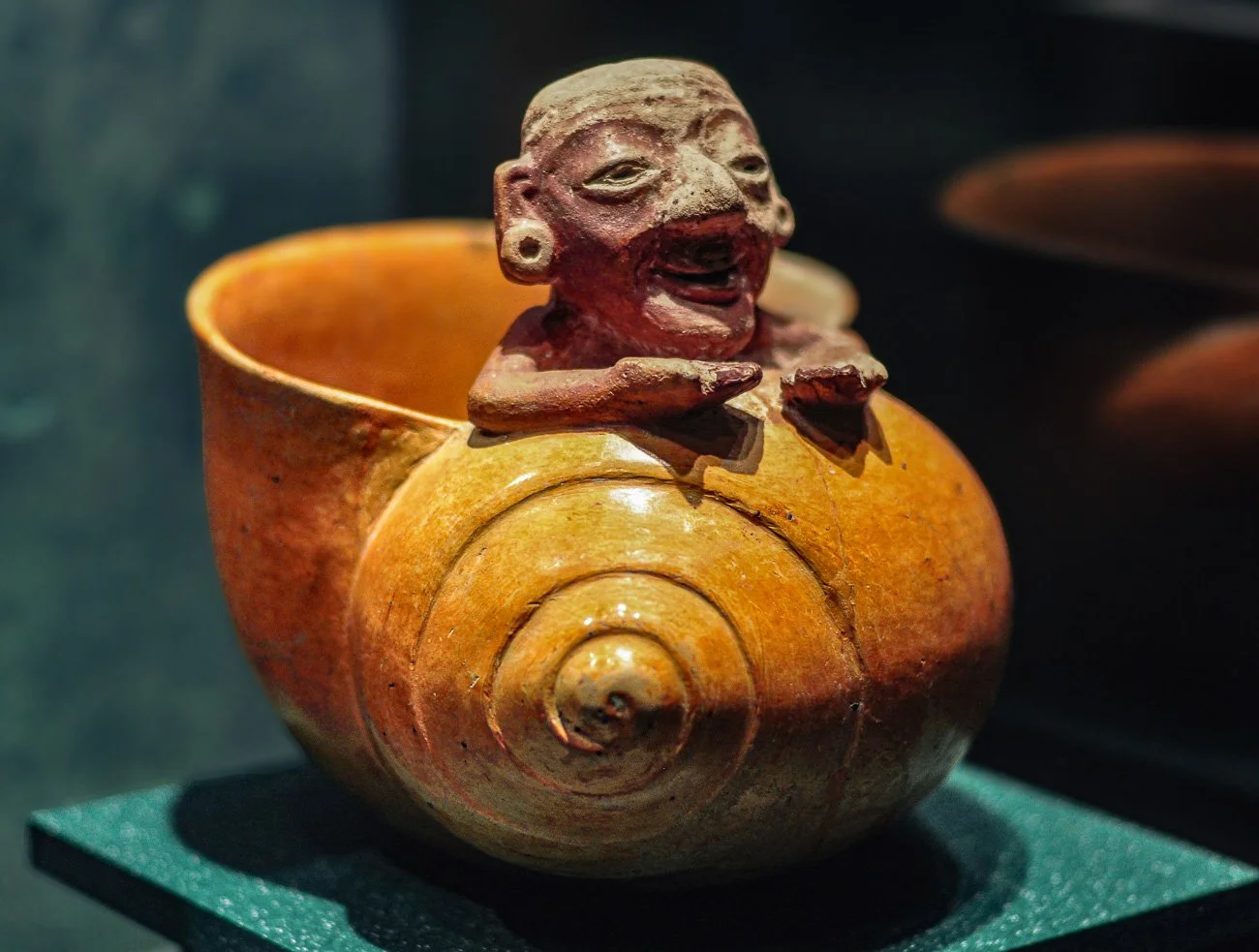
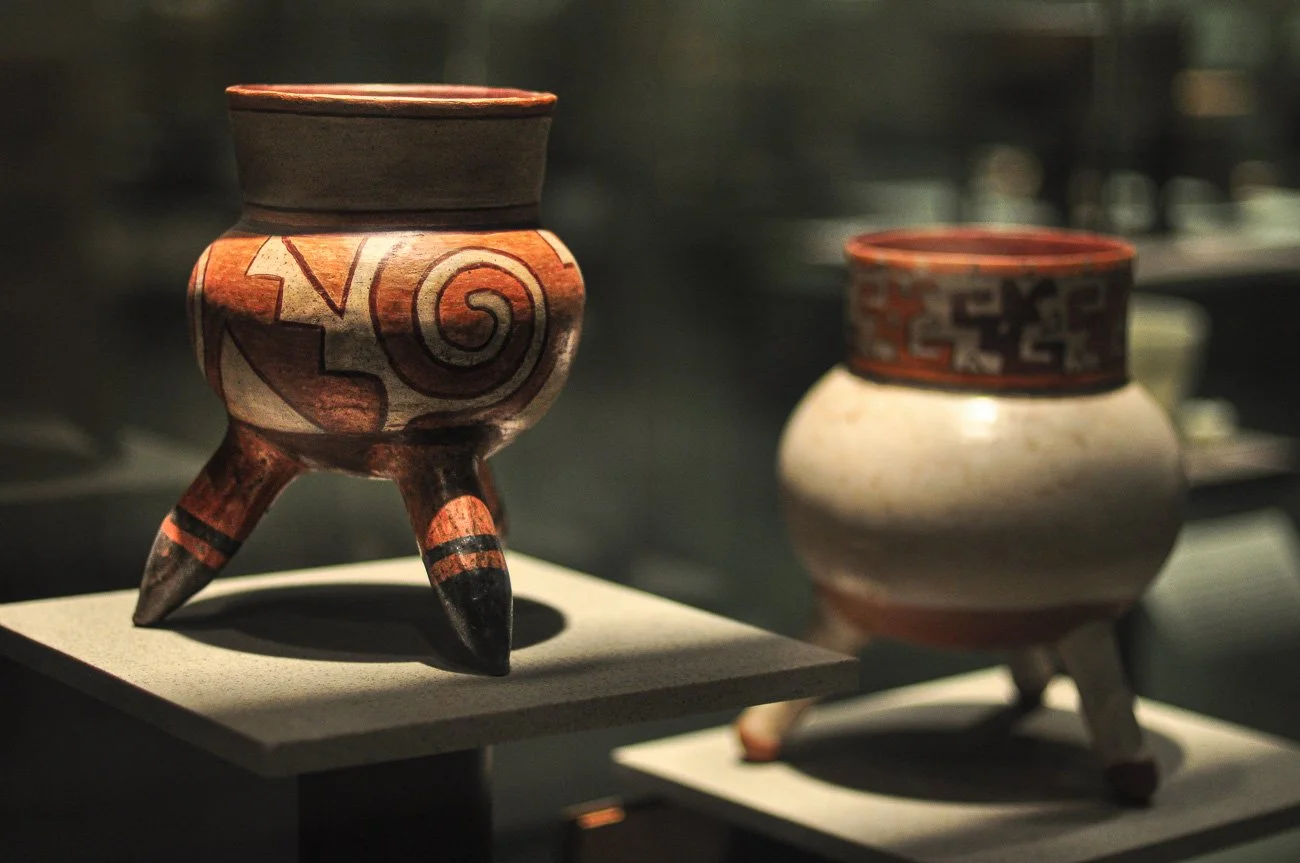
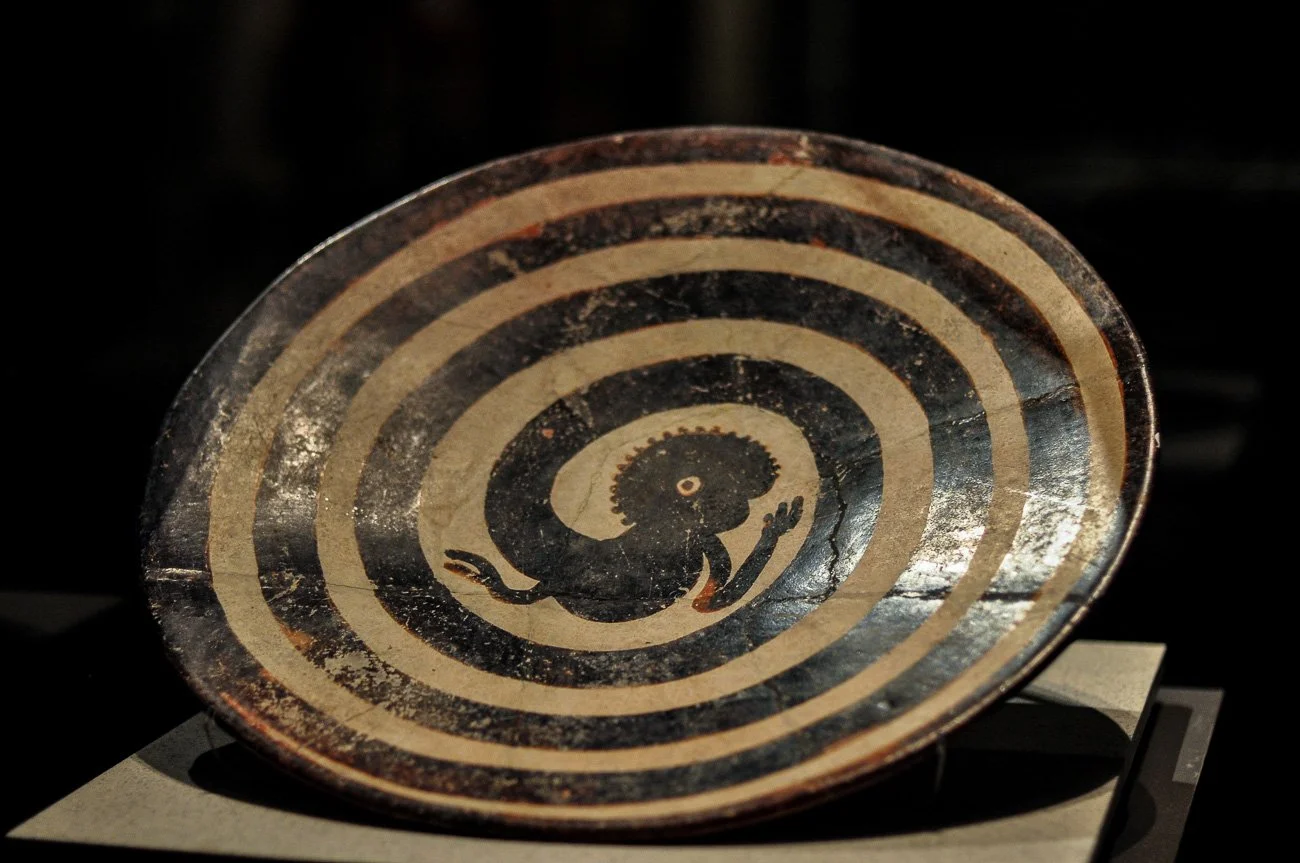
Mixtec (Ñuu Savi) tripod cajete Earthenware pottery
** Chac Mool (header Image)
Toltec statue from Chichén Itzá; its name in Yucatecan Maya translates to 'paw swift like thunder.' However, this name is modern and probably not connected to its original identity, which was given in the nineteenth century by explorer Augustus Le Plongeon. Not much is known about it, but it is believed that Chac Mool figures served as intermediaries between priests and gods.
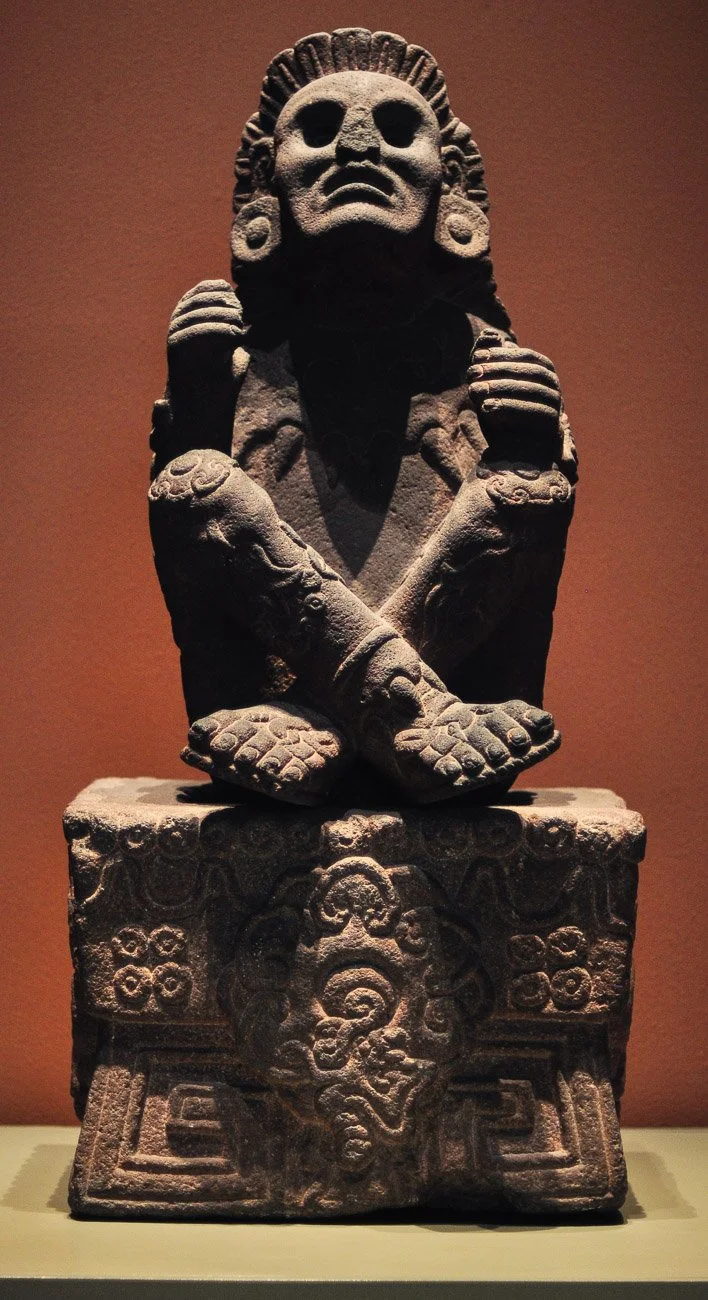
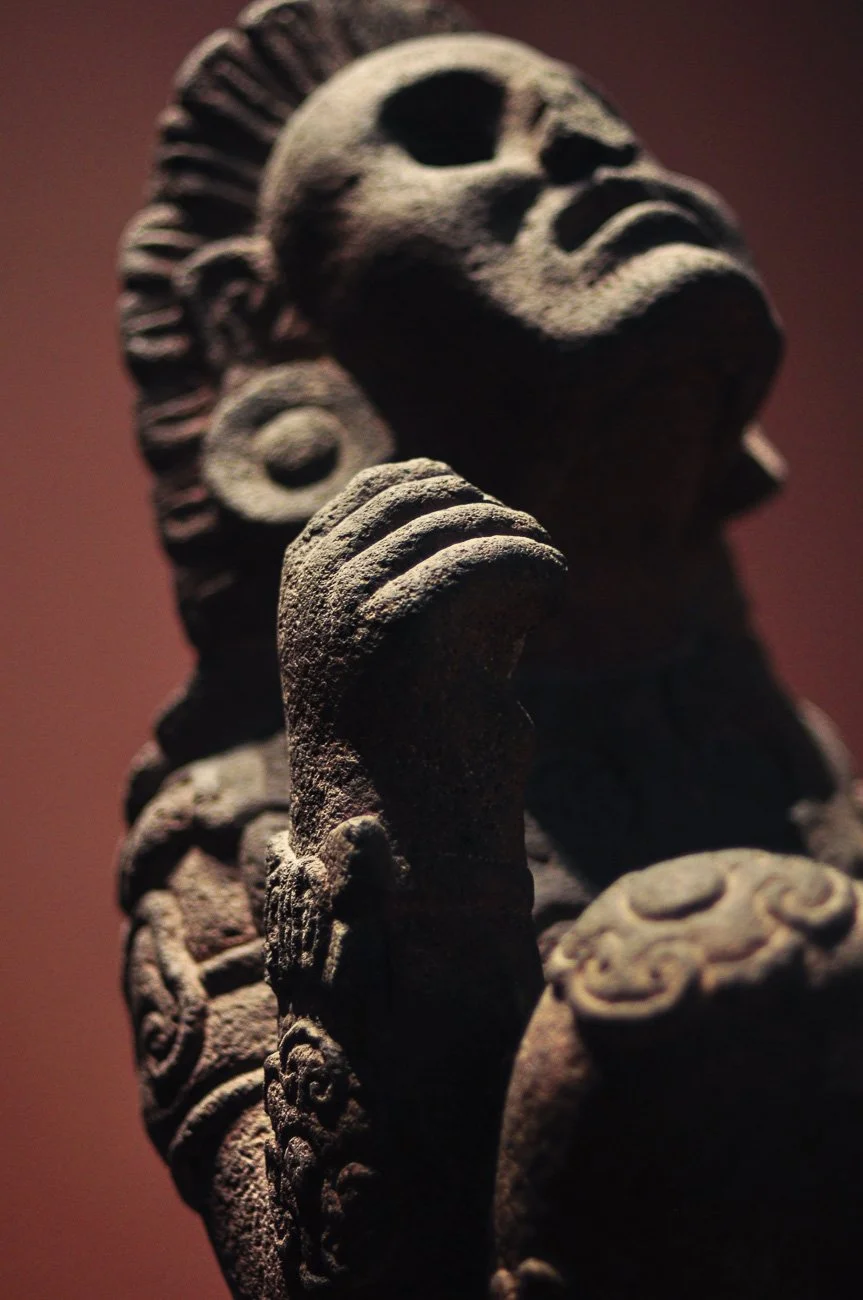
Xōchipilli - Macuilxochitl
Aztec god of art, games, beauty, dance, flowers, and song. Traces of the red pigment used to paint the statue still cling to his stone body. The ear spools are a sign of noble status. On the chest is the hide of a beast, and on its ankle are its claws.
Carved into him are sacred plants: tobacco and morning glory, used as visionary intoxicants to gain knowledge; and Sinicuichi, a yellow flower used to aid memory. On the knees and pedestal are motifs of magic mushrooms representing Teonanácatl (flesh of the gods), linking Xochipilli to altered states of consciousness.
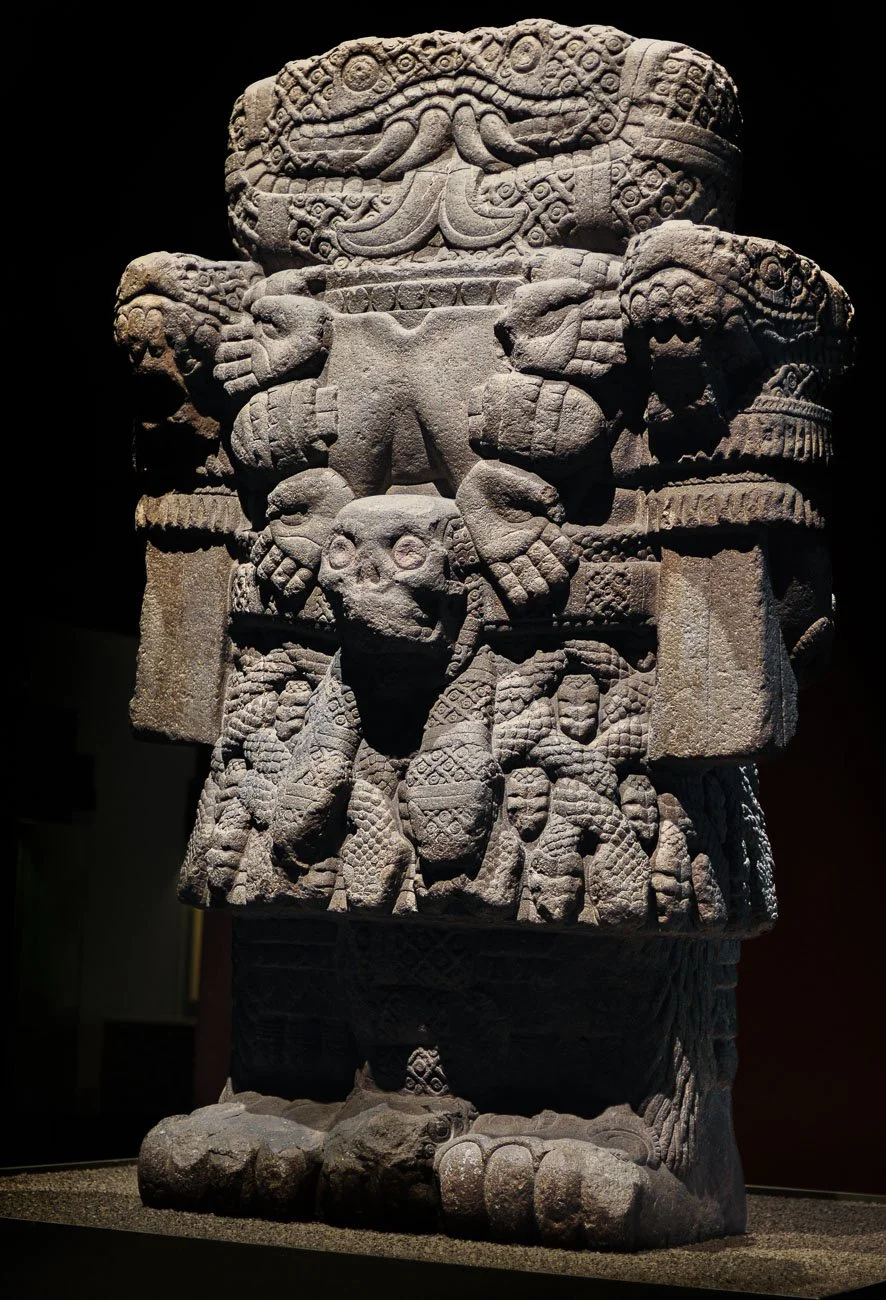
Coatlicue, Earth goddess, mother and devourer.
Here stands one of the museum’s most iconic pieces, a Mexica statue carved from volcanic andesite, measuring 3.5 metres and dating from 1325 to 1521. Serpents form her head; a necklace of human hearts, hands, and skulls; a skirt of writhing snakes; and claws gripping the base.
According to myth, she became miraculously pregnant when a ball of feathers fell from the sky. Her children, outraged, prepared to kill her. At that instant, Huitzilopochtli, the sun and war god, was born in his warrior attire, wielding a chimalli shield and a xiuhcoatl fire serpent, and defeated them. The story is cosmic, violent, and generative. It symbolises the birth of a new sun and a new world.
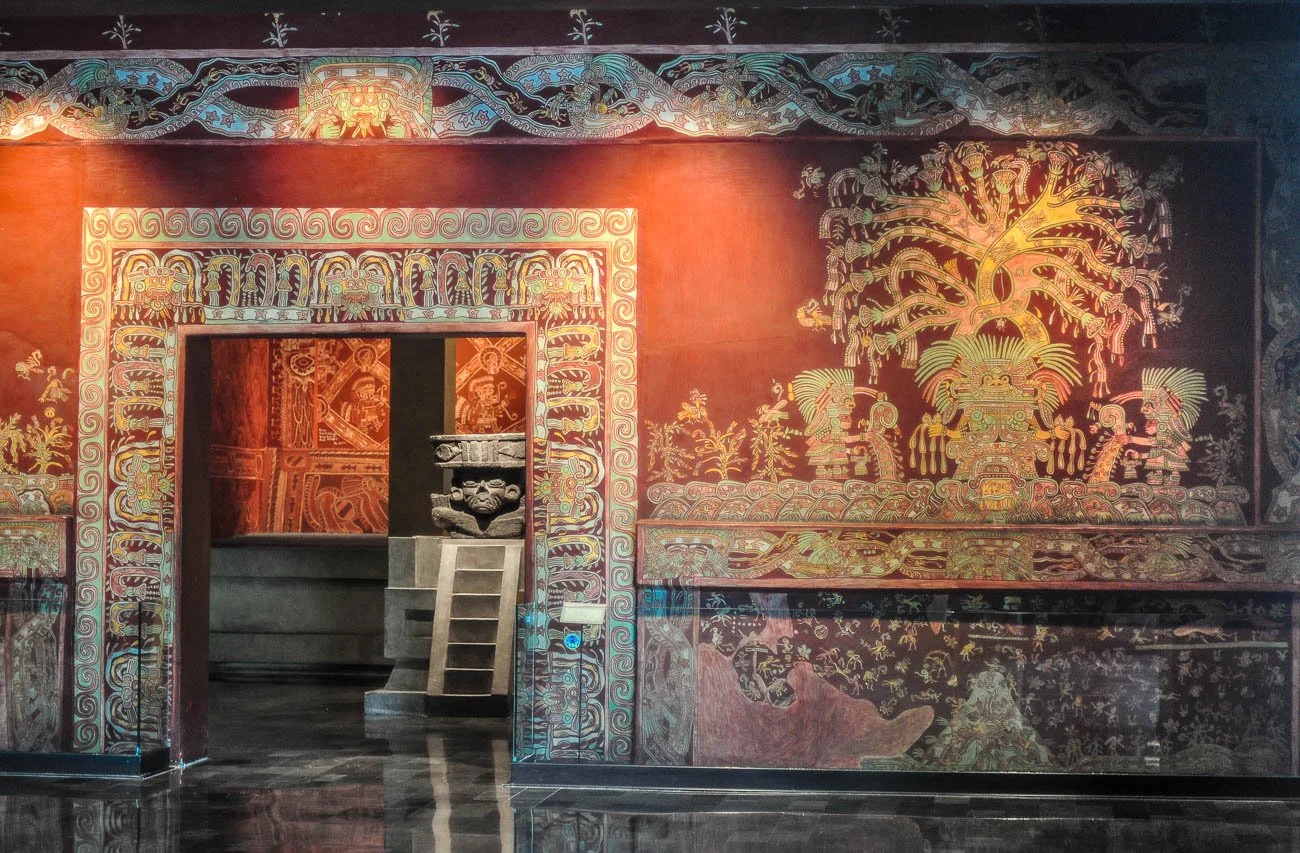
Mural from the Tepantitla compound showing what has been identified as the Great Goddess of Teotihuacan
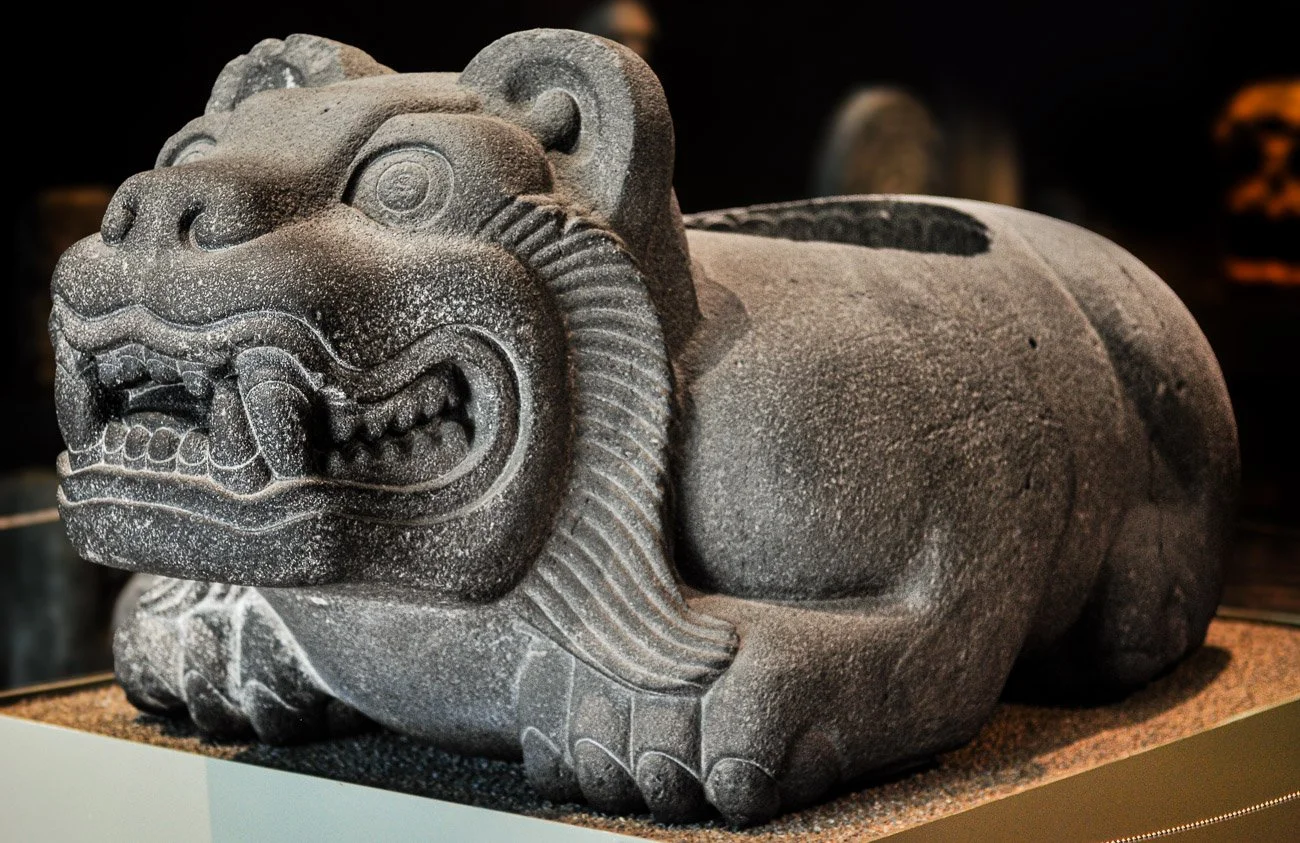
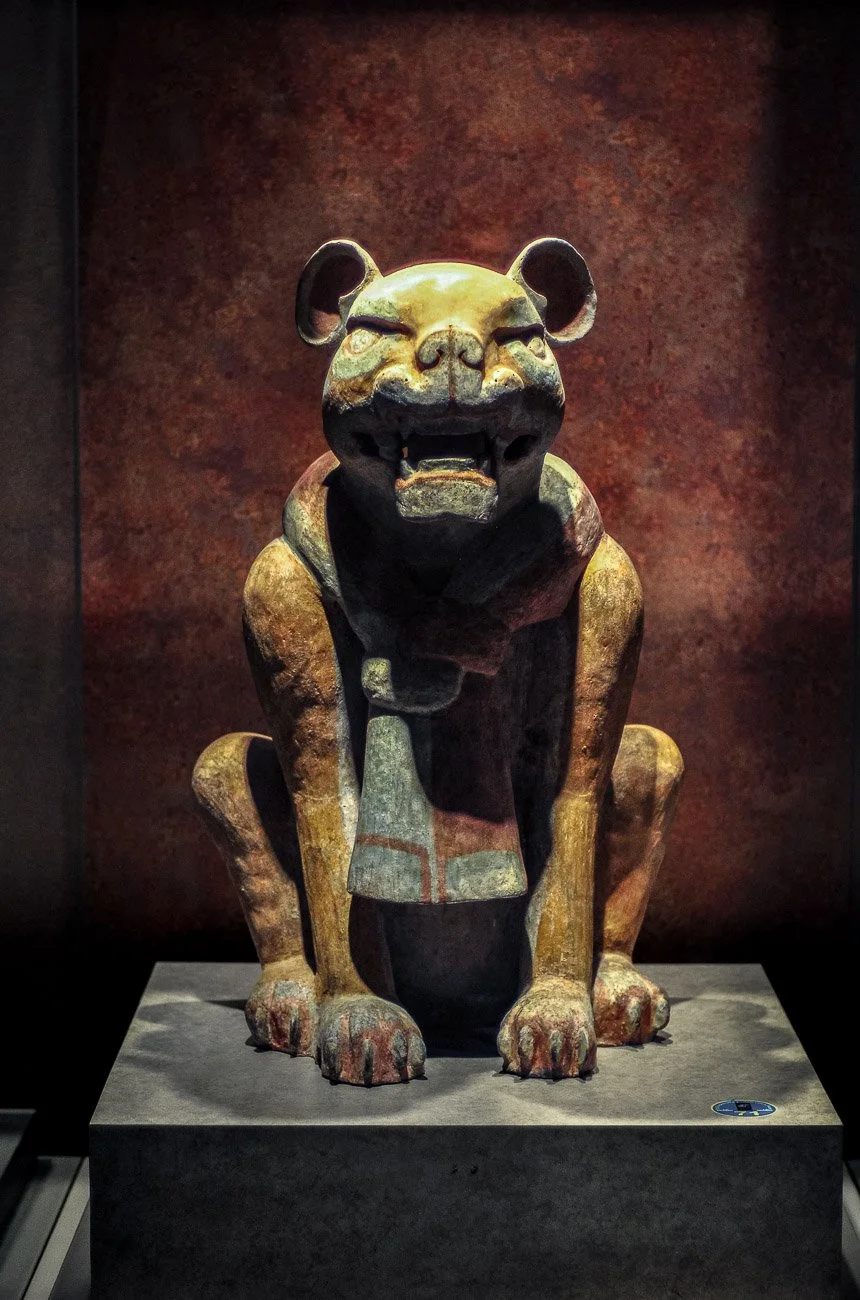
The Ocelotl Cuauhxicalli — this jaguar-shaped ceremonial vessel, carved from andesite, once held the hearts and blood of sacrificial victims. Along its back, intricately carved images of Huitzilopochtli and Tezcatlipoca merge warfare and divinity into a single commanding form. It measures 93 cm high, 105 cm wide, and 227 cm long; Mexica, circa 1500 AD.
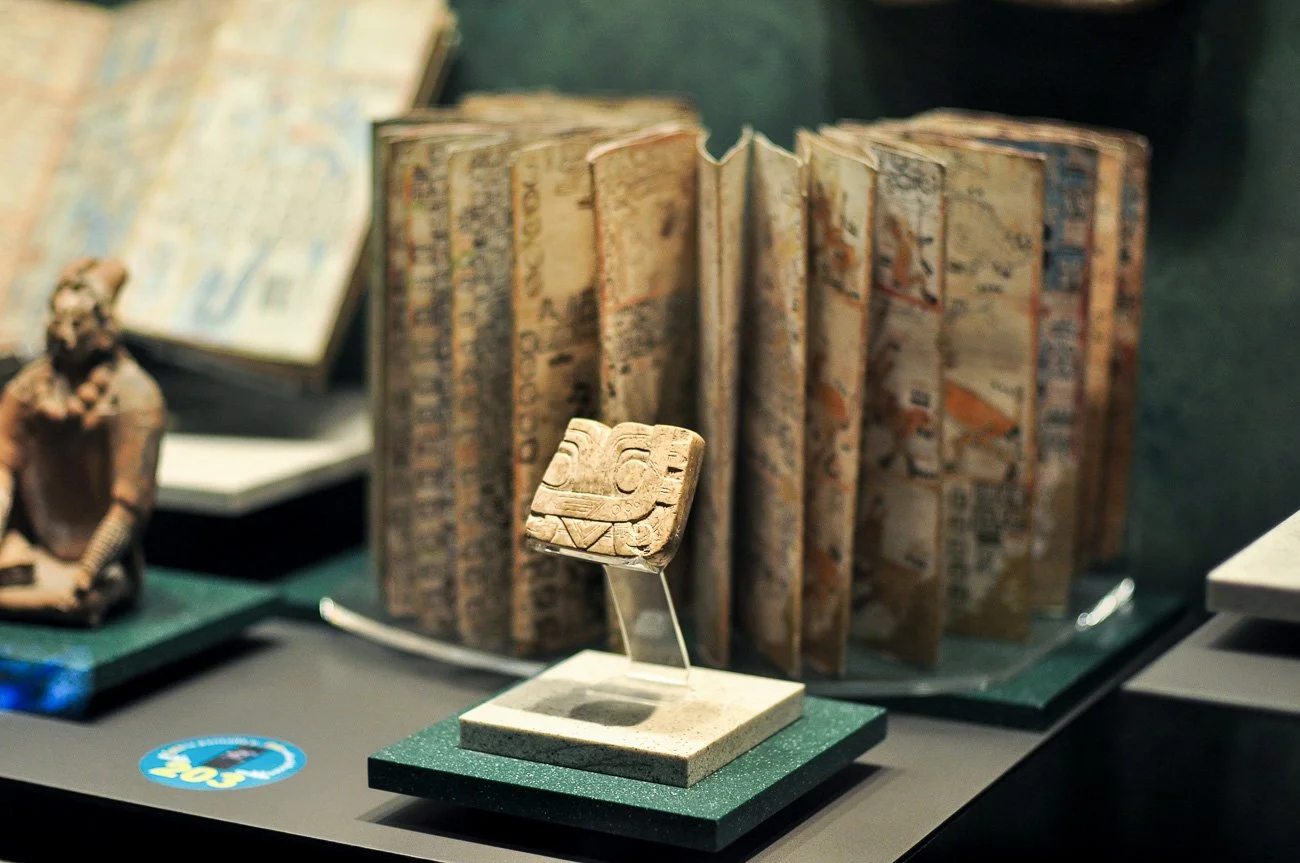
The Maya Dresden Codex, a significant pre-Columbian artefact that showcases the Maya's advanced understanding of astronomy, including detailed charts for eclipses and cycles of celestial bodies like Venus.
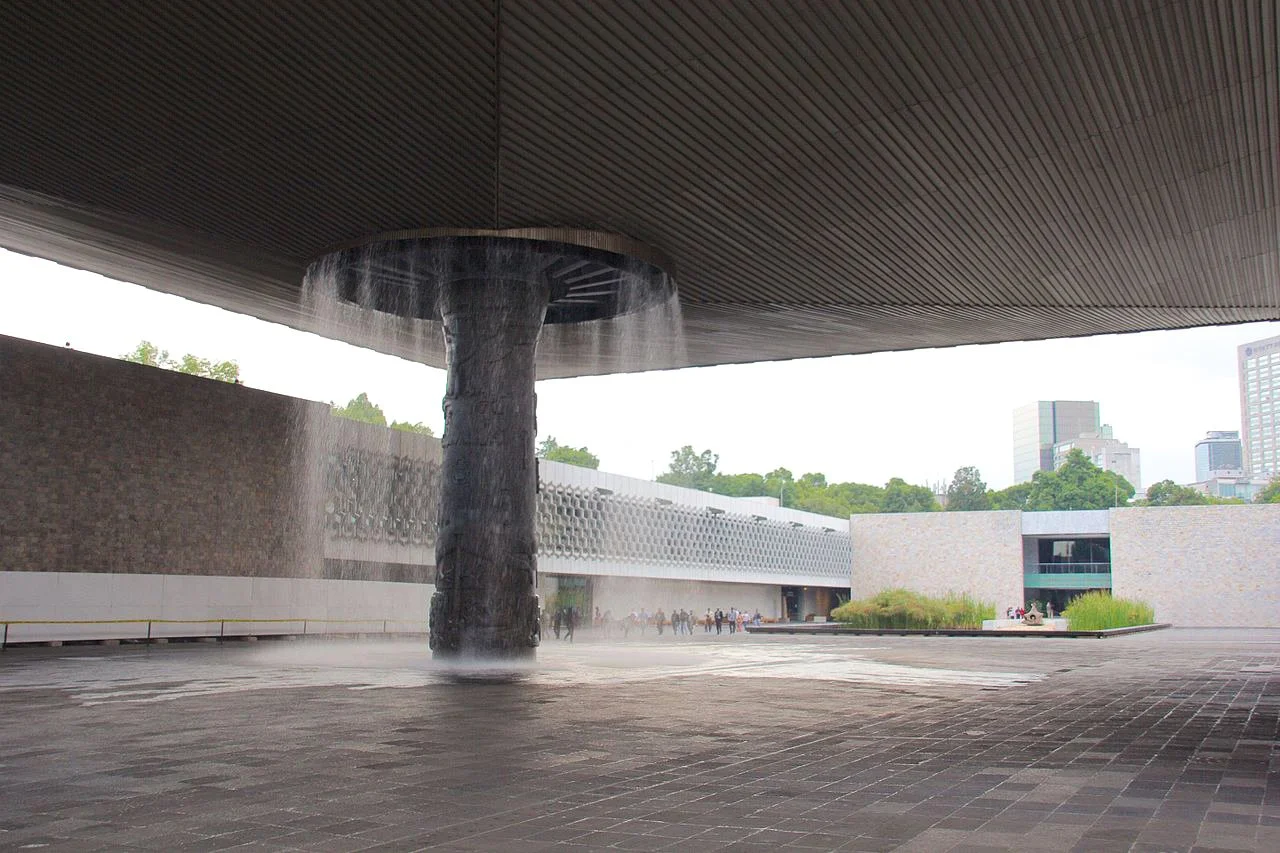
El Paraguas — “the umbrella” —
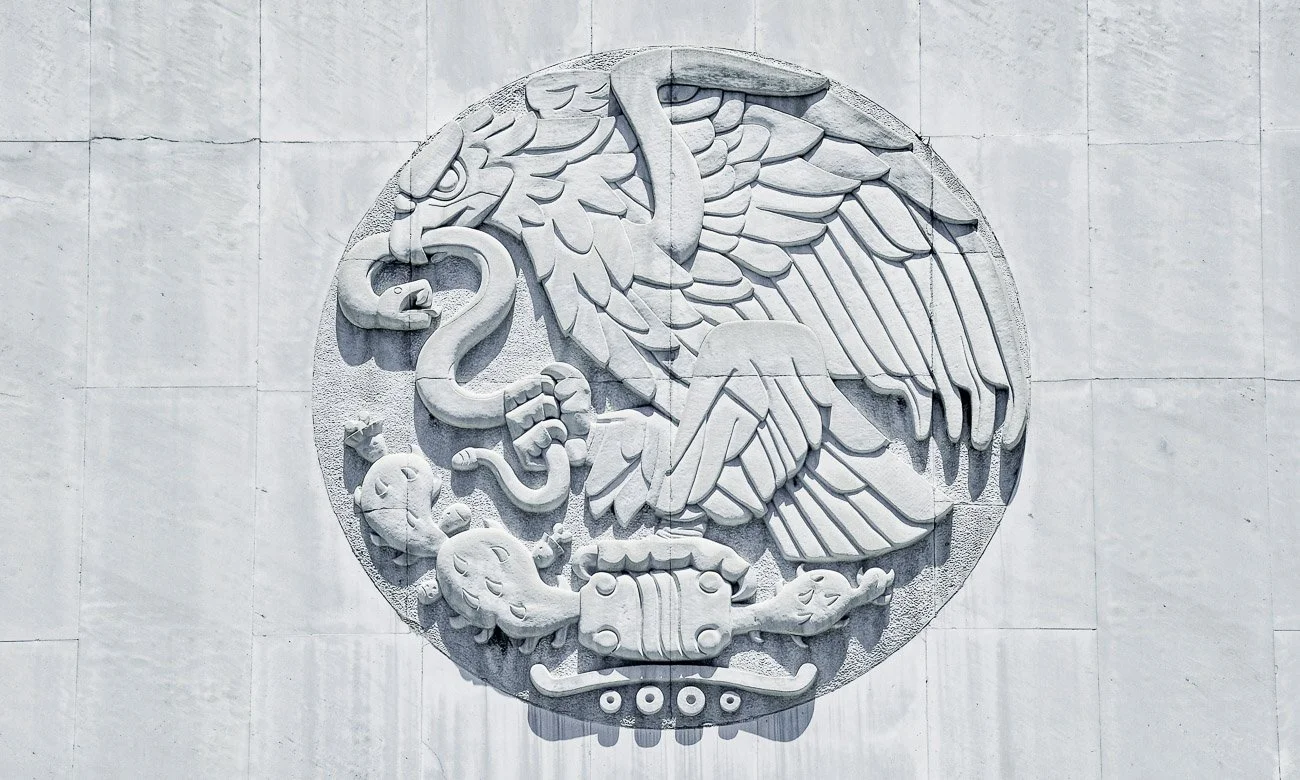
The National Coat Of Arms
Displayed prominently above the entrance, it bears the foundational myth. The legend recounts that the Mexica headed east from coastal Aztlán, now Nayarit, in search of a place to establish their civilisation. They wandered, seeking a sign from Huitzilopochtli indicating where they should settle. The sign was an eagle devouring a serpent perched on a flowering nopal cactus on an island in a lake. When the vision appeared in 1325 in the Valley of Mexico, they built Tenochtitlán — now Mexico City. The eagle symbolised the sun’s power; the serpent represented the earth’s strength, and the nopal cactus was an essential food source. Their union symbolised destiny.
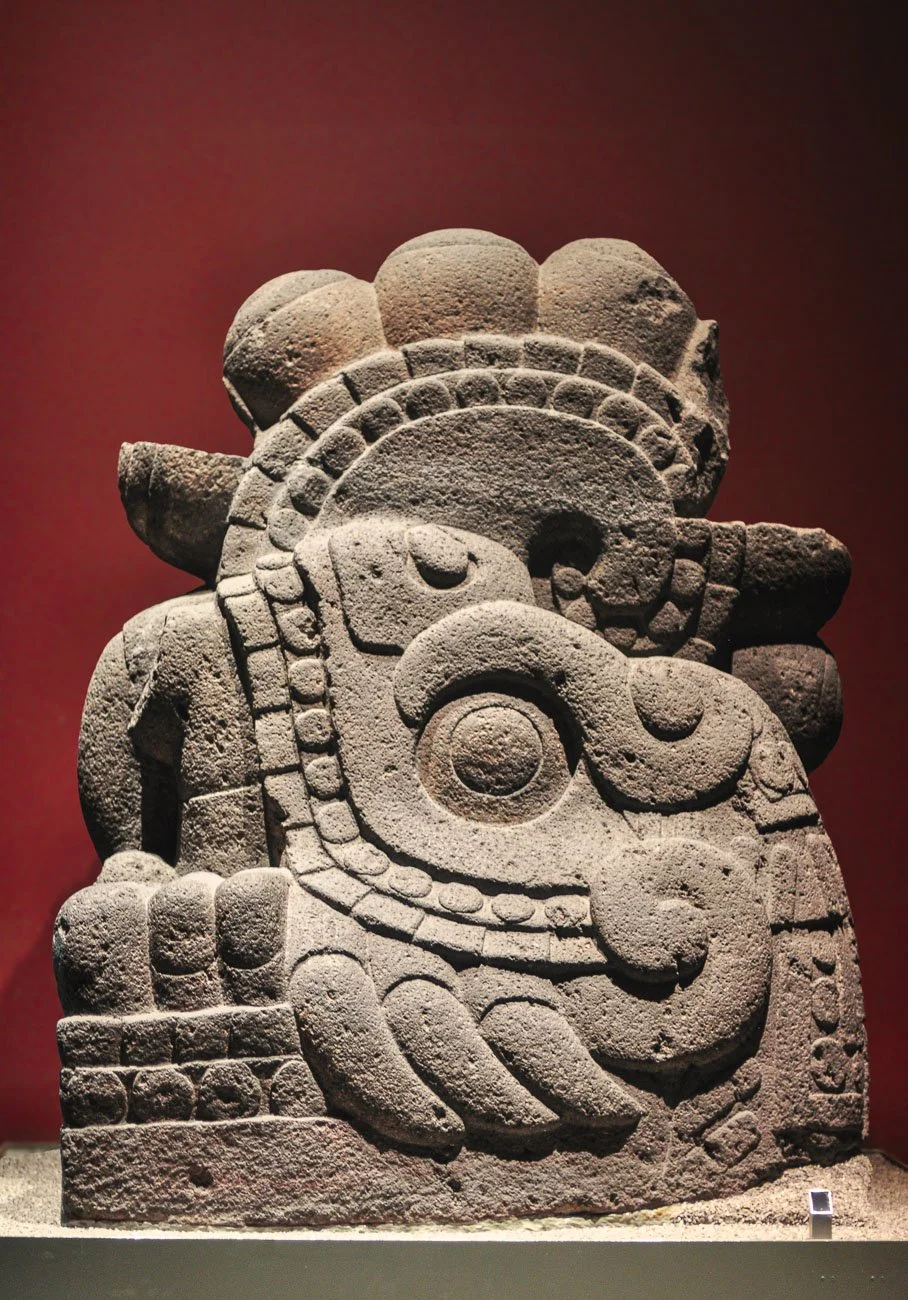
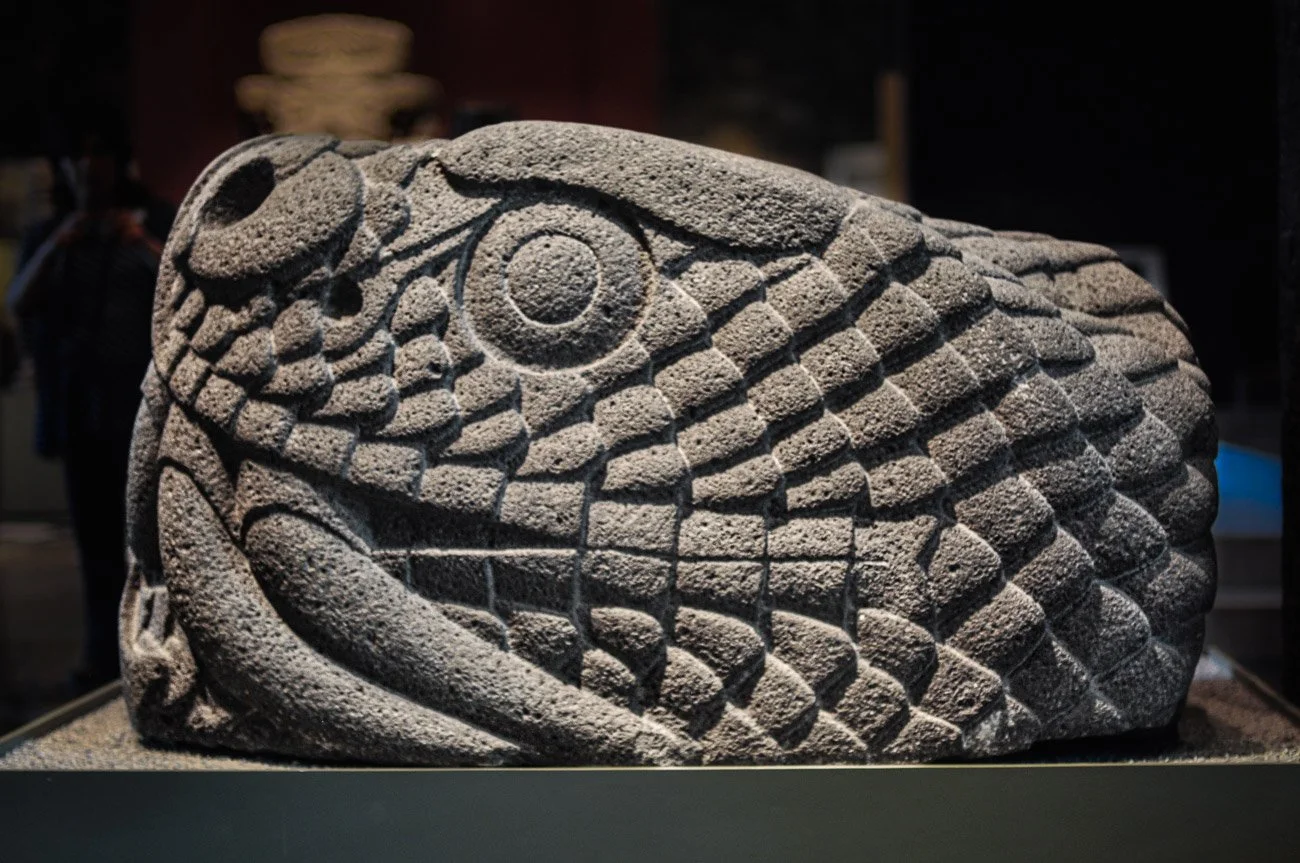
Stone figure of Xiuhcoatl, the fire serpent
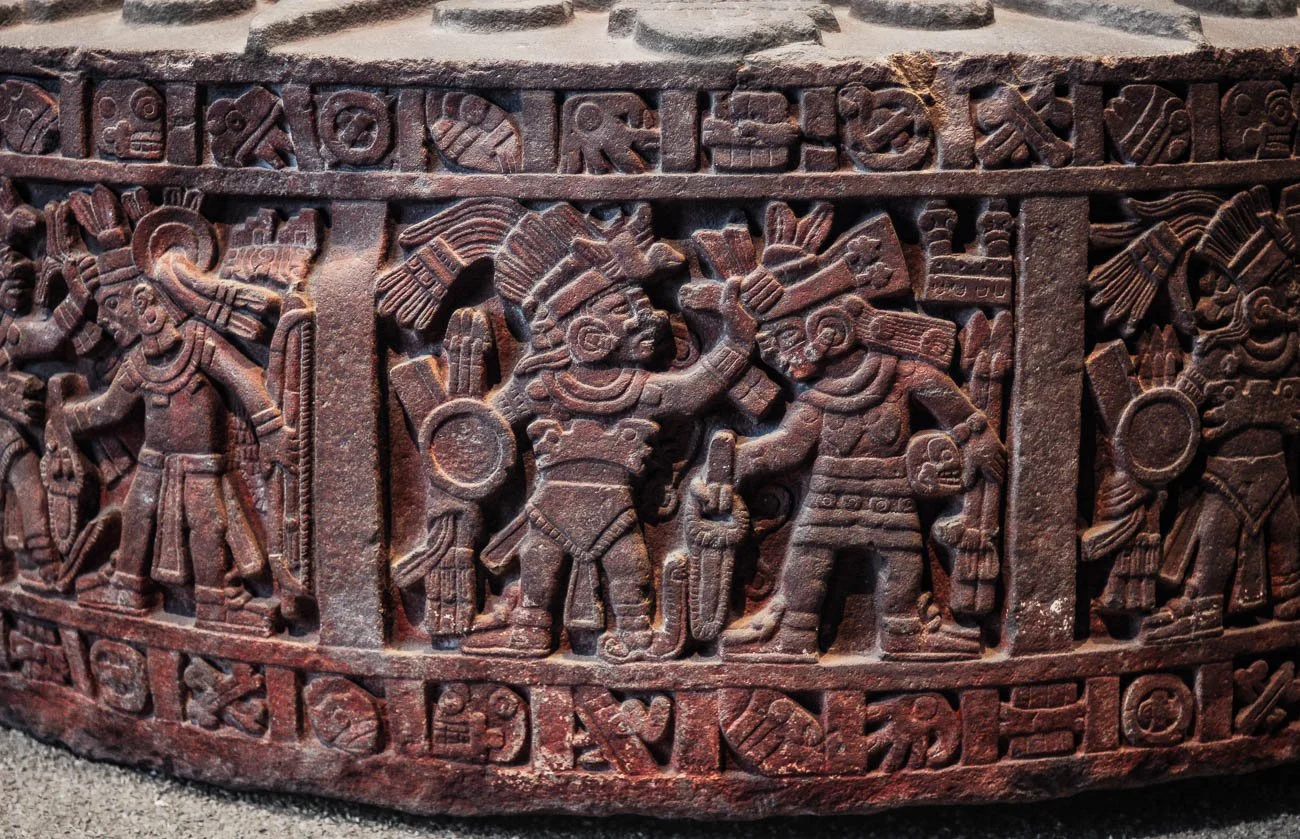
The Mexica Piedra de Tizoc
Discovered in 17quare, this ritu from 1481 to 1486, measures 2.6ter. It once staged ceremonialh a Mexica warrior would fight aweakened weapon, turning the figarved on the stone's surface are scenes depicting a Tizoc governprisoner by the upper corners oglyphs identify the conquered towns.
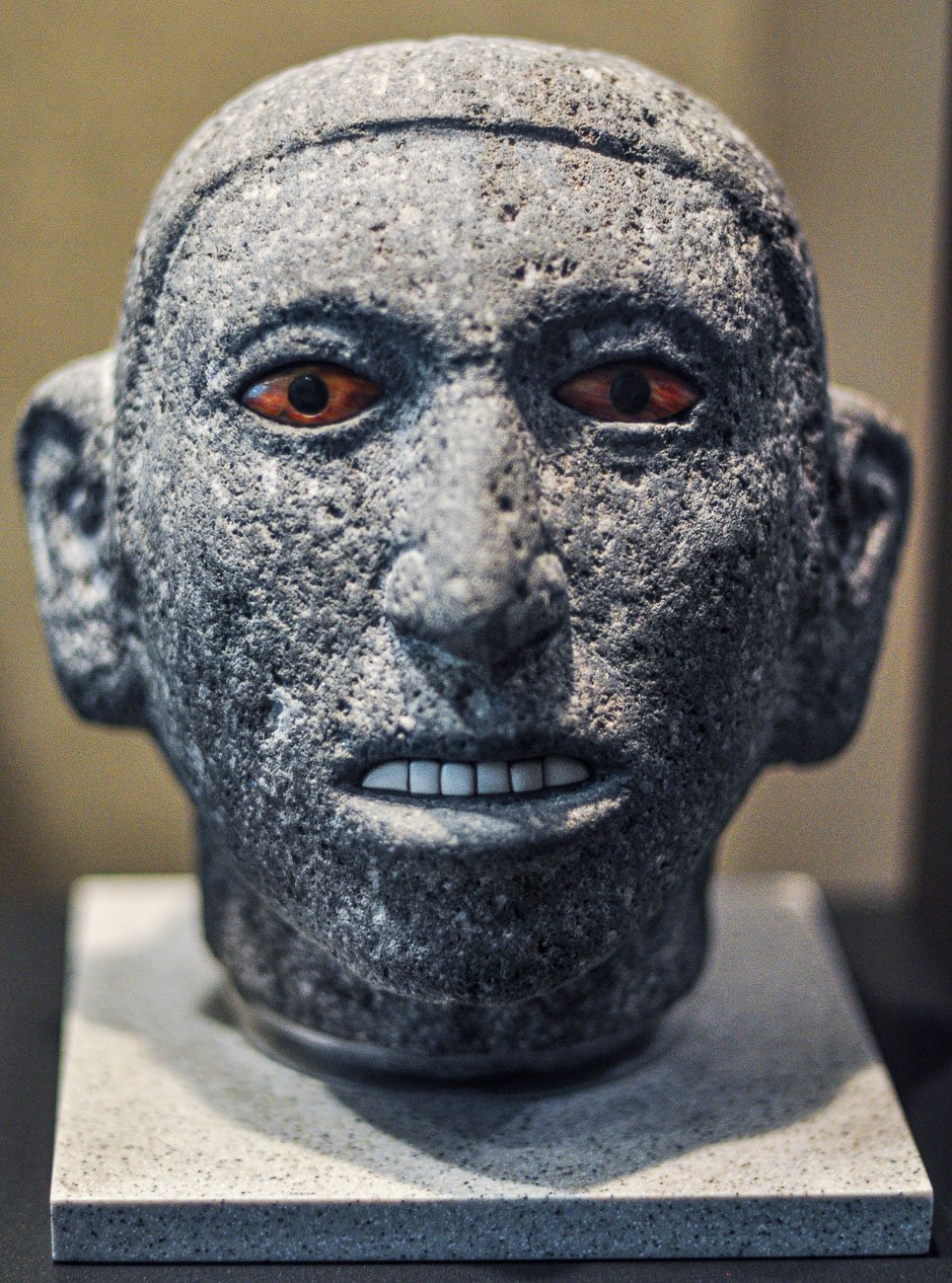
Step back into the courtyard
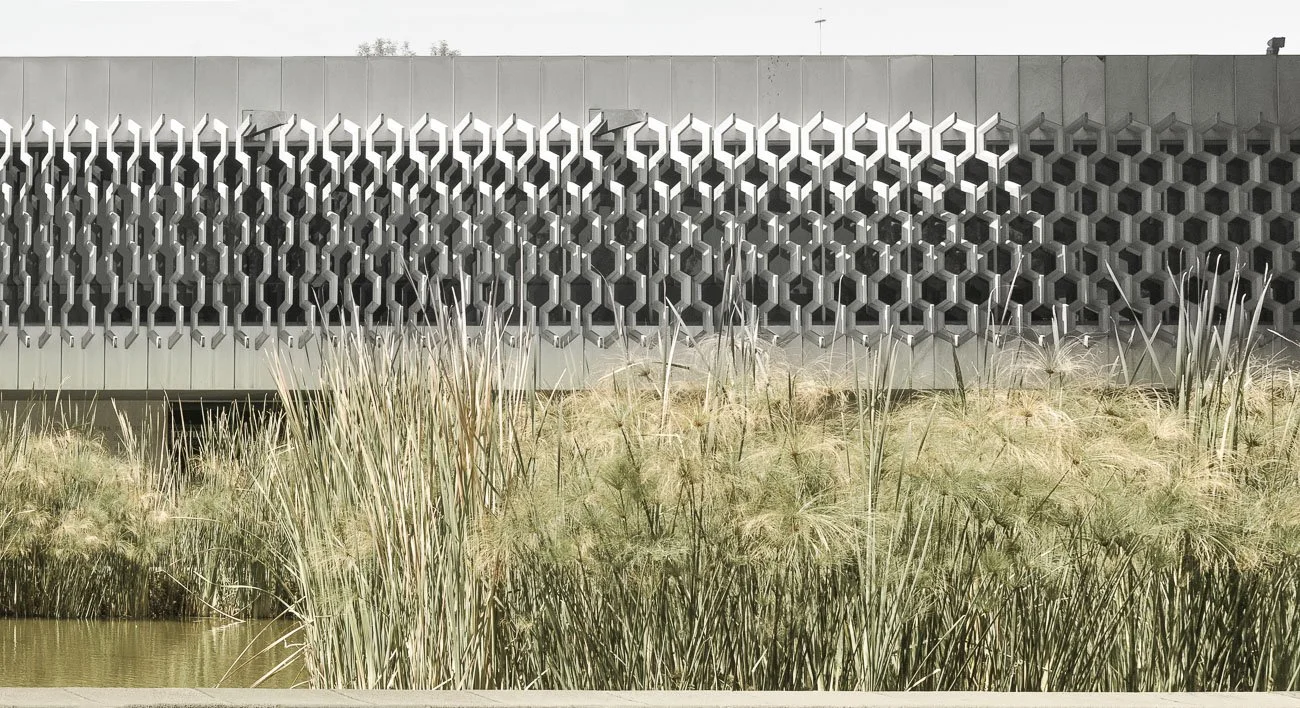
On the far side lies a large rectangular pond reflecting the sky. Tall grass and irises soften the geometry. The courtyard seamlessly connects the halls.
Museo Nacional de Antropología
+52 555 553 6275
Av Paseo de la Reforma S/N Esq. Calzada Gandhi, Chapultepec Polanco, Miguel Hidalgo, Ciudad De México 11560 , México
www.mna.inah.gob.mx
